
With reservations gone, shuttles key to Glacier crowd control
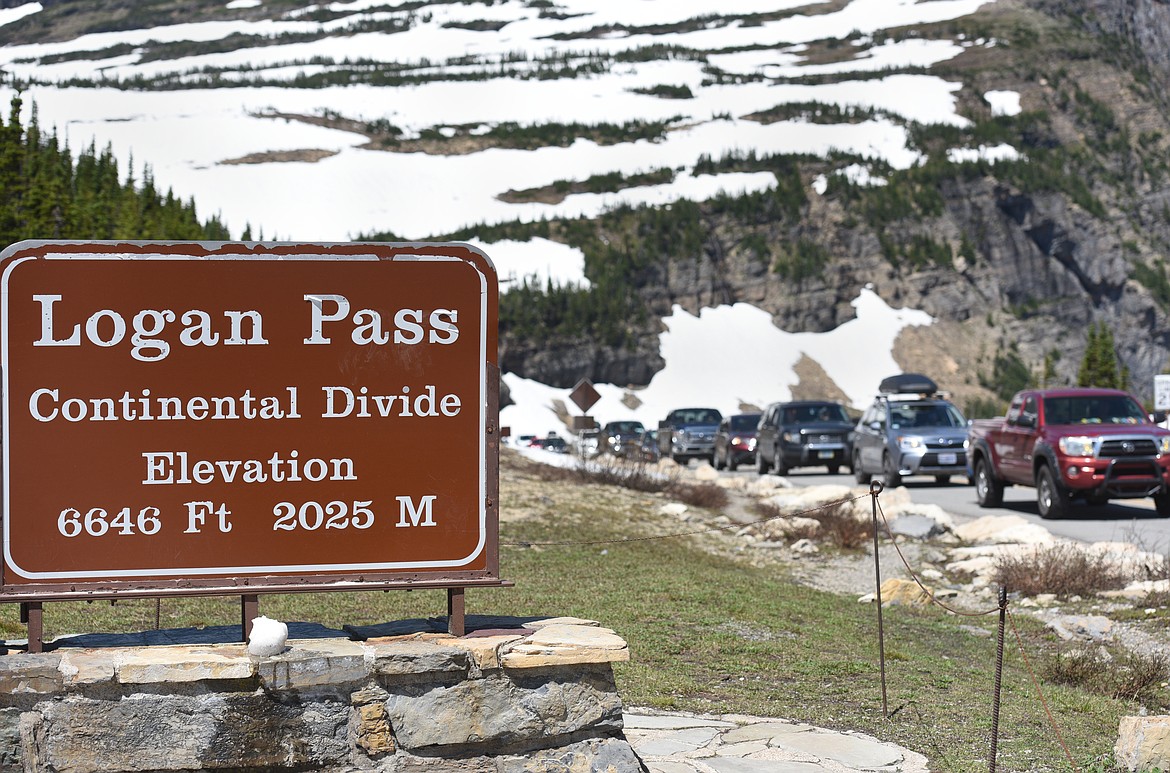
A long line of cars crawl up the Going-to-the-Sun Road near the Logan Pass Visitor Center parking lot on Wednesday. (Aaric Bryan/Daily Inter Lake)
One shovel at a time, excavators and plows are digging into the legendary Big Drift atop Glacier National Park’s Logan Pass this week. The 80-foot mountain of snow is the final effort to clear Going-to-the-Sun Road of its winter blanket, and soon the entire route will be open to vehicles.
This season, no reservation will be required to drive what is considered America’s most scenic alpine highway. Eliminating timed and ticketed entry, along with additional plans to limit parking at Logan Pass, has drawn a mixture of cheers and jeers from resident parkgoers.
On one hand, securing an advance reservation proved to be a major pain for locals accustomed to taking spontaneous trips to the park. That sense of freedom was lost when the National Park Service rolled out its reservation pilot program in 2021. Restricting access only to those lucky enough to score a limited number of pre-purchased passes rightly drew the ire of locals who claim Glacier as their backyard playground.
Yet the underlying reason for ticketed entry was justifiable. A swelling level of annual visitation — now topping the 3 million mark — threatened to tarnish Montana’s crown jewel through rampant overuse. Limiting access through the reservation portal was the most straightforward way to check the chaos.
But park officials admit the result did not match the intent to reduce congestion on the Sun Road and its most popular trails. While the vehicle reservation system succeeded in breaking up midday traffic, Superintendent Dave Roemer noted it only shifted congestion earlier in the day rather than reducing it overall.
This summer, instead of ticketed entry, the park will take a reactive approach to traffic backups. Areas of the park that become overcrowded will be closed until crowds thin, and rangers will enforce a new three-hour parking limit at the Logan Pass Visitor Center, roughly the time it takes to hike the Hidden Lake Overlook Trail.
To accommodate hikers hoping to traverse the popular Highline Trail, a new express shuttle — reservation required — will go directly to the pass from Apgar. According to Roemer, the number of available express tickets will match the Highline Trail’s daily capacity of about 800 people.
Much like the shelved reservation system, the new express shuttle and timed parking plan is a beta test for what could become a long-term solution to overcrowding.
According to a preliminary transportation plan revealed this month, park officials are working to beef up their woefully insufficient shuttle capacity in the coming years, while simultaneously exploring options to build more parking on both the west and east ends of the Sun Road.
While still in development, the framework of the transportation plan represents a necessary step. Visitors and park officials must come to terms with the fact that 3 million annual visitors is the Sun Road’s limit under the current strategy that prioritizes personal vehicles.
Seeking a more sustainable approach built around a robust and reliable shuttle fleet that whisks hikers and sightseers to their preferred destinations is exactly the release valve Glacier needs to provide the most enjoyable experience for the most people possible.
Like clearing the Big Drift one snow load at a time, Glacier must continue to chip away at the Sun Road congestion challenges that have plagued the park for the past decade. Scaling up the shuttle fleet would represent a major push forward.