
Survey measures virus impacts on local businesses
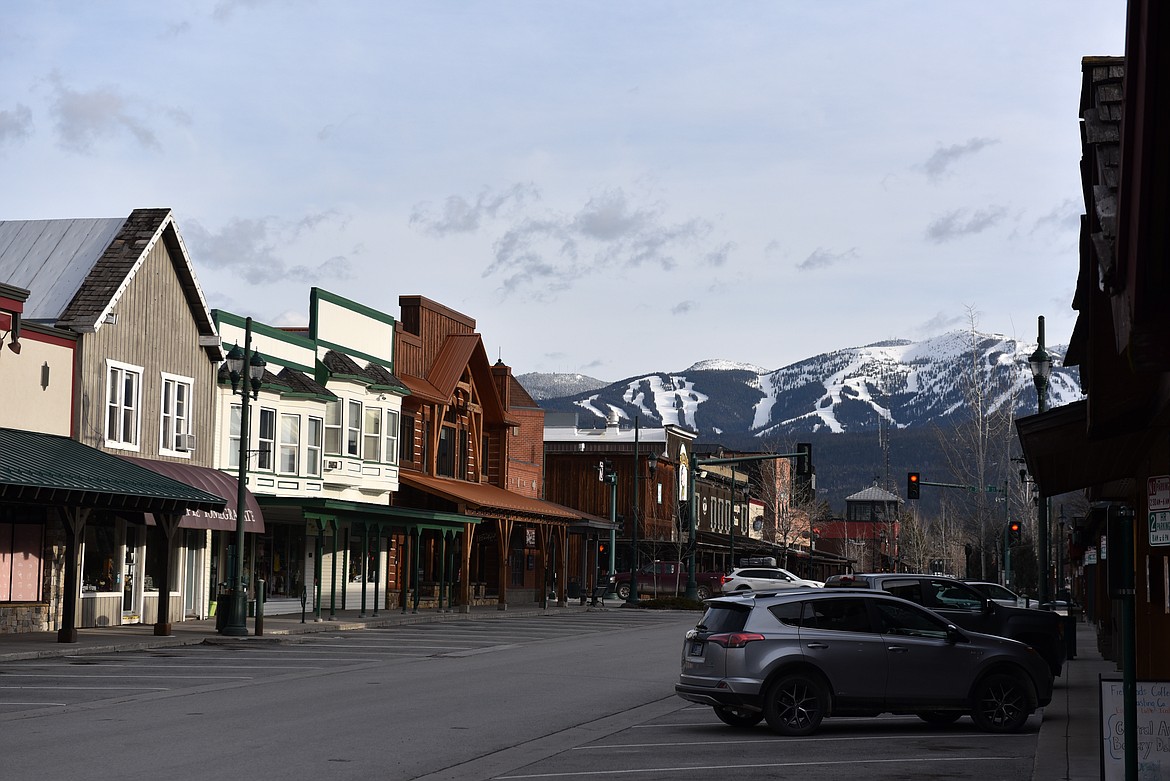
Central Avenue on a spring morning in downtown Whitefish. (Heidi Desch/Whitefish Pilot)
Just over a month ago, LC Staffing’s job board evaporated.
There were no businesses looking to take on new employees and there were no candidates searching for work — everything just stopped.
“We went overnight from 90 job orders to almost none,” LC Staffing President and Owner Kristen Heck said. “It literally was like you’re going 100 miles an hour and then you hit a brick wall.”
As COVID-19 crept into Montana, one of the first large businesses to close was Whitefish Mountain Resort, and since then many others have either electively closed as a safety measure or shut their doors after Gov. Steve Bullock’s stay-at-home order went into effect. This sent the Flathead Valley into a very early “shoulder season,” and LC Staffing saw the effects firsthand because the agency has connections with a variety of workplaces all over Western Montana.
It’s obvious that businesses closing down is a massive hit to the local economy and the financial health of locally owned establishments. But LC Staffing decided to survey businesses to find out just how much they are altering their models and figures in response to the pandemic.
In the survey completed April 8, 102 companies throughout seven counties in Western Montana responded and the results shed light on the impacts, concerns and also opportunities coming forth in the current economic climate.
Unsurprisingly, 68% of respondents saw a decrease in revenue since the pandemic arrived in the state. With less revenue and fewer operating hours, 69% of the businesses that participated in the survey slowed or stopped hiring staff, with 46% laying off a significant number of workers.
Heck said her staffing company started feeling this change when many businesses temporarily stopped using their service a few weeks ago. She thinks most employers affected by the numerous rules and regulations introduced by the government needed time to come to terms with a new normal. As these businesses recover from the initial shock, many have found new innovative ways to serve their customers and stay afloat.
“This was a major disruption, so it may make it impossible [for businesses affected] to achieve their strategies and goals for the year,” Heck said. “But I am so encouraged to see how many businesses have just quickly adapted to change the way their workforce works, most importantly, and then their service delivery models.”
AS MANY companies developed new approaches to reach their clientele — such as restaurants switching gears to focus on takeout and delivery — the survey reported that nearly 30% of employers have people working outside of their original job description. In addition, 30% of these companies actually have seen new business opportunities emerge in recent weeks.
Heck attributes this to organizations being innovative and adapting to current demands. She was also impressed with several companies’ ability to switch their manufacturing to producing personal protection equipment and becoming a part of the solution while keeping employees working.
“I mean, look at how many businesses have had to just totally transform the way they deliver their goods and services to the market,” Heck said. “There’s certain sectors, too, that have had demand go off the chart.”
In the last week, though, LC Staffing has seen both employers and candidates reaching out to them again. As summer approaches many seasonal jobs are coming available, such as landscaping, construction and building supplies manufacturing. Heck said the Flathead Valley is one of her company’s busiest markets right now, which is probably due to the variety of business types and a large number of companies offering essential services.
Heck explained a lot of establishments that are now beginning to bring in new workers had to change the way they approach the interview, screening and onboarding of potential new hires. As these businesses figure out their adapted processes, more jobs are becoming available.
“It’s ramping up a bit,” Heck said. “I would say it’s a far cry from where we were, but it’s a positive sign. I think there’s been some obstacles for employers because they want to make sure they’re keeping their workforce safe.”
As Montana reaches the end of its shelter-in-place directive, many businesses have already begun thinking about forming a recovery plan. According to the survey, over half of the respondents believe it will take less than eight months to recover from the hardships brought on by COVID-19, with 33% saying it would take anywhere from 4 to 8 months for the effects to subside.
Heck is hopeful Montana businesses can get back on track for the summer season, and said she is grateful the valley is beginning to phase out of the coronavirus restrictions as the busiest hiring time of the year quickly approaches.
Reporter Whitney England may be reached at 758-4419 or wengland@dailyinterlake.com.