“We’re here because we want to be”
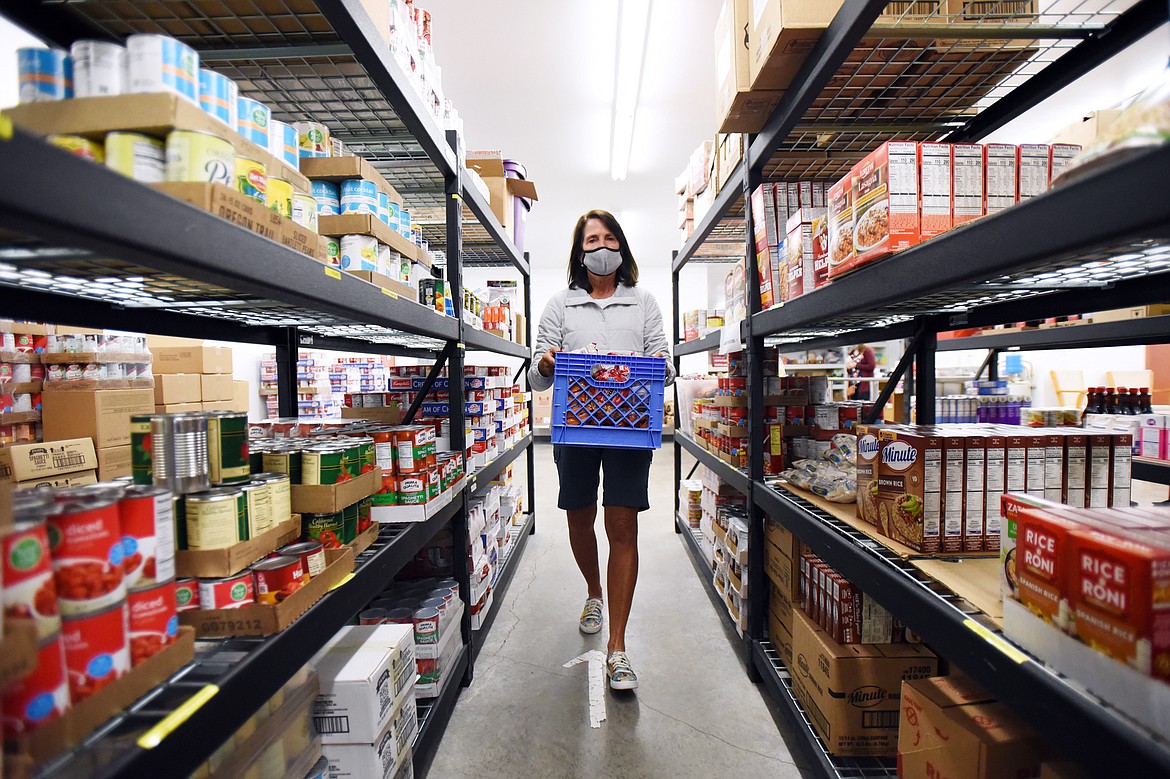
Board president Julia Sunde stocks items at the West Shore Food Bank in Lakeside on June 3. (Casey Kreider/Daily Inter Lake)
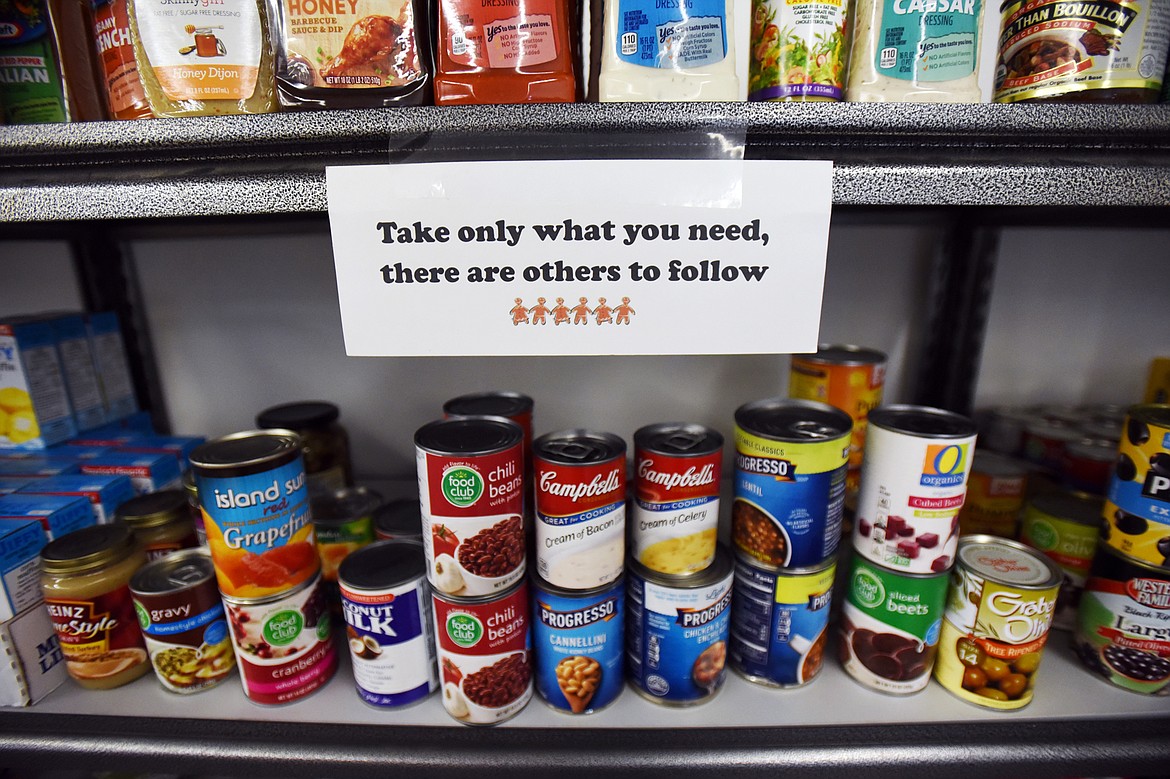
Signs reminding customers to take only what they need are hung around the pantry area at the West Shore Food Bank in Lakeside on Wednesday, June 3. (Casey Kreider/Daily Inter Lake)
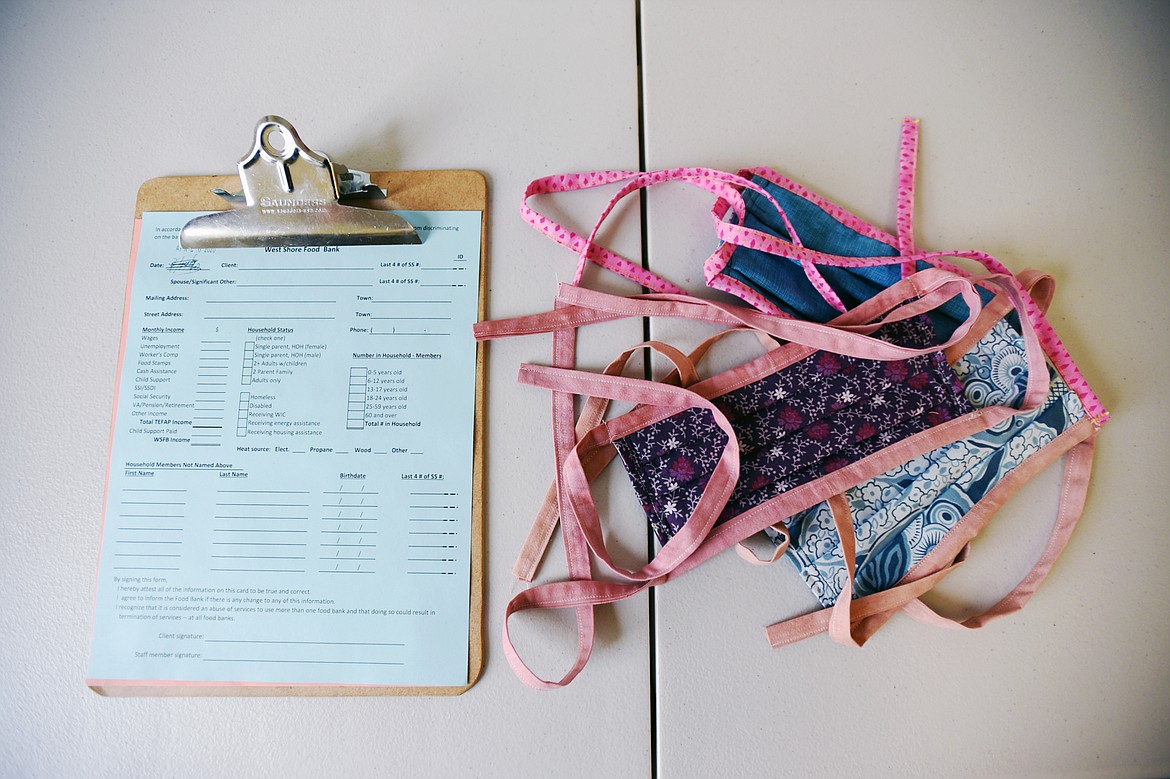
Face masks on a table next to intake forms at the entrance to the West Shore Food Bank in Lakeside on June 3. (Casey Kreider/Daily Inter Lake)
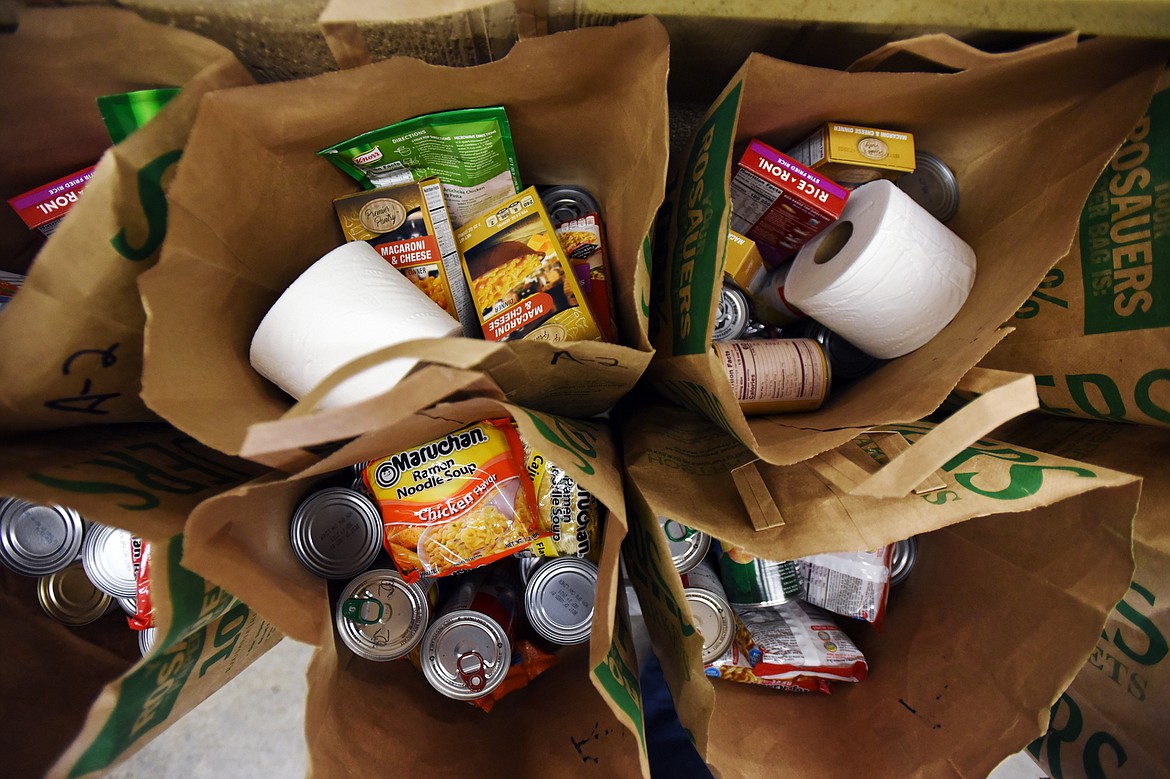
Meal bags full of food and necessities at the West Shore Food Bank in Lakeside on Wednesday, June 3. In addition to receiving a meal bag from the food bank, families also receive a bag full of produce, a bread bag and a bag containing occasional sweet treats. (Casey Kreider/Daily Inter Lake)
On the west side of Flathead Lake, just off the highway in Lakeside, a rather understated blue and white building belies the bustle of activity going on inside.
A team of eager volunteers works hard to implement an efficient system that feeds numerous underserved families in nearby communities. Although small, the West Shore Food Bank extends its reach to anyone in need and the unpaid volunteer staff serves with joy in their hearts.
“Everybody is committed to it, we’re here because we want to be,” food bank treasurer and 10-year volunteer Celia Eastburn said.
In Lakeside, home prices soar above average and rent is on par with large cities, so at first glance the lakefront community may appear to be largely a playground for the wealthy. But a glance rarely tells the whole story. Disparities in income from one house to the next is a growing problem across the United States and even in places where the affluent reside, financial difficulties of varying magnitudes are also challenges for many families.
According to both Eastburn and West Shore Food Bank board president Julia Sunde, there is a client base that needs the services of a food bank in the area, which extends from the Toyota dealership south of Kalispell south to Elmo. This area houses many blue collar workers who make the numerous stores, gas stations, restaurants and many other services possible around the tourist-attracting Flathead Lake.
“It’s hard to imagine that we have a need and our need isn’t huge, but it is a very real need,” Sunde said. “We can’t help people pay their electric bill, but we can help with food and small things.”
Eastburn, who is also unofficially the food bank’s historian, recalled the necessity of a food bank in the area was first acted on by West Shore Food Bank’s founder Leslie Knuth. The longtime Lakeside local, who retired from her service and moved to California two years ago, first started the food bank nearly 30 years ago in a garage.
Since then, this vital community service has been transferred between many different buildings as the operation grew larger. In 2012, through community-raised donations, West Shore Food Bank finally saw its own dedicated building erected. In the eight years since moving to the new site, the organization has grown from serving around 30 families to nearly 80 families.
After Knuth’s retirement, Rick Redfield took over as director and brought a background in grocery along with him. Redfield recently retired to Lakeside, but he’s had family ties in the area since the 1920s. “He’s bringing strength to areas that we needed,” Sunde explained.
The West Shore Food Bank gets pantry staples provided by the Food Bank Network, and may also purchase goods from the network for a discounted price. But that only accounts for one section of the operation. Sunde explained they also partner with three grocery stores — Blacktail Grocery, Costco and Rosauers — which donate a massive amount of the food the organization supplies to families in need.
Every week it works the same way. Each Saturday and Sunday volunteers load up donated food from the grocery stores in a refrigerated van, which was also community-funded. They come back to the food bank and proceed to weigh, sort, wash and, if necessary, repackage the food. The volunteers then pre-bag the pantry staples based on family size, the smallest getting around 70 pounds of food and the largest group getting upwards of 130 pounds each shopping trip.
The food bank brings in between 1,000 to 2,000 pounds of food from the grocery store pickups. Much of the food brought in at that time consists of fresh produce, meat, eggs, cheese and other fresh foods. The organization moves most of that food to families every week, and any leftover products are shared with other charities in the area.
“We keep what we think we need and then we are able to share with other food banks in the area if we have an overage,” Sunde said. “Beyond that it goes to the Salvation Army; it’s a total circle of life — there’s nothing wasted.”
In order to use the food bank services, clients must fill out a form and be within a certain income bracket to qualify. Households are allowed to pick up groceries twice per month, and the hope is this food will supply all the groceries that family needs.
Prior to the coronavirus pandemic, clients of Lakeside’s food bank would receive their bags of pantry staples that were pre-packaged. Then they would be able to shop two big tables, one filled with produce and the other with bread and treats, and fill up their own bags of those foods. Since mid-March, however, things have run a little differently.
Redfield, Sunde and Eastburn transformed the prior food bank practices to a drive-thru only service, considering it was not possible to offer clients a socially distanced indoor shopping experience. Now volunteers must select those products for the clients and put the bags in the trunk with minimal contact. According to Sunde, everyone working there misses the social aspect but remains grateful for the continuing opportunity to serve families in need.
Following the first COVID-19 cases arriving in the U.S. and the food hoarding that proceeded to happen, Eastburn said she was worried about having enough money and product donations to keep the food bank going. But the Lakeside community turned out major support, with the organization receiving many donations.
“The community has been so supportive,” Eastburn said. “We have gotten donations from people we’d never heard from before, people who evidently decided, ‘hey, we’ve got neighbors who need help.’ I just have been really humbled by the kindness of these people.”
Coronavirus closures caused widespread unemployment and West Shore Food Bank has served 28 new households that they had not seen yet this year, 13 of those Eastburn had never seen before whatsoever. Although there have been some new families using the grocery services, Sunde and Eastburn said surprisingly the total amount they normally service has actually decreased some. Both credit this to clients using their extra stimulus check to buy groceries and also confusion about whether the food bank would be able to continue offering services.
“Unlike a lot of places in the country, we don’t have lines out the door, but we are preparing ourselves to serve a later group,” Sunde said. “Our numbers have not grown, so what we’re trying to do is accumulate as much as we can for when they do.
“Donations came out of the woodwork and that will supplement what we’re going to need to buy in the fall when the lines become what we’re anticipating,” she added.
As the pandemic continues, West Shore Food Bank has actually had to say no to the number of new people wanting to volunteer. Sunde referred to this as a “champagne problem.”
Community support is what made West Shore Food Bank successful in the first place, and it will continue to be the largest driving force for the success of the organization going forward.
Reporter Whitney England may be reached at 758-4419 or wengland@dailyinterlake.com