Flathead grad describes front-line nursing care in NYC as virus rages
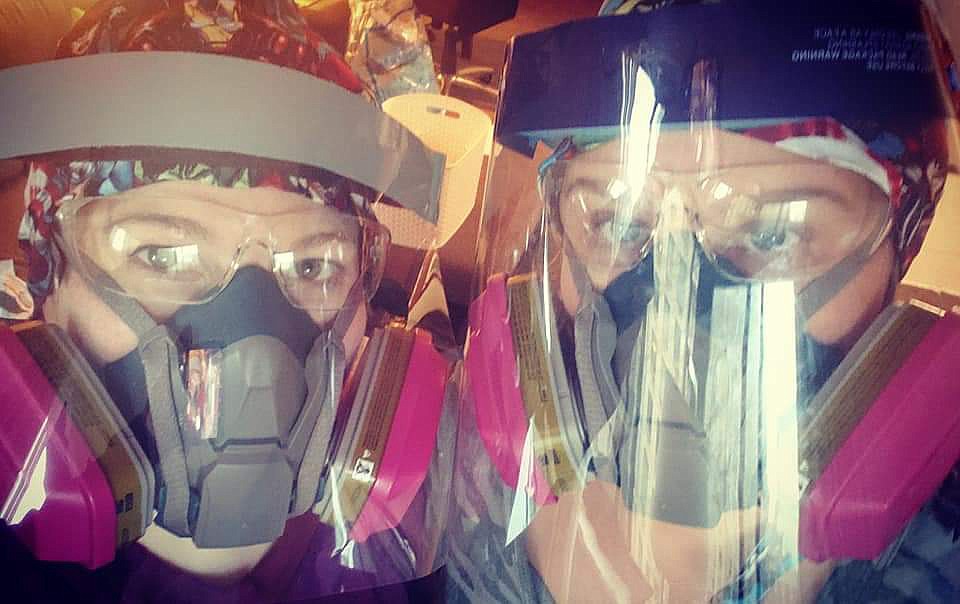
Flathead High School graduate Megan Moore (right) and her friend Wendy Beck in full protective gear while treating COVID-19 patients at New York’s Montefiore Nyack Hospital. (Courtesy photo)
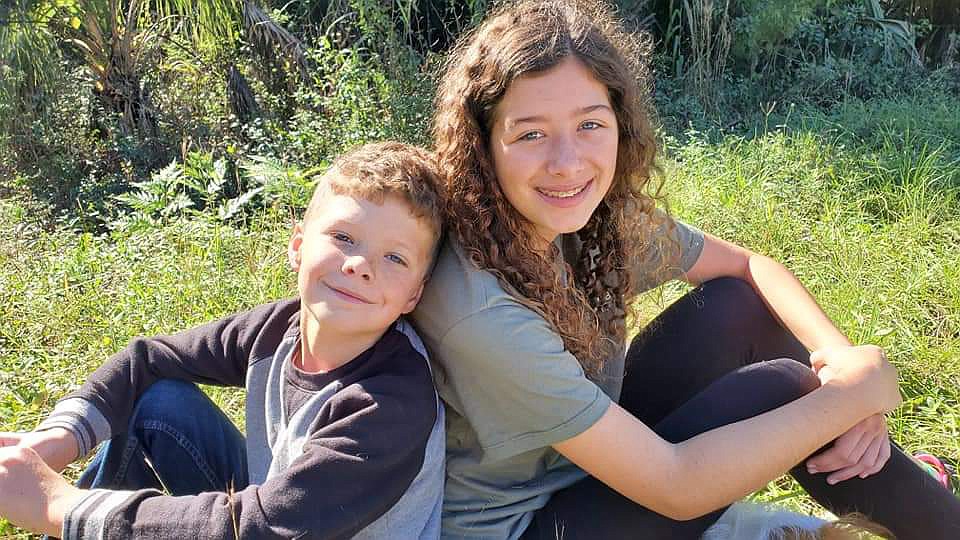
Flathead graduate Megan Moore has not seen her children, Jackson (8) and Lily (15) since she started working with COVID-19 patients more than six weeks ago. (Courtesy photo)
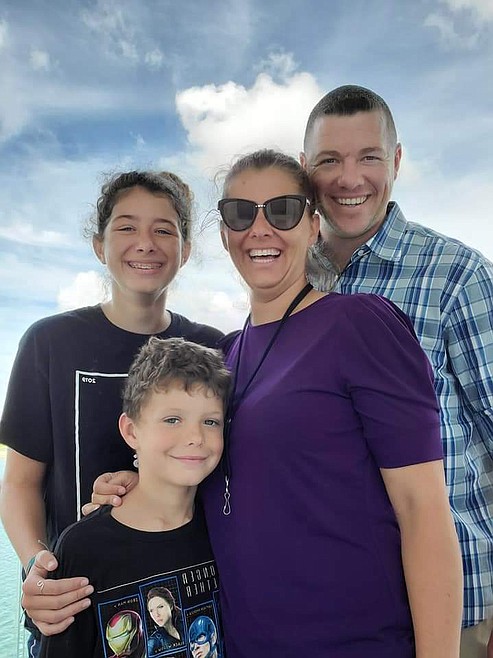
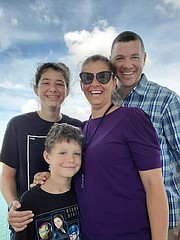
Flathead High School graduate and nurse Megan Moore (center right) has been away from her husband Justin and children Lily (15) and Jackson (8) as she helps in the battle against COVID-19. (Photo provided)
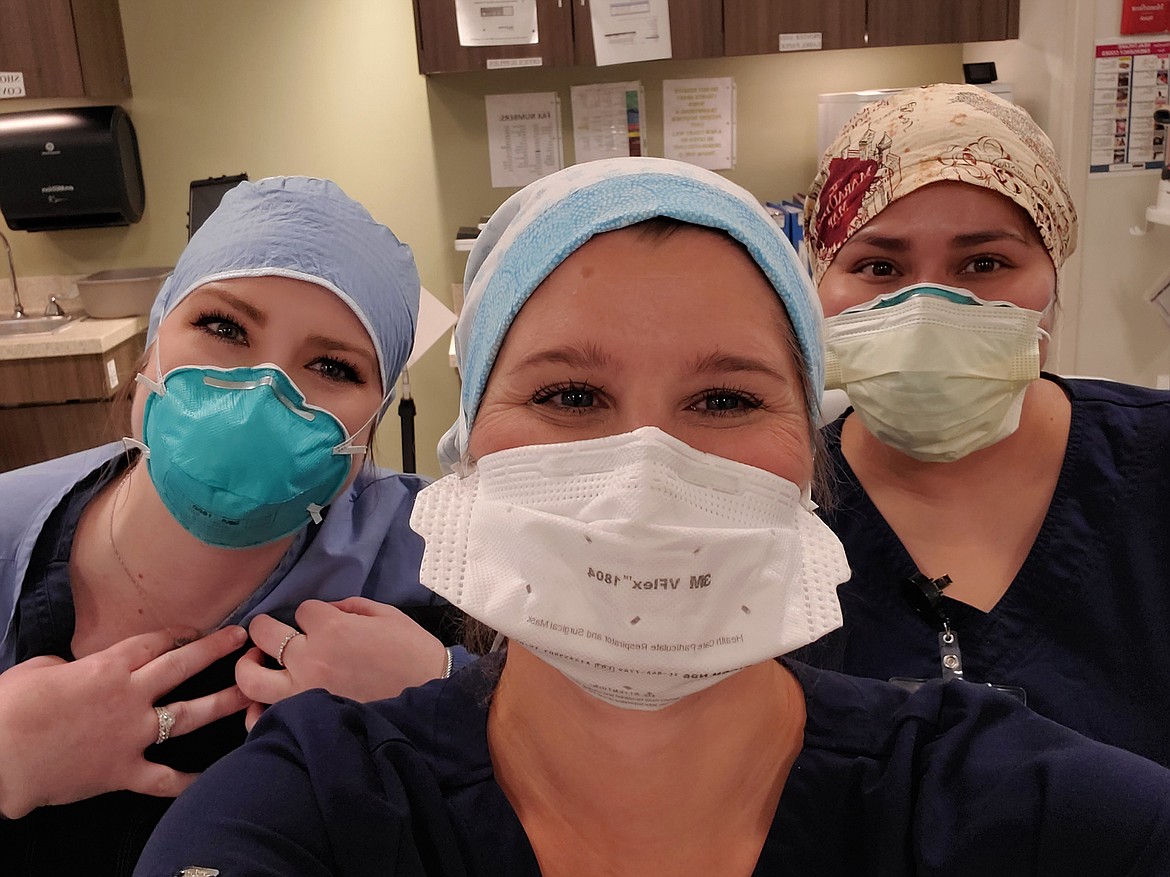
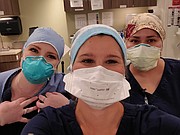
Megan Moore (center) and her fellow nurses Cheyenne White of Georgia and Sarai Vengas of Texas are hard at work treating COVID-19patients at Montefiore Nyack Hospital in New York. (Photo provided)
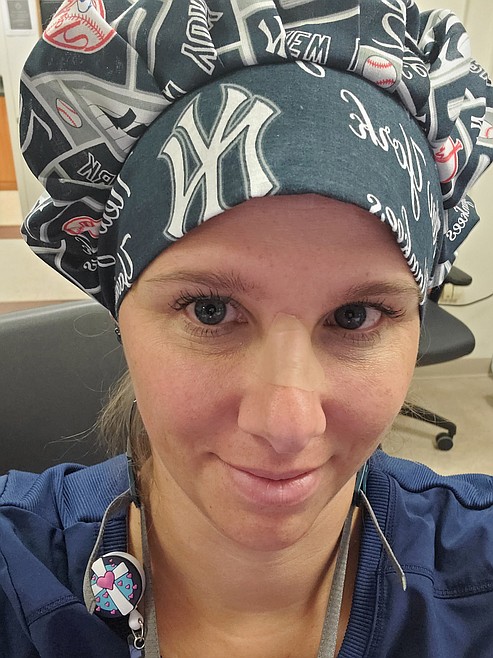
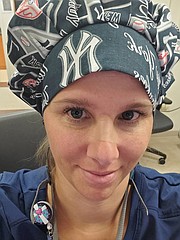
Megan Moore while on shift at Montefiore Nyack Hospital in New York, where she is helping care for COVID-19 patients. (photo provided)
Night has already fallen when ICU nurse Megan Moore begins her shift at Nyack’s Montefiore Hospital, just 20 minutes north of Manhattan in New York City. For nearly three weeks now, the 2000 graduate of Flathead High School has voluntarily been on the front lines of America’s battle against COVID-19.
Everywhere she looks, intubated patients fill the corners of the 391-bed community hospital, one of only two in Rockland County. The ICU units, which once contained just 19 beds, are now bursting at the seams with 47 and in desperate need of more space.
She can only watch as another body bag is rolled down the hallway. It’s not the first time she’s seen one and she knows it is far from the last.
Moore and her fellow nurses are at war, and they know it.
Born and raised in the Flathead Valley, Moore completed her nursing training at San Antonio College in Texas before moving to Florida with her husband, Justin, who serves in the United States Air Force.
A traveling nurse at hospitals in Miami, Moore made the decision to live in a hotel room away from her husband, her 15-year old daughter Lily and 8-year-old son Jackson while dealing with COVID-19 patients and later decided, if she had to be away from home, she might as well go where she was needed most: New York. A deeply spiritual person, Moore prayed with her family before making the decision to accept the job at Nyack.
Within the first 20 minutes on the job, she had already seen her first COVID-19 death in New York. Now, nearly three weeks into her eight-week stint at Montefiore Nyack, Moore said she had no idea what she was getting herself into.
“The first two weeks were just wild. It’s everything you have been seeing on the news. The patients are really, really sick and the doctors and nurses are overrun. It’s just as awful as you have seen on television and in the news,” she said. “It’s nothing short of controlled chaos. Before all of this, our nurse-to-patient ratio was usually two patients for every nurse, but we have had nurses having to deal with as many as eight at a time, which is just insanity.”
MOORE MADE the trip to New York with her friend and fellow nurse Wendy Beck, who came from her job in Arkansas but had spent time working with Moore in Miami. Together, the two spend most of their nights looking after as many as five patients at a time before going back to their White Plains hotel room to grab what little sleep they can. With nurses working 68 hours a week, the hospital has almost become home for most.
“We were scared to even go into the hospital when we first got here. We had so much fear and anxiety even walking through those doors. Now, we are there nearly 70 hours a week and the hospital is more of a home to us than anywhere else. We have learned to relax and live with the anxiety,” Moore said. “It’s like we stepped into a war. It’s hard to think of it any other way. There are bodies being wheeled down the hallway and dying patients everywhere. It’s like a nightmare come to life.”
As bad as it is now, Moore has heard the horror stories from the nurses who were there before her arrival: stories of nights with 10 deaths in seven hours and the times when the staff was stretched so thin that nurses were having to choose who they would try to save when multiple patients crashed at once.
With the hospital promising it has at least four months worth of protective gear on hand for its staff, Moore said her fear has lessened to an extent, but it is always there in the background in a facility that has seen two employees die of COVID-19 with four more staff members currently on ventilators.
Through it all, Moore said the support from friends and family has been overwhelming as she keeps in touch with people by phone, Facebook and video chats.
“I have an overwhelming support group behind me during all of this. My church back home has been incredible. My roommate and I get packages and encouraging mail every day. It has been amazing and I appreciate it so much,” she said. “My son told me earlier tonight that the only reason he doesn’t miss me is because he knows I am saving lives. That makes me feel good, but my 15-year-old also called me in tears, so it is really tough. My husband is in the military, so he understands, but even he doesn’t know what we are going through here.”
MOORE HAS already seen five of her patients die since starting in New York. An ICU nurse for 10 years, Moore has witnessed her share of hospital deaths, but having to call family that could not be there at the end for their loved ones is a new and solemn task.
“It’s an awful duty. As an ICU nurse, we deal with death quite frequently, but not like this — not at these kinds of volumes and not where they are forced to be isolated away from their loved ones,” she said.
There have been two deaths so far that hit her particularly hard. The first came in Miami, before she made the trip to New York. Her hospital’s 37-year-old cardiologist had contracted COVID-19 and had passed it on to a patient before testing positive. The 51-year-old patient shared Moore’s birthday and wound up in her care, where she could only watch as he fought for his life, and lost.
“We did everything we could to save him. We continuously turned him to help him breathe, but he was bleeding from everywhere. It was horrific. It will be with me for the rest of my life,” she said. “It was also the first family that I had to call and tell them their loved one had died.”
The cardiologist who had passed the sickness to his patient died earlier this week.
The second patient Moore confided will stick with her forever was in New York. A man in the step-down unit (the unit just under intensive care) was struggling to breathe, but not yet on a ventilator. To help distract him from his discomfort, Moore engaged him with a series of questions about his family.
“All he could talk about were his two daughters and how special they were to him and how he had prayed for girls,” she said. “He was later moved up to the ICU for two days and it kept bugging me that I was the last face he saw and the last person he had talked to. I was the last person he told how much he loved his family.”
Not knowing what else to do, Moore found the phone number for the man’s wife on his chart and called to relay what the man had said. She tearfully made the call at 8:30 one evening, just four hours before her patient slipped away.
“There are a lot of things that have happened that I haven’t been able to process because we just don’t have time to. I’m not going to lie, there are days when I go to work crying and then I cry coming home,” Moore said. “When my eight weeks here are up and I am sitting alone in quarantine and have time to think about all of this, I think it is going to be quite rough.”
DESPITE THE hard times, Moore said the numbers have let up a bit over the last week, but she is worried about a resurgence as states begin to reopen.
“I understand the economic implications of shutting down. I get it 100 percent. I have friends who are out of work. I see this crisis from the viewpoint of the health-care workers. We as health-care workers can’t emotionally handle a second wave of this. It was traumatic enough the first time around, a second wave would just be too much,” she said. “Just because places like Montana haven’t seen what we are seeing here doesn’t mean it can’t happen. I don’t think we have a good enough handle on how it spreads, our testing for it, how to treat it or how this virus is going to affect patients in the long term. There are just too many unknowns still out there.”
As the country looks to move forward, Moore said it is up to each individual to take the threat seriously and protect themselves and those around them from getting sick.
“People who do not take this seriously make me furious. I understand there are places that are not seeing it like New York, but that doesn’t mean that this virus is not real. It’s not a conspiracy theory. It’s not a hoax. It’s not the government trying to over-inflate case numbers,” she said. “People say I am overreacting because I am in a hotspot, but that should be a warning to everywhere else. This crisis is real and people need to realize that. If you think you are immune to this, you’re stupid.”
Moore hasn’t decided yet if she plans to return home after her first contract with the hospital is up June 15. She said she desperately misses her husband and family, but would feel guilty leaving her fellow nurses behind knowing what they are facing.
“I’m not a hero. I did not run into this situation looking to be a martyr,” she said. “I’m scared, but I am doing what I can to help in the only way I know how and that’s what I am going to keep on doing.”
Reporter Jeremy Weber may be reached at 758-4446 or jweber@dailyinterlake.com.