
Rosie Kenmille, found dead on Flathead Reservation, was ‘very, very loved’
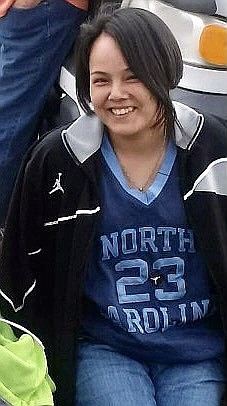
Miranda Rose "Rosie" Kenmille, who was found dead on the Flathead Indian Reservation in November 2020, is seen in a photo provided by her family.
Miranda Rose "Rosie" Kenmille had been wandering too long between worlds, her family said.
Six months after a decomposed body was discovered in Big Arm State Park last November, the family finally got word May 4 that DNA testing had confirmed the dreaded news. The remains were those of their beloved Rosie, now undeniably among Montana's many cases of missing Indigenous people.
The Montana Missing Persons Clearinghouse currently lists 179 active missing person cases, with 57, or 32%, of them identified as Indigenous. Indigenous people make up 6.9% of the state's population.
A cause of death has not been established for Kenmille, and her case remains active. Her family felt it was important that she be buried as quickly as possible once her remains were identified.
"She suffered too long on this earth," said her younger sister, Felicity Caye. "With whatever happened to her and with how long it took us to find her, and how long it took to confirm it was her. In our [Kootenai] culture, we had to get her put on the Red Road to have her go back to her home."
Kenmille was laid to rest on May 8, four days after her identity was confirmed.
"They were waiting for her on the other side," Caye said. "Now she can start her journey and take care of the rest of us, so that we're all looked after."
LOOKING AFTER others was a big part of Kenmille's life.
"She was a very strong, independent woman who was there for everybody and anybody, to help," another family member said. "She had lots of friends. She took care of others' children when they needed it. She was basically everything to everybody."
Rosie was known for many talents, among them dancing Fancy Shawl and a Jingle at powwows, music, beading and baking a wonderful banana bread.
"She was a very kind person, her 'sister's keeper.' She looked out for her younger siblings more than herself," Caye said.
The two girls and their two brothers were raised mostly by their grandparents, Albert and Alma Caye, in Elmo.
KENMILLE WAS last seen sometime late last summer. The exact date proved impossible to nail down.
She had left her mother's home in Elmo on foot one day in mid-August. As an independent 37-year-old woman, she would not have needed to tell anyone where she was headed or who she would visit. With a large, extended family throughout the Flathead Indian Reservation, and reaching from North Dakota to Oregon and Washington, she had visited and stayed with relatives and friends all her life.
So it was at least several days before local family members started to realize no one had seen her in a while. A missing person report was not immediately filed because no one was actually thinking she was missing, just visiting somewhere.
"People forget that sometimes when our family members leave, we let them go with the best intentions. We try not to think of the worst that could happen when they're out there," said Kenmille's cousin, Kayla Ridgley. "When the possibility [of them disappearing] arises, you want to think no, it can't happen to your family. She has to be safe, because you just love her so much and want her to be safe."
FAMILY AND friends started calling each other.
"We had lots of different leads as to who might have seen her last and when," Kenmille's aunt, Selina Kenmille, said. But details were thin. "None of the stories matched up in the beginning. Everyone had a different timeline."
"One story said she went to Washington to stay with some friends, another said they had found her ID and wallet at the Highway Department road shop in Elmo," said a family member. "I wanted to believe the one about Washington."
"The press release said she was only reported a month later, as if no one was looking for her," Ridgley said. "She was very important to us and we loved her very much. As soon as we knew she wasn't with family, we did make the report."
Ridgley, who called Kenmille "sister" ever since childhood, was among those who put "Missing" posters all around the area.
"People were taking her poster down even before the body was found in Big Arm," Ridgley said. "It was worse once the body was found in Big Arm and they assumed it was Rosie. Then they were taken down almost daily. But we didn't know if it was her. It was really frustrating."
She said she continued to put new posters up.
"It's been a nightmare," Selina Kenmille said of the frantic and painful time since her niece disappeared. "Sheer confusion."
Selina Kenmille said she and her other nieces spent "countless" hours gathering information, sharing it with law enforcement and checking back with them, "trying to figure out what was going on." At times, she wondered if everything they reported was being dismissed, as the investigation dragged on. "It felt like it was going nowhere," she said. But the sheriff's office was "so good to us, keeping in touch."
"When we got told it could be seven to eight months [until the body was identified by DNA], that broke my heart because it's hard waking up every day, lost and confused and frustrated," Selina Kenmille said. "I told myself, 'This is just giving you time to prepare for what's coming.'"
"I just hope that other families don't ever have to go through this," she added.
THIS WAS not the first trauma the family had suffered. Kenmille had been injured badly in a car accident in her late teens. Her injuries were severe enough to warrant skin grafts and a metal plate in her head, Caye said. Then, in 2013, Laurence Kenmille, a middle sibling between Rosie and Felicity, was murdered at age 28 by a relative who is now serving life in prison.
Caye and Kenmille both struggled with the loss of their brother, and Caye ended up serving time in prison due to a struggle with methamphetamine. She rarely returns to the reservation now, as she has made a successful life elsewhere and does not want to be faced with the drugs that are constantly trafficked into the area despite law enforcement's best efforts. Through it all, Kenmille gave her sister support. "She was my best friend," Caye said.
"My family has dealt with a tremendous weight of loss," she said. "I can't wrap my mind around it."
ONE FAMILY member said it is common for his family and others to walk the many miles between towns and everywhere. But he worries this may be less safe than in the past.
"Back in the day, it used to be safe to walk," he said. "Nowadays, if somebody's offering a ride, you cannot trust them." He thinks it might be wise to teach families that "when they do this traveling up and down this reservation, go in pairs, always be together, watch out for each other."
"I think about how many times I just decided I was going to go somewhere," Ridgley said, "and I never thought to tell anybody until one of my aunties would call and say, 'Where are you?' 'Oh, I didn't tell you?'"
"Rosie was a beautiful soul in a dark world," Caye said. "She didn't deserve any of this, and her community is so confused with what's going on."
"I want people to understand that she was very, very loved," Selina Kenmille said.