
Montana's healthy wolf population is proof that states can manage grizzlies too
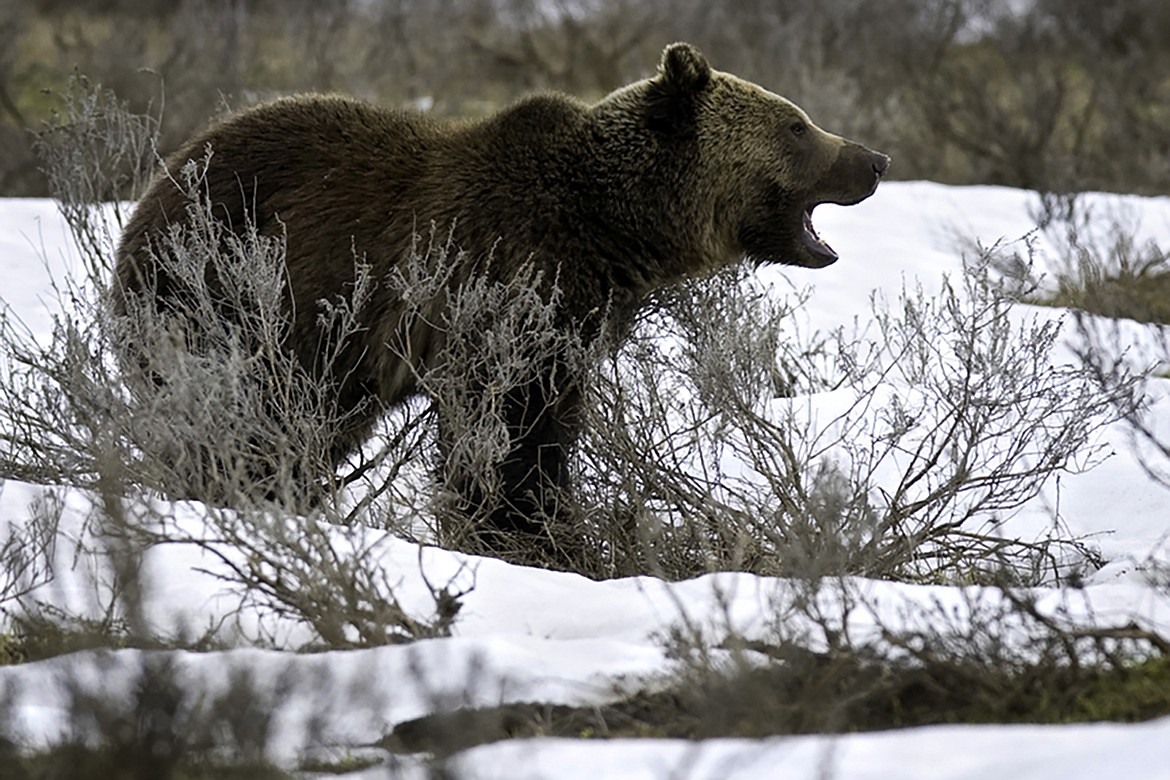
A grizzly bear in Yellowstone National Park. (Jeremy Weber/Daily Inter Lake)
Congress moved a step closer last week to finally removing federal protections for the robust grizzly bear population in the Yellowstone ecosystem of southwest Montana and Wyoming.
The House Natural Resources Committee narrowly approved a measure to reinstate a 2017 U.S. Fish and Wildlife Service decision that delisted Yellowstone grizzlies as a threatened species. Montana Republican Reps. Ryan Zinke and Troy Downing co-sponsored the legislation, which was introduced in January by Wyoming Republican Rep. Harriet Hageman. Zinke, who served as Interior secretary during former President Donald Trump’s first term, played a key role in the original delisting decision.
The bill now heads to the Republican-controlled House, where it is expected to receive strong support. If passed, management of the grizzly population would eventually return to state agencies, where it now belongs.
Grizzly bears in the Lower 48 have made a significant recovery since being listed as endangered in 1975. At one point, the population had dropped to just a few hundred. Today, there are nearly 2,000 grizzlies in the contiguous United States, with about half residing in the Yellowstone region. That figure far exceeds the recovery benchmark of 500 bears in the ecosystem, according to the Fish and Wildlife Service’s 2021 Grizzly Bear Recovery Program report.
Zinke has rightly criticized continued federal protections, arguing that opponents of delisting have shifted the criteria for recovery rather than relying on scientific data.
“If we are managing based on science, there must be an offramp for wildlife on the list once their goal is reached,” Zinke said.
Environmental groups also have expressed concern that states may not adequately protect grizzlies, but that doesn't square with Montana's proven track record with delisted animals.
Since federal protections for wolves were removed 15 years ago, Montana’s population has remained stable at more than 1,000 animals, with half located in the northwest part of the state. The state uses annual hunting and trapping quotas to maintain this balance.
A similar approach could be applied to grizzlies, especially as their range expands into areas they haven’t occupied in decades and as human-bear conflicts increase. A new dashboard launched this month by Montana Fish, Wildlife and Parks tracks grizzly conflicts statewide. So far this year, there have been 66 reported incidents, including 14 in the Yellowstone area. Notably, seven conflicts occurred east of the Rocky Mountains, with one as far east as Havre.
It's clear the Endangered Species Act has worked. Grizzlies are once again roaming far and wide.
Let’s celebrate this achievement and shift the focus to maintaining a healthy and balanced future for this iconic species.