
Runway project: Why July makes sense
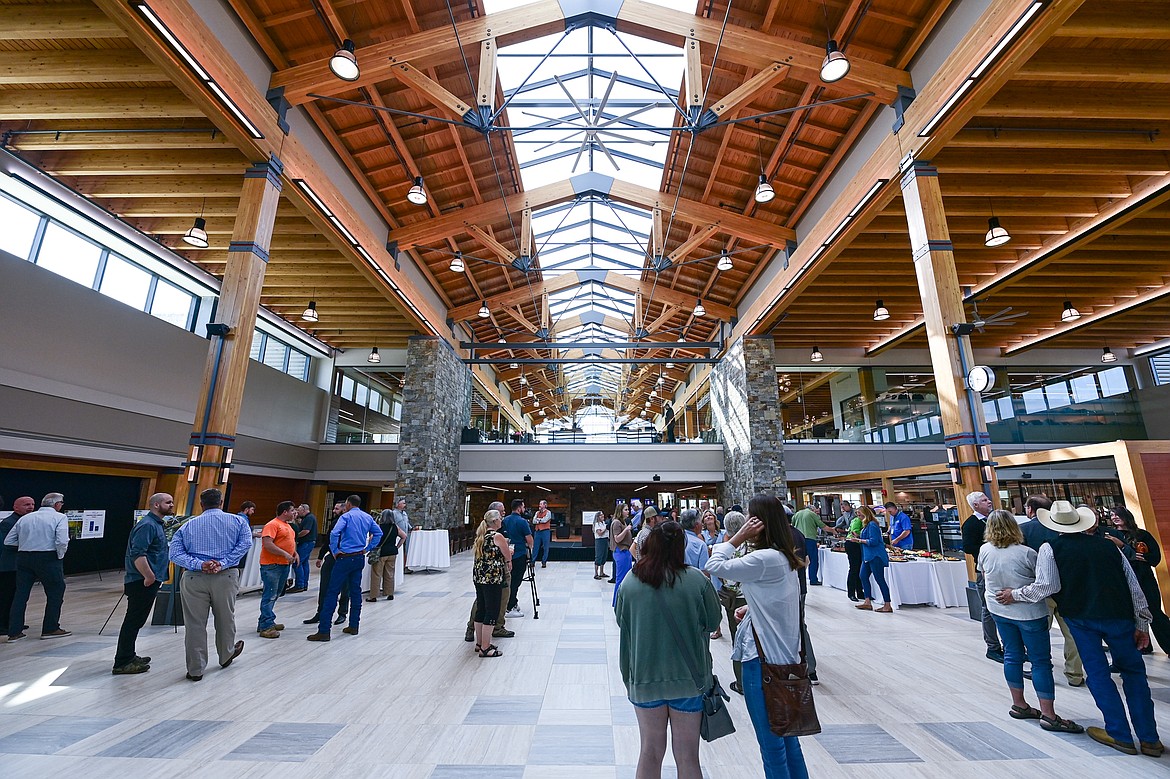
Visitors gather during a ceremony unveiling the central core area of Glacier Park International Airport's terminal expansion project on Tuesday, June 24. (Casey Kreider/Daily Inter Lake)
Casey Kreider
Glacier Park International Airport’s decision to repave its runway next July has local businesses on edge — and justifiably so.
The airport will limit operations for four weeks during peak tourism season next summer, suspending services from Mondays at 6 p.m. through Fridays at noon between July 6 and July 31, 2026.
It’s been 16 years since the airstrip was last rebuilt, and the aging asphalt shows it. For obvious safety reasons, the work must be done — and with a $21 million federal grant secured, the timing is locked in.
After news of the closure broke, the burning question from the local business community was simple: Why July?
It’s the busiest month of the year at the airport — and in turn, the most lucrative for area hotels, retailers, restaurants and outfitters. These businesses rely on the summer surge in visitation to stay afloat.
So we asked Airport Director Rob Ratkowski: Why July?
Like the question, his answer was simple and reasonable: All of the data indicates that completing the project in July will deliver the best results for a long-lasting runway.
Ratkowski explained that specific weather conditions are required to properly resurface the runway to meet federal standards. Namely, temperatures must stay above 50 degrees and conditions must remain dry. That rules out June (too rainy) as well as August and September (too cold at night).
“We need four consecutive weeks that each have four consecutive days of weather that meet those paving requirements,” Ratkowski told the Daily Inter Lake.
If crews are rained out or temperatures dip into the 40s, the project could be delayed — exacerbating the disruption for travelers and businesses alike.
July, it turns out, is the most logical time to get it done.
The plan also minimizes impact by keeping the airport open on weekends, when most leisure travel occurs.
Given all this, the time to second-guess a decision that’s already been made is over. Now is the time to shift into a proactive mode and help local businesses weather the dry spell.
Markets within driving distance — like Missoula, Spokane and Alberta — should receive a jolt of promotional attention to entice regional travelers to visit Glacier Country.
Local chambers, meanwhile, can promote “staycation” incentives for residents who want to enjoy a quieter July. It’s a rare opportunity to experience the valley’s restaurants and amenities without the usual crowds.
Shoulder season events should be put in the spotlight to rev up attention, and ideas for new events (maybe a restaurant week) would be a welcome addition to the calendar.
Instead of dwelling on “Why July,” let’s focus on how to keep the valley’s tourism engine running through this temporary lull. A little creativity can go a long way in offsetting the loss in visitation.