
Evergreen students share their opinions during board work sessions
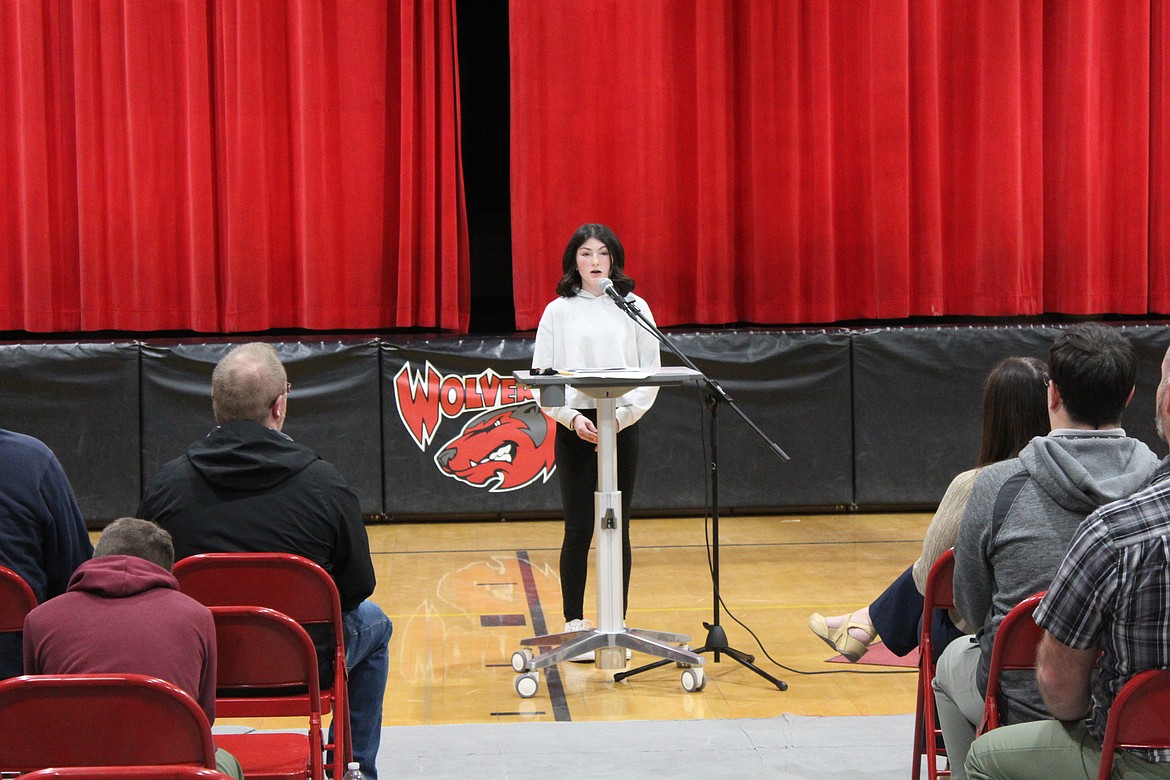
Evergreen eighth-grade student Braelynn Peltier shares her We Want to Play, Too speech. (Courtesy photo)
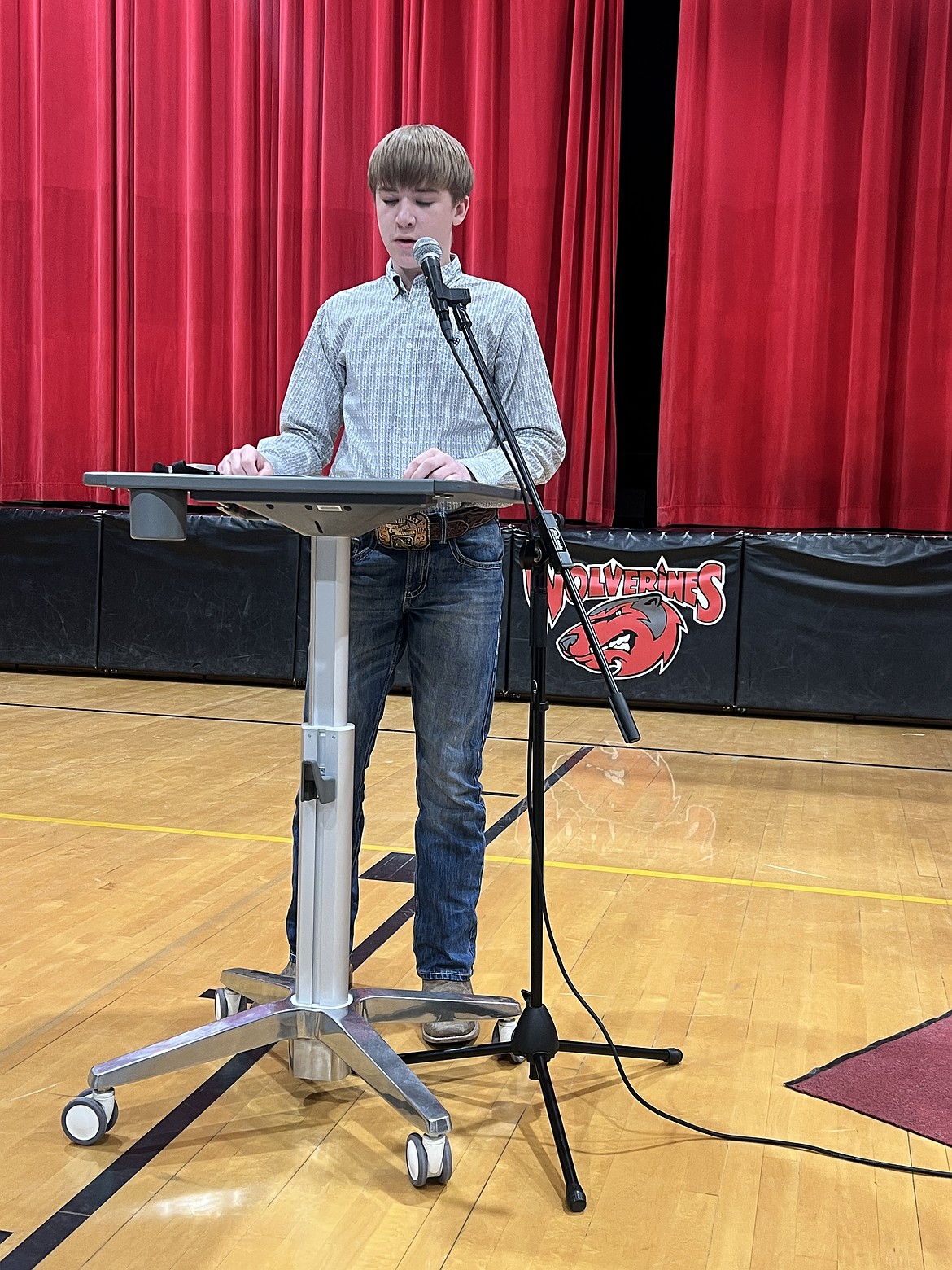
Evergreen eighth-grade student Bentley Bauer shares his Germs Be-Gone speech. (Courtesy photo)
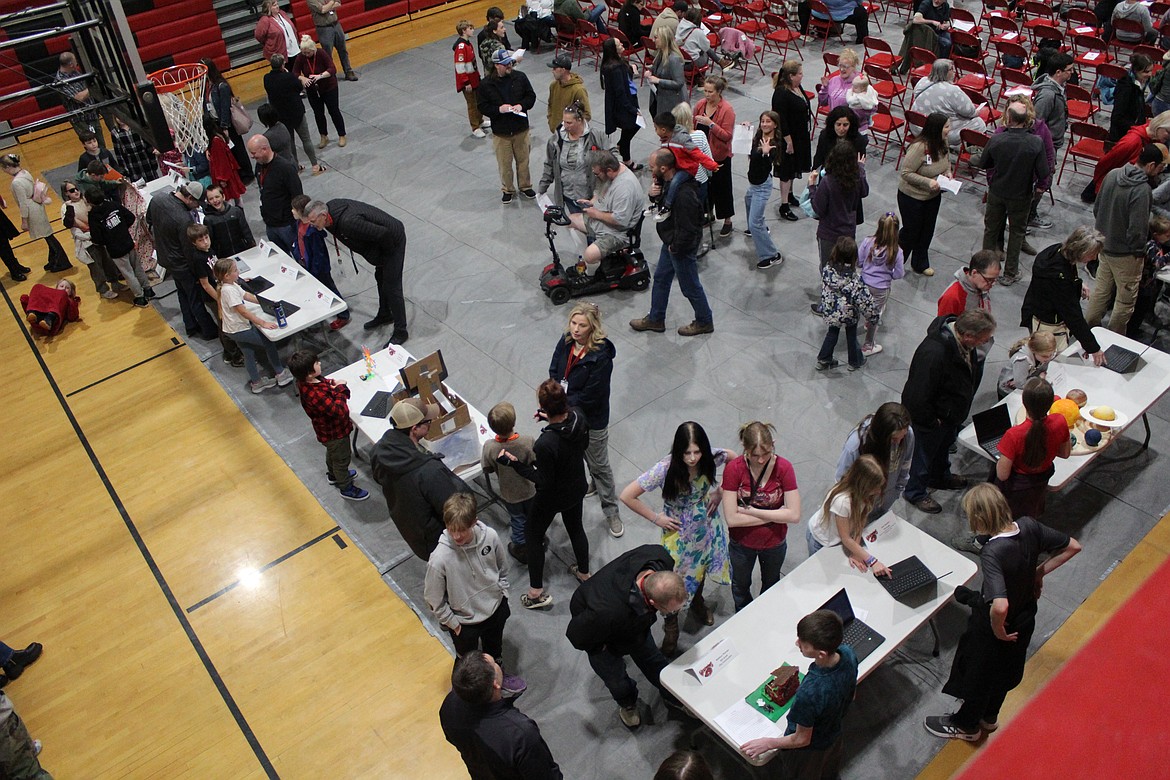
Students, families, staff, and board members enjoy the ACE Expo at the Evergreen School District. (Courtesy photo)
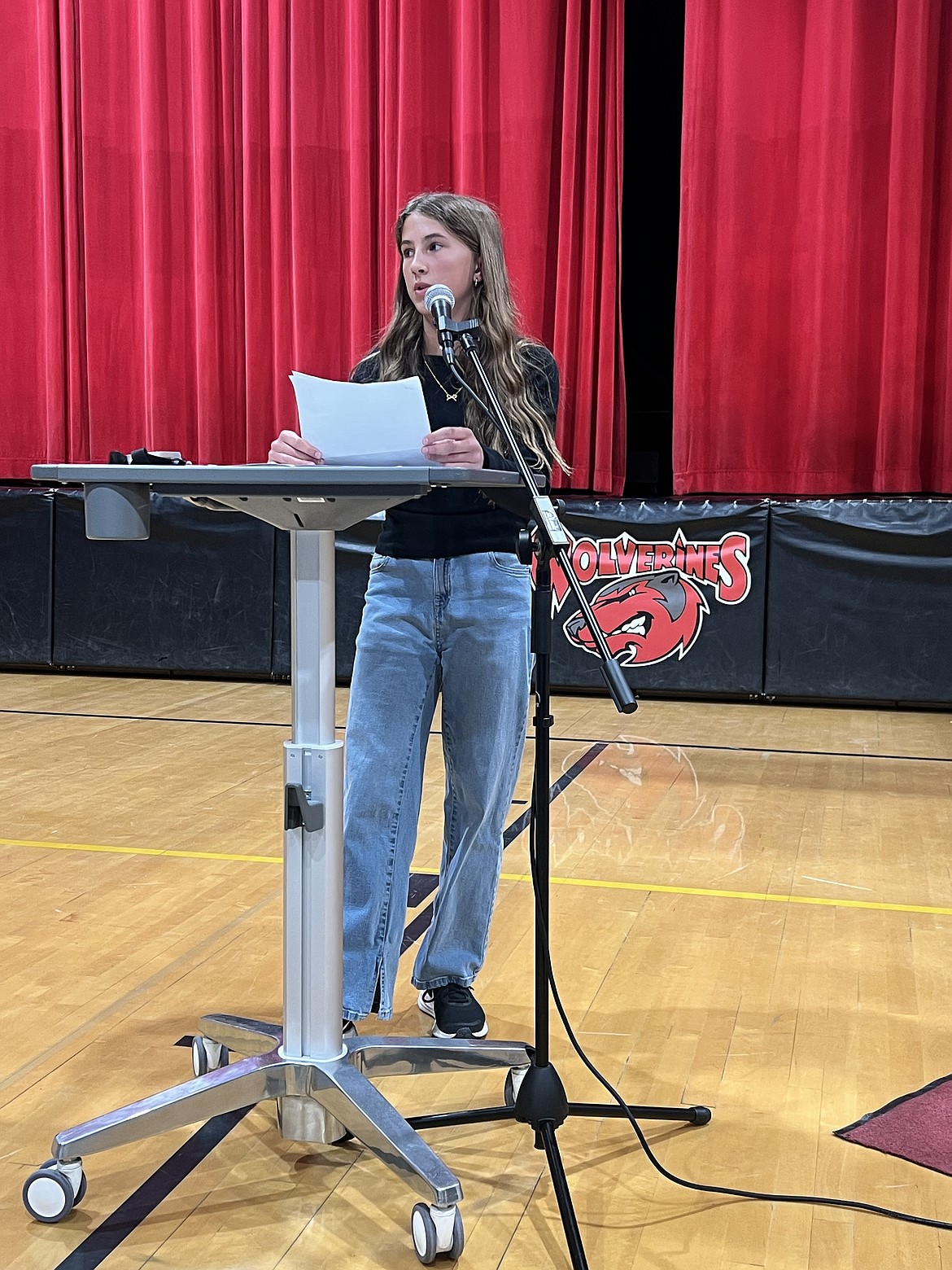
Evergreen eighth-grade student Taelor Boyce shares her Goodbye, Study Hall speech. (Courtesy photo)
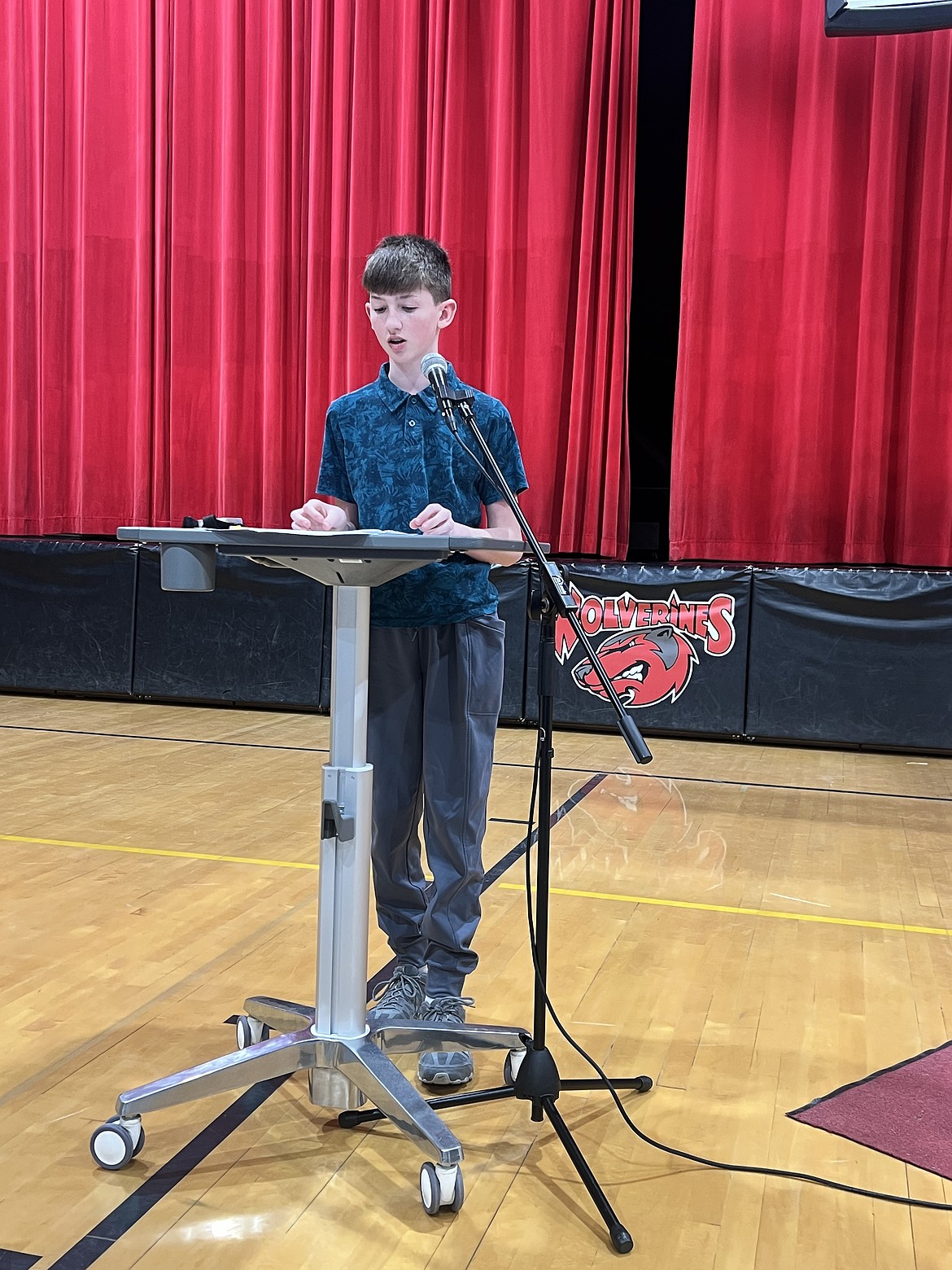
Evergreen eighth-grade student Matteus Thorsen shares his Get Cooking speech. (Courtesy photo)
When you ask students their opinions (and they definitely have them), be ready to listen and act.
In the spring of 2014, the Evergreen School District began hosting Student-Led Board Work Sessions.
These annual meetings now incorporate our ACE Expo (student-chosen projects) and speeches (students presenting persuasive essays for school improvement to align with English language arts standards).
The process of preparing for and presenting to the board of trustees is a serious one and takes time and commitment from students and their teachers to make the student-led session a reality (and a success).
Achieving Content Extensions, known as ACE, is the Evergreen School District’s Gifted and Talented program. It provides opportunities for students to extend learning beyond what they are already doing in the classroom. Starting in September, students meet after school weekly. Many participating students are also involved in other activities, such as sports and clubs, and participate as their schedule allows. This flexibility keeps students coming back.
Students who participate in the program have varying opportunities to engage in their identified area(s) of strength. Students engage in activities that promote higher-level thinking skills, creativity, and problem-solving related to real-world applications and work to complete a passion project or Genius Hour-type project of their choosing and design.
Evergreen Junior High School ACE Coordinator Cynthia Thorsen notes that “While participating in ACE activities or creating and completing their projects, students develop leadership skills within the school and community.”
When students present their projects at the culminating ACE Expo, they share their knowledge, ideas, and experience with board members, staff, students, and families.
Fifth-grade student Thomas Boyce says he really enjoys being a part of ACE because he gets to “be creative and choose from a bunch of different things” and he really appreciates that “all of the kids in ACE are positive and fun to work with.”
As a parent of fifth- and seventh-grade student participants, Melissa Hendrix says that she loves that her children get the opportunity to participate in ACE.
"It gives them some structured time to work on interests and create projects that they then present to and receive feedback from peers and adults at the Expo," she said.
After the ACE Expo portion of the evening, students then share their persuasive speeches. Their work begins long before the board work session when students start preparing in their English language arts class. Students spend time learning and applying the English language arts content standards for reading, writing, listening, speaking, and viewing. They learn standards in a way that matters to them: by picking something that they don’t like or that they want to improve about school and then working to convince others that they have a good idea.
In doing this work, they learn and implement skills in researching, developing, and supporting a topic; reasoning and acknowledging opposing views; understanding the conventions of written language; using appropriate vocabulary, figurative language, voice, and mood; using technology to produce writing; presenting findings with appropriate displays of evidence; and engaging the audience (they have been impressively convincing over the years), just to name a few.
All students in fourth grade and eighth grade write persuasive school improvement essays as part of their English language arts class. Every student researches, prepares, outlines, writes an essay, and shares it as a speech with classmates. Then, classmates vote for the top 10 school improvement presentations presented by their peers at each grade level, and those presentations are then shared formally with the board of trustees, staff, students, families, and community members at the Student-Led Board Work Session in the spring of each year.
For our younger learners in fourth grade, the project starts with a whole class brainstorming session over possible school improvement ideas. The class then narrows down the topics to the four about which they feel the most passionate.
Students then choose a topic from among the four class topics that they personally want to write about, followed by the groups doing a shared brainstorming of reasons why they think that their topic is important. From this point, students choose the reasons that they feel are the strongest to support their thinking. Students write their individual papers but have the support of the group at a level that best fits their needs. During the editing process, students self edit, peer edit, and have teacher editing support. Students share their paper with their groups as well as the whole class, and each class chooses three students they feel best represent them and the ideas for improvement.
Teacher Lisa Mitchell notes the project is amazing for fourth graders.
"This is one of the first times they write in a persuasive style, and to have the authentic audience of both their class and the school board is highly motivating and exciting," she said. "They have a chance to put all of the skills that they are learning into practice: reading, the writing process, typing, collaborative discussion, listening, and speaking all come together.”
For our eighth-grade students (most of whom participated in the process as fourth graders, too), the process for writing persuasive essays to share with the board of trustees is a little more involved. Students start by analyzing past student essays and mentor texts in order to gain a better understanding of task expectations and to inspire topic selection.
All eighth-grade students then review the English language arts eighth-grade performance task primer: You are being asked by members of our school board to help leave a positive legacy at Evergreen Junior High School by producing and presenting a school improvement persuasive essay. Your project should focus on creating positive school change through a topic of your choice. The top 10 projects will be presented in a special session to the Board, faculty, and family members.
In persuasive writing, a writer takes a position on an issue and writes to convince the reader to believe or do something. Persuasive writing is often used in advertisements to get the reader to buy a product. It is also used in essays and other types of writing to get the reader to accept a point of view or take an action. In order to convince the reader, you need more than opinion; you need facts and examples to back it up. So, be sure to do the research!
Persuasive writing follows a particular format. It has an introduction, a body where the argument is developed, addresses any critical counterclaim, and wraps up with a conclusion. After writing an essay, like any other piece of writing, EDIT before publishing the final product. Before starting, check the rubric to see how you will be evaluated. (A persuasive writing rubric and a persuasive speech rubric is used to assess standards.)
Using the performance task primer, students then choose a topic and begin the brainstorming and writing process. Our eighth graders then have the unique opportunity to work with Writing Coaches of Montana, a nonprofit group that trains community members to support public school student literacy.
As eighth-grade English language arts teacher Kara Gronley notes, writing coaches “help students grow as confident, competent writers."
"They coach and mentor students and support teachers through a trained community of volunteers," she said.
The coaching format is provided through a classroom-based, teacher-driven approach, and volunteer coaches meet twice with our eighth graders during the writing and revision process. Once students complete their essays, the top 10 speakers in eighth grade are chosen by students based on their standards based rubric performance as well as their concept originality.
Gronley, who has helped lead this project for the past 12 years, says this experience “is highly motivating to eighth graders, as it gives them an authentic audience and the opportunity to leave a lasting legacy before they move onto high school.”
As eighth-grader Braelynn Peltier shared the opportunity to present to a live audience was fantastic.
"It made writing fun," Peltier said. "I was so glad I got to share my idea to help make our school a better place.”
Eighth-grader Taelor Boyce also really enjoyed the experience.
"The overall experience was great," Boyce said. "It was a little nerve-wracking but really fun. I loved having the opportunity to better the school for future students like my little brother.”
Perhaps one of the most meaningful aspects of this process is that students are working to leave a legacy for others. They are advocating for something that will never benefit them personally, as they will move on to another school at the conclusion of their fourth and eighth-grade years.
As special services director Melissa Hardman shares, “students learn about leaving things better than they found them for the students coming behind them.”
Over the past 12 years, fourth- and eighth-grade students have successfully petitioned the school board for things like building a new district pavilion, adding cross country as a spring sport for K-8 grades, placing additional drinking fountains in hallways, adding flexible seating in classrooms, putting dry erase board student desks in classrooms, creating the Wolverine Den, securing hands-free hall passes, changing the dress code, planting an eighth-grade class tree, adding an American Sign Language Club, improving cleanliness and hygiene in the weight room, placing microwaves in the cafeteria, purchasing new sports uniforms, adding lights to flagpoles, and adding soccer nets to goals, among many other improvements.
The board of trustees has also enjoyed and learned from this process.
Board Chair Tamara Williams has been part of the process for the past 12 years.
“As trustees, our primary focuses are on policies and procedures and to present a balanced, fiscally responsible budget," Williams said. "We don’t often get to see the day-to-day operations of the district or get to spend a lot of time with our students. This is without a doubt one of our favorite board work sessions. It is such a powerful opportunity for students to share their projects and their perspectives and visions with our board and other audience members." "We take each of the requests very seriously with guidance from our administrative team and implement their ideas as we can," Williams added. "From the simplest of concepts to much larger projects, we are always impressed with the practical nature of their ideas and feel honored that they share them with us in this forum. We are so proud of this incredible Evergreen tradition.”
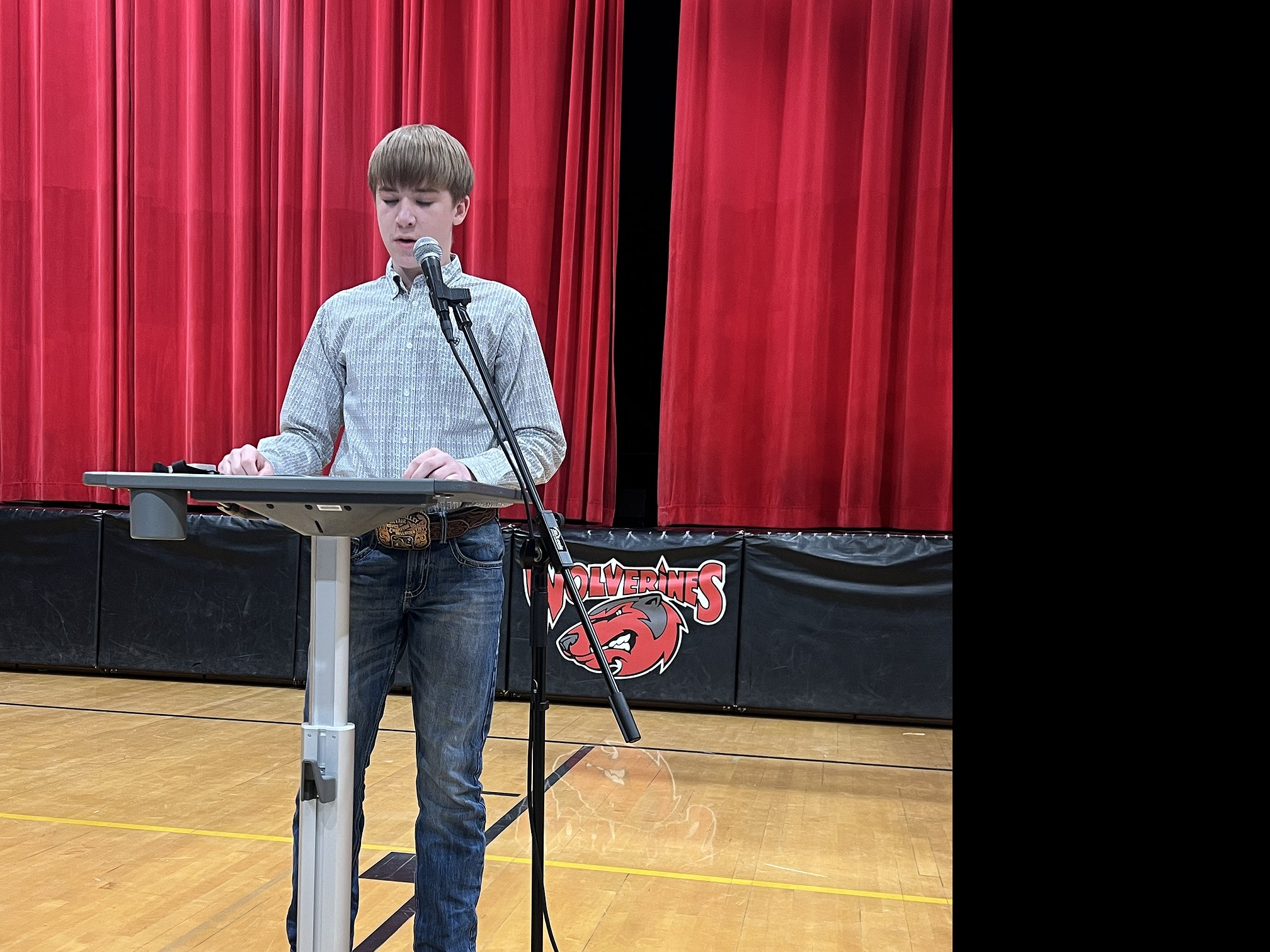 Evergreen eighth-grade student Bentley Bauer shares his Germs Be-Gone speech. (Courtesy photo)
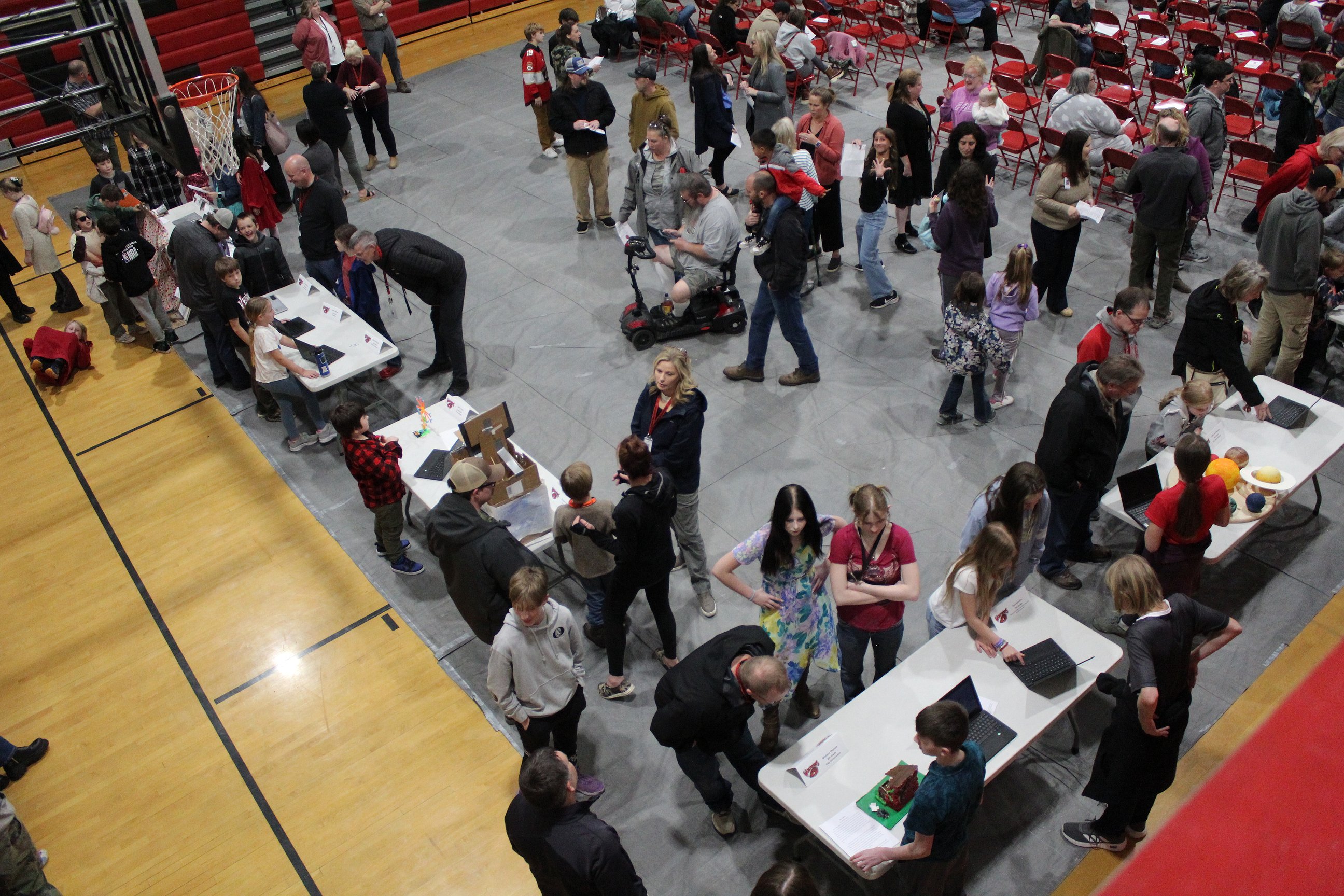 Students, families, staff, and board members enjoy the ACE Expo at the Evergreen School District. (Courtesy photo)
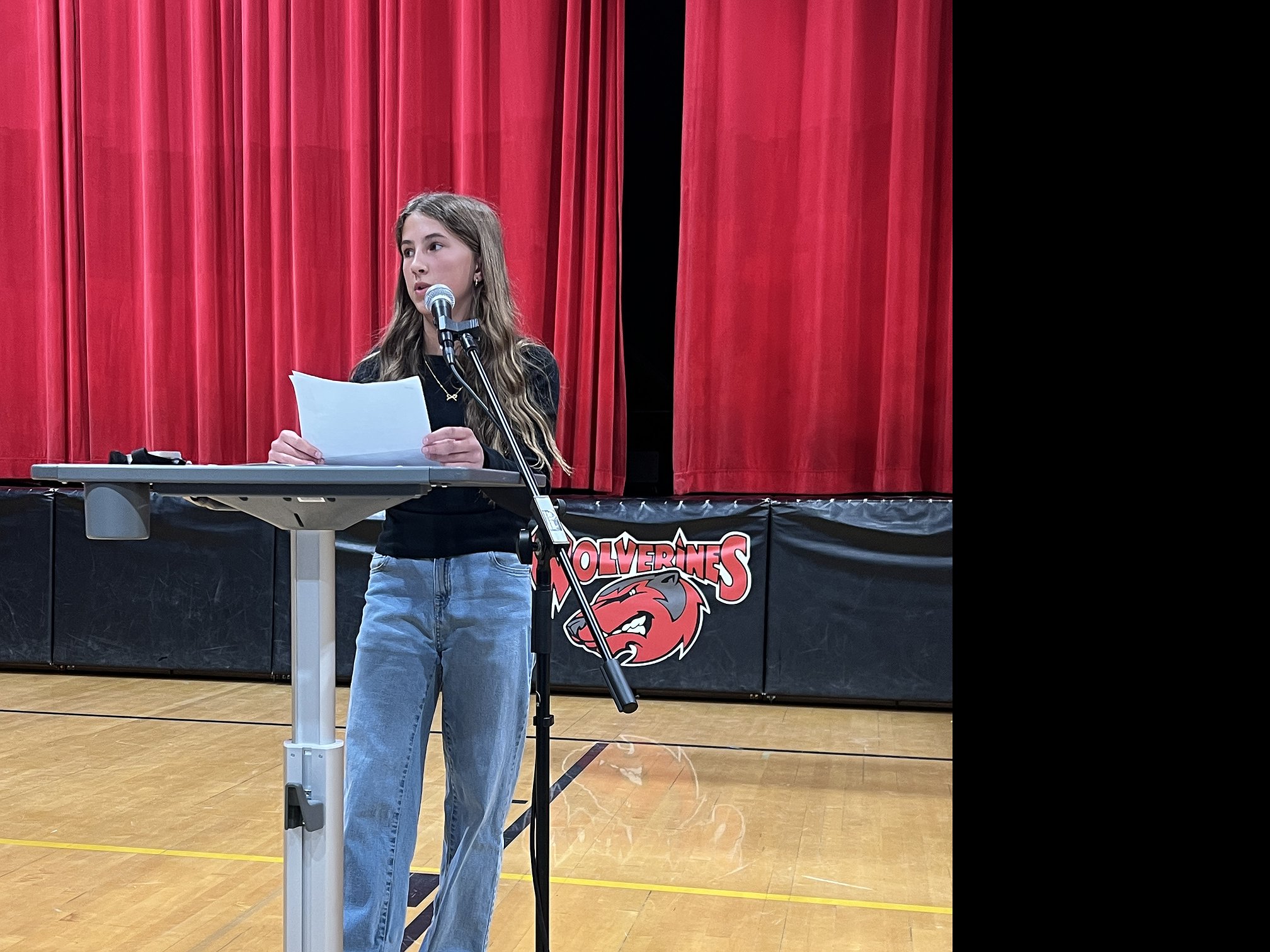 Evergreen eighth-grade student Taelor Boyce shares her Goodbye, Study Hall speech. (Courtesy photo)
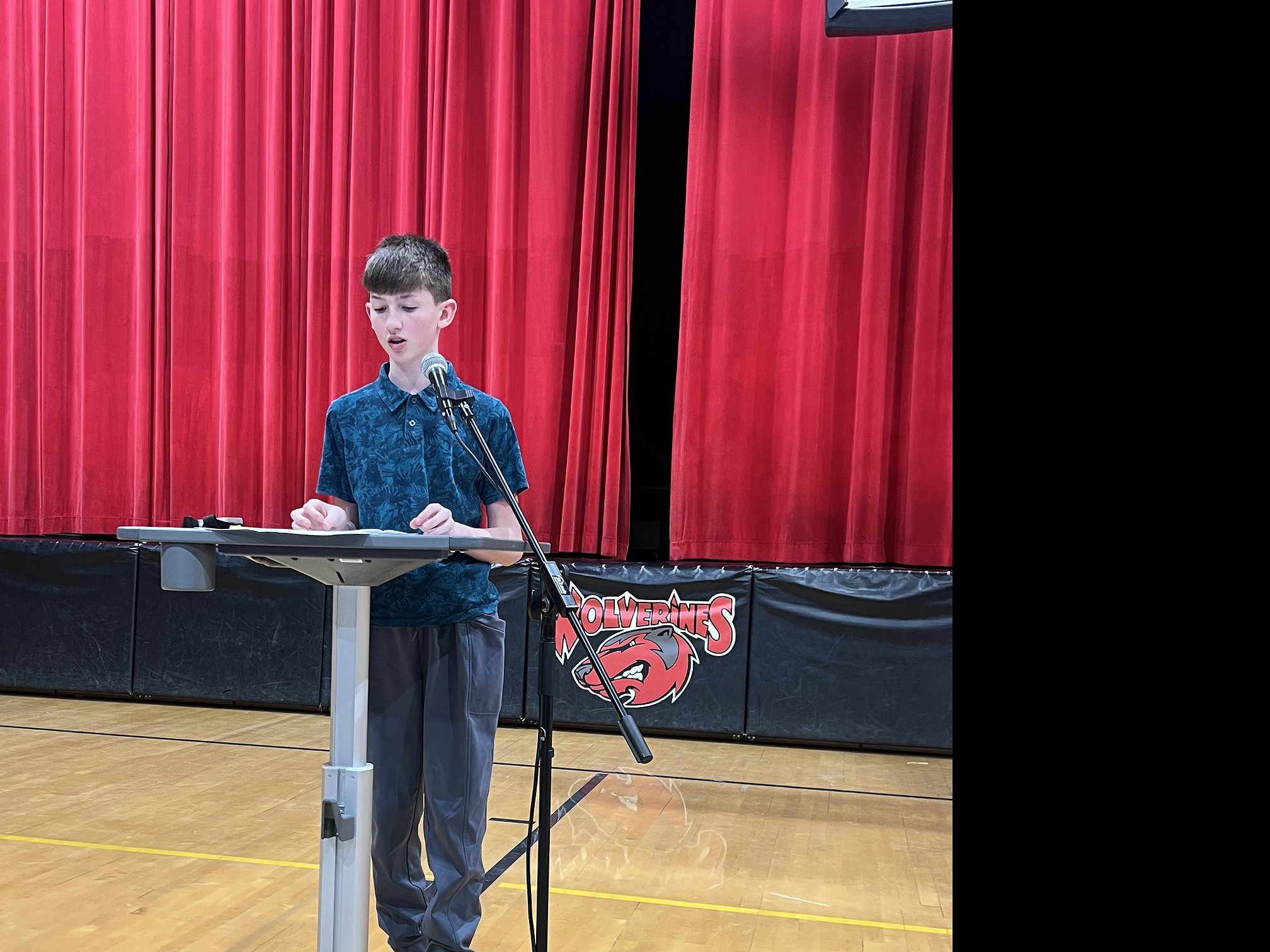 Evergreen eighth-grade student Matteus Thorsen shares his Get Cooking speech. (Courtesy photo)