
Tariff rollback will deliver mixed results
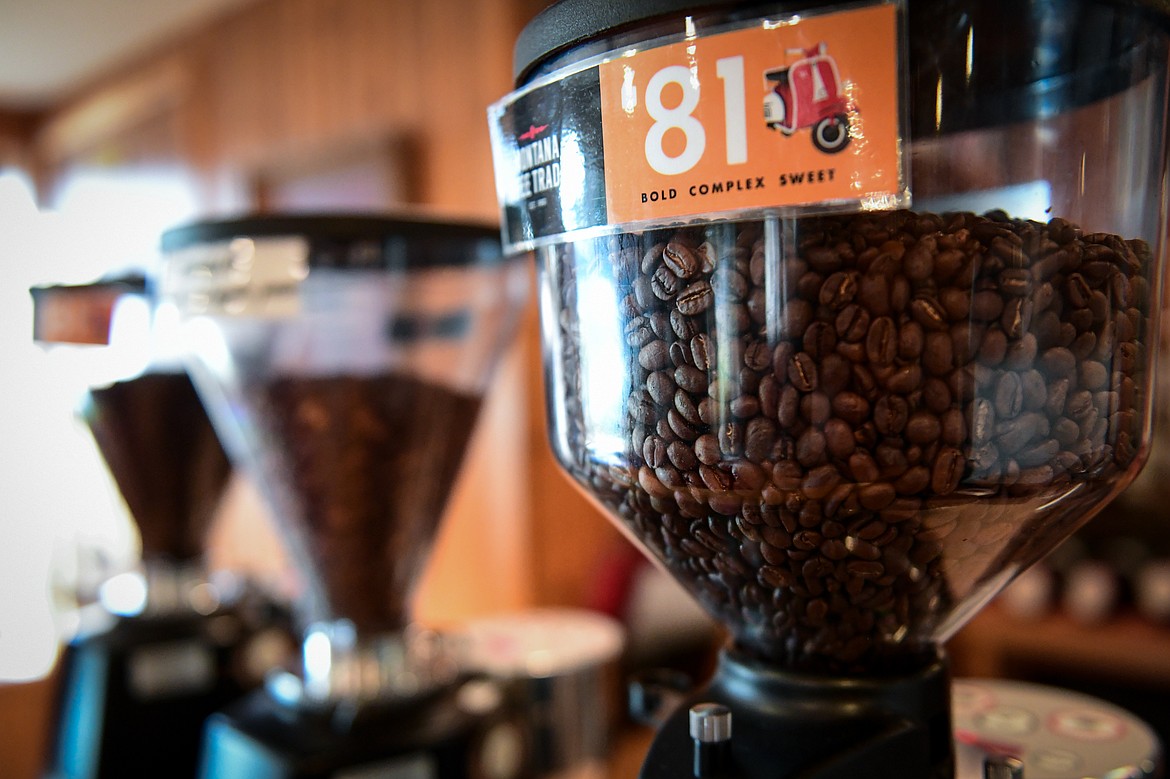
Coffee beans on display at Montana Coffee Traders Roastery and Cafe in Whitefish on Friday, Nov. 7. (Casey Kreider/Daily Inter Lake)
Casey Kreider
The Trump administration late Friday rolled back sweeping reciprocal tariffs on a pantry full of commodities in an effort to curb soaring grocery prices. Fruit, beef and coffee are among the products that will see import taxes scrapped.
For latte lovers and local coffee roasters, the news is grounds for celebration.
Coffee prices have surged to record highs since Trump imposed tariffs on three of the largest bean exporters — Brazil, Colombia and Vietnam. Those steep levies hit importers hard, as there are few domestic sources of coffee. Hawaii is the only state with a climate suitable for commercial bean production, meaning Trump’s coffee tariffs were largely punitive.
Not surprisingly, coffee drinkers and roasters bore the brunt of the import tax.
Uptown Hearth in Columbia Falls saw its prices rise about $3 a pound this year. Despite efforts to absorb costs through creative sourcing, some increases were passed to consumers, who now pay about 50 cents more for a cup of joe.
“We’re still trying to keep it as low as we can,” said owner Chas Brandt.
Montana Coffee Traders in Whitefish faced similar challenges, implementing a small price hike on beans earlier this year to offset tariffs.
Economists say it will take time for the coffee market to recalibrate after the welcome rollback, but eventually it should result in savings at the local drive-through.
We’ll drink to that.
Unfortunately, beef consumers are unlikely to see much savings — if any. Beef prices have soared this year, driven by limited cattle supply and rising demand.
The average cost of a pound of ground beef today — $6.33 as of September — is about 55% higher than five years ago.
But with domestic cattle accounting for most of the nation’s beef supply, halting tariffs will have minimal effect on store prices. In fact, ranchers worry that encouraging imports could undercut U.S. cattle producers who are finally hitting sustainable margins after years of tough markets.
Instead, they point to the so-called Big Four meatpackers — JBS, Cargill, Tyson Foods and National Beef — as the source of consumer pain.
The group dominates nearly the entire beef processing market, limiting bargaining power for cattle producers on one end of the supply chain while squeezing consumers on the other.
“We’re at the mercy of the Big Four packers,” said Flathead Valley cattle rancher Mark Siderius.
Montana Republican Sen. Tim Sheehy reportedly met with Trump earlier this month to discuss the Big Four’s market manipulation and the critical need for reform. Montana ranchers and independent processers deserve a level range.
In the meantime, some producers like Siderius are bypassing the packing cartel and working with direct-to-consumer processors such as Glacier Processing Cooperative in Columbia Falls. Consumers, too, can wield the power of the purse by supporting small Montana ranchers who feed the community and nation.
Until Congress backs meaningful reform, buying local remains the most powerful way to loosen the Big Four’s monopoly grip.