
A challenging route up Glacier's Mount Saint Nicholas
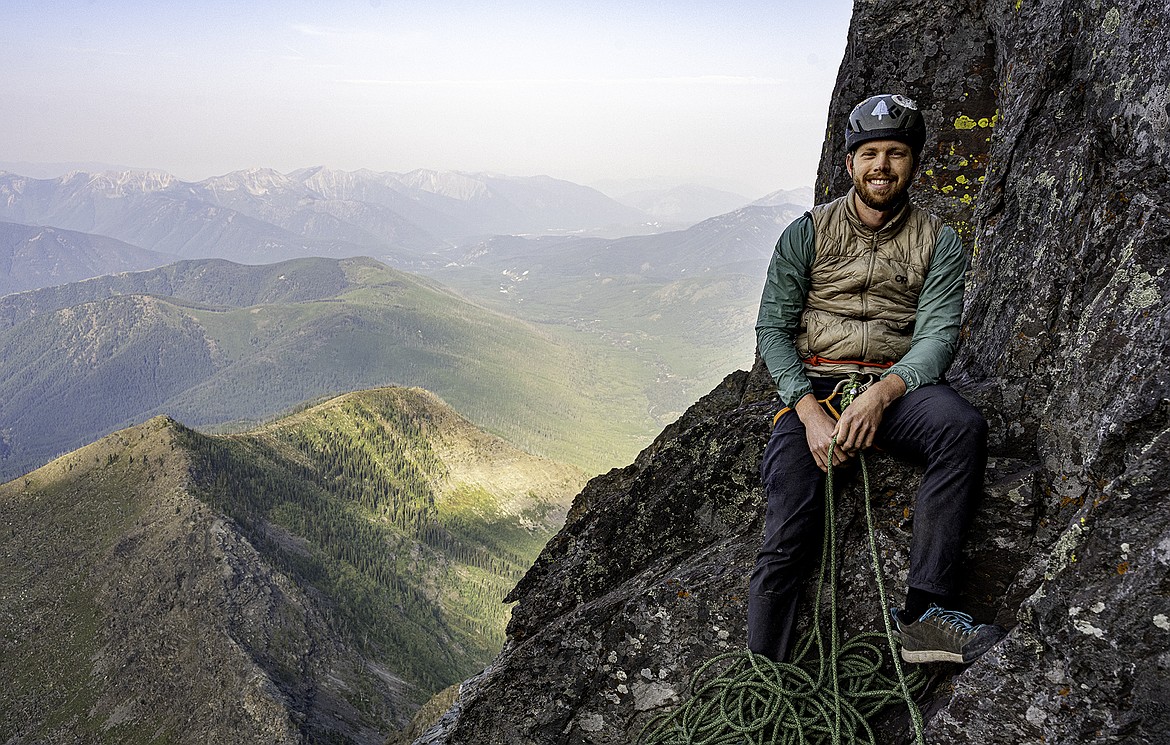
Adam Cazell at a comfy belay while climbing the southwest face of Mount St. Nick. Seth Anderson Photo.
SETH ANDERSON PHOTOGRAPHY
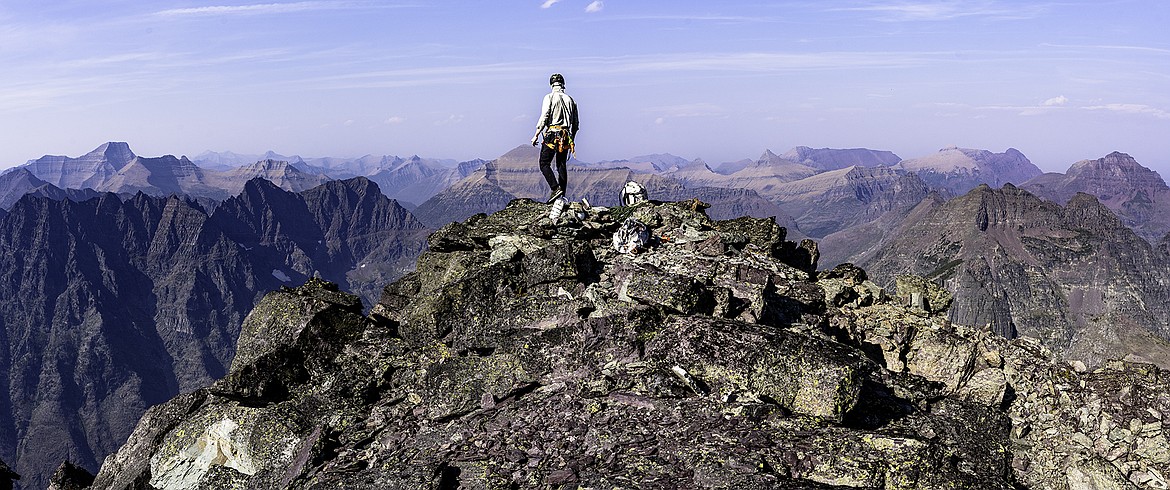
Adam Cazell enjoys the panoramic view from the top of Mount St Nick in Glacier National park after asceding its southwest face. Seth Anderson Photo.
SETH ANDERSON PHOTOGRAPHY
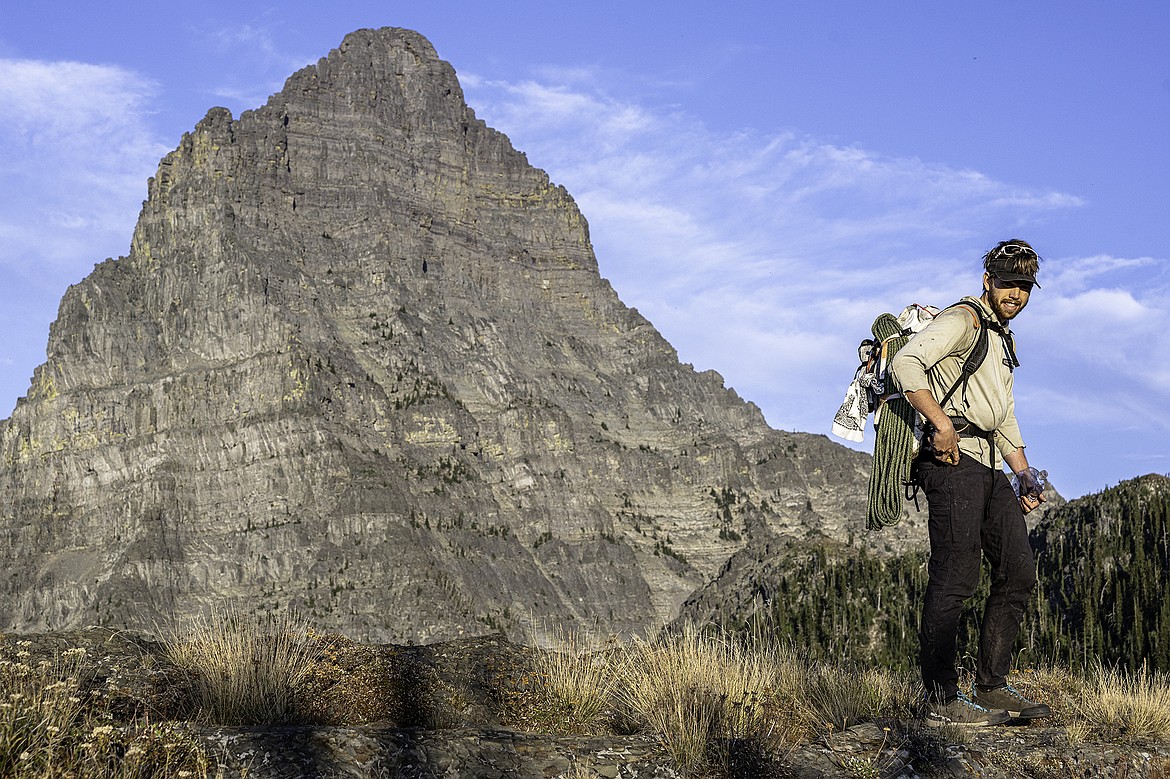
Adam Cazell and the Southwest face of Mount Saint Nicholas in Glacier National Park. Seth Anderson Photo.
SETH ANDERSON PHOTOGRAPHY
Sheer, foreboding, and guarded by an uncompromising bushwhack, Mount Saint Nicholas is the epitome of Glacier Park alpinism.
Driving east along U.S. 2, Mount Saint Nicholas beckons from the isolated southern end of Glacier as a solitary citadel of stone, jutting ever skyward. Nick is one of a handful of Glacier Peaks with no easy way to its summit. Technical skills, bullheaded persistence and a bit of luck are required to stand atop its 9,376-foot summit.
Since its first known ascent in 1933, St. Nicholas, with its countless spine-chilling faces, has remained a beacon of alpine climbing in Glacier Park. Its most infamous aspect being the southwest face, visible from U.S. 2.
The southwest face was first climbed in September 1974 by legendary Glacier climbers Terry Kennedy and Steve Jackson, and seconded in June of 1986 by renowned Flathead climbers Ted Steiner and Kenny Kasselder. They also climbed the face in the summer of 1987. During the ‘86 ascent, the climbers battled ferocious thunderstorms that threatened their lives. The storm resulted in a prolonged waiting game just below the summit before they could continue down the southwest face.
Those early ascents were incredibly daring, especially considering the gear and tactics climbers employed in the 1970s and 1980s. Pitons, mountaineering boots, and limited weather forecasting only added to the uphill battles these pioneering climbers faced. Steiner recalls the ascent as the best alpine climb he has ever embarked on. Since 1987, the face has remained potentially untouched.
Returning to the present day, Adam Cazell and I thrashed our way through the Muir Creek drainage, finding ourselves at last beneath the face that had occupied our imaginations for years. Ultralight gear, sticky rubber shoes, instant weather reporting, and Jerry Garcia tunes at our fingertips had us far better adapted to challenge the great Nick than our predecessors.
Reaching camp below the peak, we watched as the last glimmers of orange alpenglow danced across the heavily featured face of the Saint. As usual, when facing a serious alpine ascent, we tossed and turned throughout the night, anticipating what the brooding face had in store for us the next morning.
We started our ascent by scrambling up a ramp that bisected the face, following the path of least resistance. This brought us below a prominent purple band of steep rock. From there, we racked up and began belaying the first of six roped pitches. Steep and tenuous climbing through downsloping, shingle-like rock had my heart racing as I tiptoed through a final loose roof capping the corner. From an expansive ledge atop the pitch, a three-piece anchor was constructed.
An antique rappel anchor, likely left by Steiner and Kasselder, also awaited us at the far end of the ledge.
We were following in the footsteps of the great climbers that came before us, standing on their shoulders and exploring terrain few people have ever touched with chalk-covered hands. The rest of the harrowing face loomed overhead, seeming to reach towards the sky forever.
From here, the technical crux awaited. Steep lie-backs, strenuous jams and careful climbing through loose blocks stood between us and the upper cleft we aimed for. Placing ample amounts of ultralight protection along the way, we executed the pitch without a hiccup and found ourselves in the middle of the southwest face of St. Nick.
From atop the crux, Cazell traversed out of sight and stretched the rope to a comfortable belay through quality rock and great jamming. Next, I shimmied to an impasse after following a direct route upward through a wide section of climbing that was guarded by a steep overhang.
A karate kick across the expanse of the entire pitch to bypass the dead end proved the most phenomenal climbing sequence either of us had ever done. Hauling our packs and parting ways on a scree-covered shelf, Cazell took the sharp end through a quality and compact pitch where we discovered another fixed piton mid-route.
The summit crest was now in sight. I followed the pitch to find Adam with a grin plastered wide across his face, the sounds of Mr. Garcia’s guitar echoing from the recess he sat beneath. A final pitch and short scramble through splitter cracks made for a storybook ending to what was the best rock climb we’d survived in Glacier yet.
The surreal panorama stretched outward as far as the eye could see; we sat in disbelief. We had successfully climbed the coveted southwest face of Mount Saint Nicholas.
Following our noses, we crossed paths with history countless times during our ascent, sans any beta from previous parties. Years of cultivating a strong friendship and reliable climbing partnership led us to fulfilling our dreams on St. Nick. The dreamlike moment was capped off as we embraced, 9,376 feet in the sky.
Without the inspiration from those who came before us, it’s unlikely we would have dreamed so big. Everything we accomplished ascending this face was done 51 years prior, but it felt as if Kennedy, Jackson, Steiner, and Kasselder all stood there with us, rejoicing together and sharing the knowledge of what only St. Nick’s jagged west face could teach us.
Note: Glacier National Park climbing is shrouded in secrecy. Therefore, the claimed ascent described in this article is characterized as the fourth documented ascent of the southwest face, as certainty is not possible with GNP alpinism.
 Adam Cazell enjoys the panoramic view from the top of Mount St Nick in Glacier National park after asceding its southwest face. Seth Anderson Photo.
SETH ANDERSON PHOTOGRAPHY
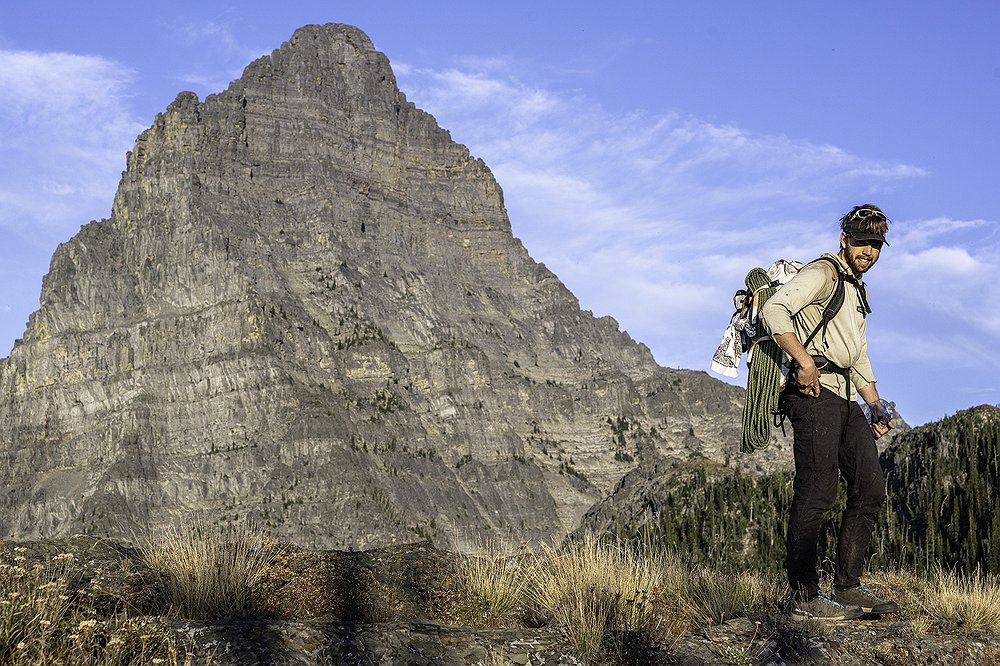 Adam Cazell and the Southwest face of Mount Saint Nicholas in Glacier National Park. Seth Anderson Photo.
SETH ANDERSON PHOTOGRAPHY