
Bigfork voters must consider the long game
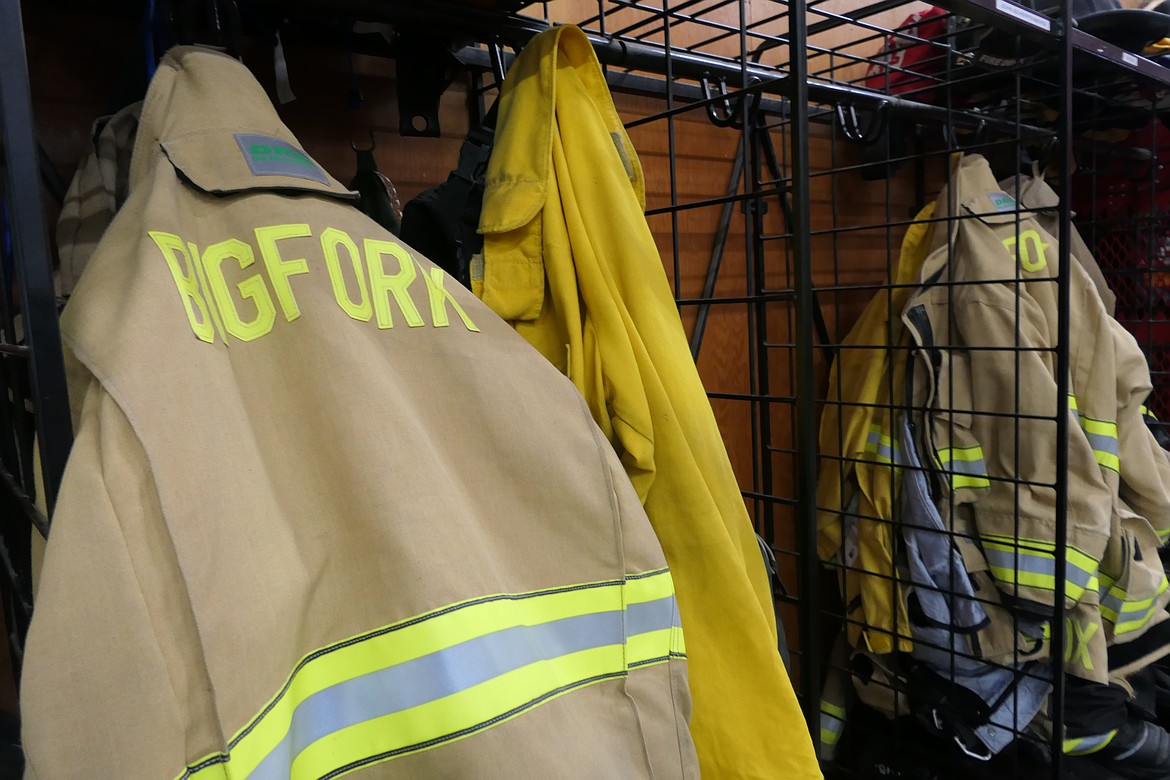
Bigfork Fire's firefighter gear hangs beside the vehicle bays. (Taylor Inman/Bigfork Eagle)
Bigfork residents are feeling the sting of growth as the unincorporated community’s fire department seeks funding for a new station and additional staffing to meet rising demand.
No longer the sleepy art enclave of past decades, Bigfork has been discovered. Population estimates now top 5,100 residents, and Census data shows the community grew by nearly 400 people over the past five years alone, placing it among the fastest-growing areas in the state.
With that growth comes increased strain on public infrastructure and greater demand for services — an inescapable reality.
In response, Bigfork Fire has proposed an ambitious plan to address these growing pains now and into the future.
The proposed $15 million bond would fund construction of a 24,000-square-foot station with five bays for emergency vehicles and second-floor living quarters. Officials say the facility is designed for a 50-year lifespan — outlasting the age of the department’s current station.
A separate mill levy would generate about $1.2 million in its first year to boost staffing and raise wages. Bigfork firefighters currently start at $19 per hour, a rate that can’t compete with neighboring departments, making retention a serious challenge.
Yet, notable critics of the bond and levy have emerged, including Dan Elwell, a former Bigfork Fire board member and volunteer firefighter, and Doug Averill, owner of Flathead Lake Lodge. Both argue the proposals are too grand for Bigfork’s needs and would burden taxpayers already grappling with rising property taxes.
The 20-year bond alone would add about $137 annually to the tax bill of a $600,000 home — roughly the median value in Bigfork. The mill levy would tack on another $142 per year.
Those figures will weigh heavily on voters as they fill out their ballots.
Still, voters must consider the long game. Demand for services is only going to increase. What might the tax impact look like if the proverbial can is kicked down the road five or 10 years? How much more would the same project cost then?
Recent examples suggest that what once seemed extravagant can age into fiscal prudence. Whitefish, for instance, built its 32,600-square-foot Emergency Services Center in 2009 for roughly $8 million. More than 15 years later, few residents would argue it wasn’t a shrewd investment.
Averill also compared Bigfork’s proposed station size to Bozeman’s — a flawed comparison. Bozeman is served by three stations, while Bigfork Fire alone covers a rural fire district spanning 75 square miles and an EMS district encompassing 186 square miles.
Constructing and staffing a station to meet the district’s public safety obligations will only become more expensive as costs rise and Bigfork continues to grow. As Friends of Bigfork Fire President Jim Sticka said, "There's no time like the present to make things happen."
"If this gets postponed and then in five years, they bring up another bond issue because they just can't operate out of that location anymore, the costs are just going to be that much higher," he said.
Bigfork Fire is hosting an open house today, Sept. 7 from 1 to 5 p.m. Ballots must be mailed or delivered to the elections office by 8 p.m. on Tuesday, Sept. 9.