
BNSF addresses utility permit issues raised by lawmakers, Montana cities
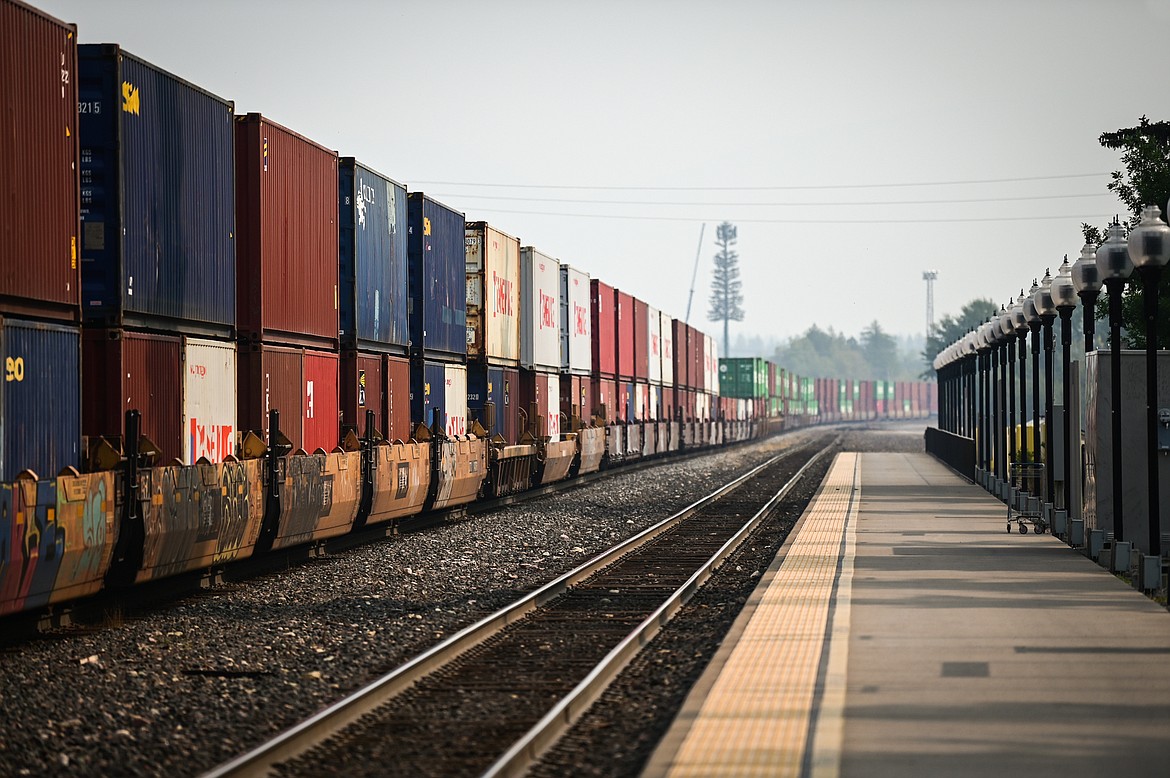
A BNSF freight train at Whitefish Depot on Wednesday, Sept. 14. (Casey Kreider/Daily Inter Lake)
Burlington Northern Santa Fe Railway officials told lawmakers they would “dig in” to solve utility easement concerns raised by leaders of multiple cities and organizations — but also defended its “good outcomes” and said the easement process is complicated.
Those problems, raised at an earlier meeting of the Legislature’s Energy and Technology Interim Committee, include high fees for permits and a lack of consistent communication from the company on active projects.
City officials from four different Montana towns have brought issues to the Legislature.
Several BNSF employees spoke to the committee on Tuesday. The issue of easements, which also touches the state’s efforts to increase rural broadband, came to a public head earlier this summer during another ETIC meeting.
BNSF defended its process, saying how to grant easements, and running cables near tracks, is complicated because it needs to be safe and pointed to examples of where they’ve had successful partnerships. Consistency with the permit process, including communication and how much the utility permits will cost, has been the crux of the issue.
“The vast majority of those permits are processed and completed within a reasonable amount of time and allow for good outcomes on those projects,” Matt Jones, a BNSF lobbyist told the committee. “We also work with cities and towns local governments on a wide array of other real estate projects, and we are committed, as with the utility permits with these other community-based projects, to good outcomes, and we often are willing to agree to low-cost leases, often donations in order to get these projects done for the benefit of the community.”
As for two towns — Thompson Falls and Colstrip — that had serious concerns with the BNSF permit process, Jones apologized and said he’d “dig in” to see what went wrong. Thompson Falls waited months for communication from BNSF, while Colstrip was forced to pay an expensive fee for a utility permit. In Colstrip’s case, the project was being funded by grant money that had an expiration date — it became a choice of either completing a needed infrastructure project at high cost or wait and potentially lose out on the money altogether.
“And I’m extremely sorry, personally and on behalf of BNSF that the process has been so difficult for those two situations,” Jones told the committee.
But other local leaders, NaDean Brown, the mayor of Richey, and Steve Zachmann the mayor of Baker, pointed to problems they’ve had with the railroad company.
“I think I’d like to reiterate the request for some expediency and a format to follow something a little more standard,” Zachmann said. “We’ve got a number of issues.”
Zachmann said trains sometimes stand still over railway crossings and BNSF has not communicated well on the issue, adding, “my most recent letter of 2023, has gone so far unanswered.”
Jones said that BNSF had interest in working with the League of Cities and Towns on education outreach about the permit process. The railroad company has reached agreements with energy co-ops and broadband providers in Montana, Jones said.
“I think we could come to an agreement in principle, with the League of Cities and Towns, in terms of, you know, what the expectations should be there. I think, our track record with the other organizations we’ve worked with, we do a good job of meeting those expectations,” Jones told the committee.
Committee chairman Sen. Daniel Zolnikov, R-Billings, said it was “important” the issue got resolved.
“After today’s presentation, it sounds like many of these communities and businesses that we’re seeing deal with the railroads are being treated more like hostages than partnerships,” Zolnikov said. “And yes, there are solutions, but the solution is to call one person in the entire state, which is a reaction to a problem, not a process that gives clarity and a route forward.”