
Lakeshore enforcement key to preserving Flathead’s waters
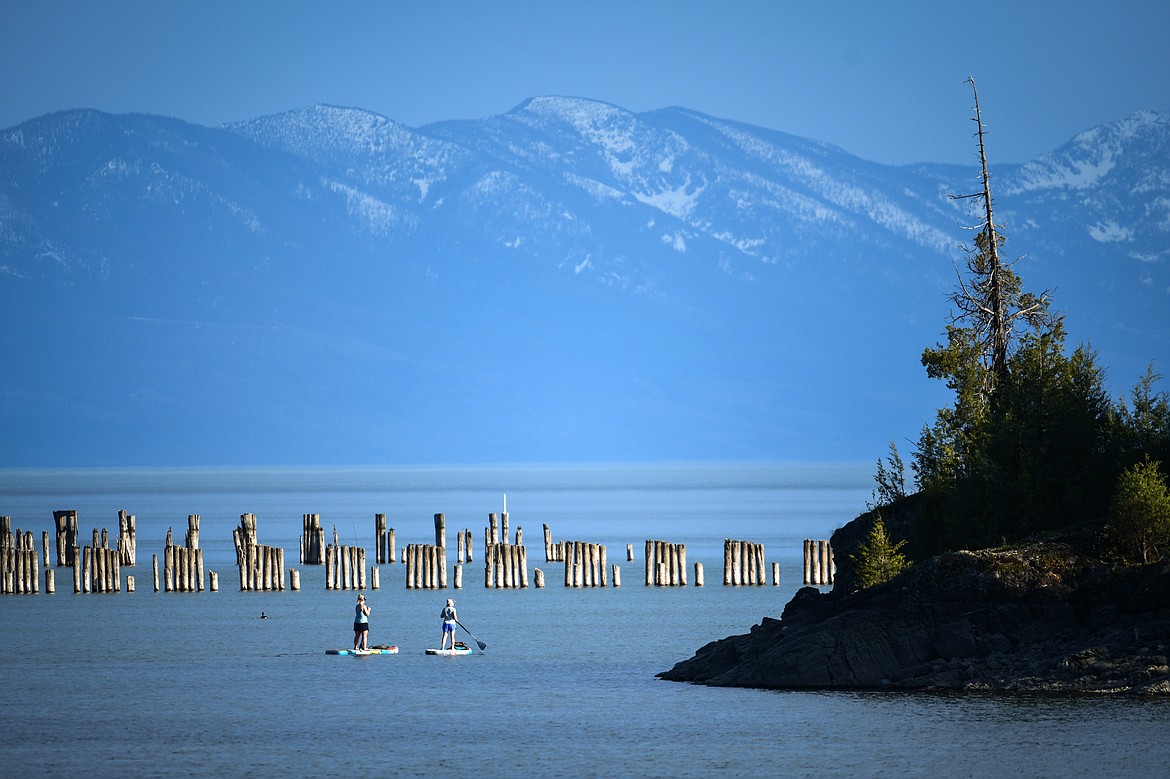
Melissa Glynn and Brianna Peterson paddle out onto Flathead Lake near Somers on Tuesday, May 2. (Casey Kreider/Daily Inter Lake)
As more lakefront homes are built or remodeled in Flathead County, the need for a renewed focus on ensuring that work is done responsibly rises to the surface.
Proposed updates to Flathead County’s lake and lakeshore protection regulations offer an important chance to revisit the rules that protect the pristine waterbodies that not only make this area a crown jewel of recreation but also serve as a source of public drinking water.
On the docket at the Jan. 14 Planning Board meeting is a discussion about regulations for permits issued for work in lakes, including land within 20 feet of the mean annual high-water elevation.
The proposed updates outline how to better restore areas affected by lakeshore violations and add new rules for boathouses, boat lifts, docks, buoys and floating toys. The updates also include a revision to the mean annual high-water mark of Little Bitterroot Lake. Each amendment deserves robust debate with a focus on striking a balance between property rights and the long-term health of the lakes we all have a right to enjoy.
But a regulation is only as good as its enforcement.
Ahead of this month’s meeting, the Whitefish Lake and Lakeshore Protection Committee is raising important questions about compliance — or lack thereof.
In a letter to county commissioners signed by Mayor John Muhlfeld, the committee points to a few new construction projects on Whitefish Lake that have drawn public scrutiny for how they have altered the landscape.
Montana’s 1975 Lakeshore Protection Act requires local counties to implement — and enforce — regulations. Given today’s construction boom, that is no small task. Since 2020, there have been 637 lakeshore permit* applications reviewed for compliance in Flathead County with 74 violations logged — 11 of which remain unresolved.
It appears the scope of violations outpaces the county’s ability to keep up. Commissioners must heed calls to make timely enforcement a priority, even if that means staffing up to meet the rising demand. Local governments have done that for other issues deemed a priority — short-term rental code enforcement among them. It’s time for the county to do the same in the name of environmental and public health, and to ensure neighboring lakefront properties aren’t negatively affected by bad actors who go unchecked.
And for luxury builders who suggest regulations and enforcement stand in the way of economic development, they fail to see the forest for the trees. Playing by the rules and taking extra care to protect waterways will only boost their long-term success.
Without Northwest Montana’s pristine lakes, their entire business model erodes — along with the public’s enjoyment of the lakes we all treasure.
* This editorial has been updated to reflect the correct number of permits and violations.