
Columbia Falls approves Teakettle Heights, largest single subdivision in city history
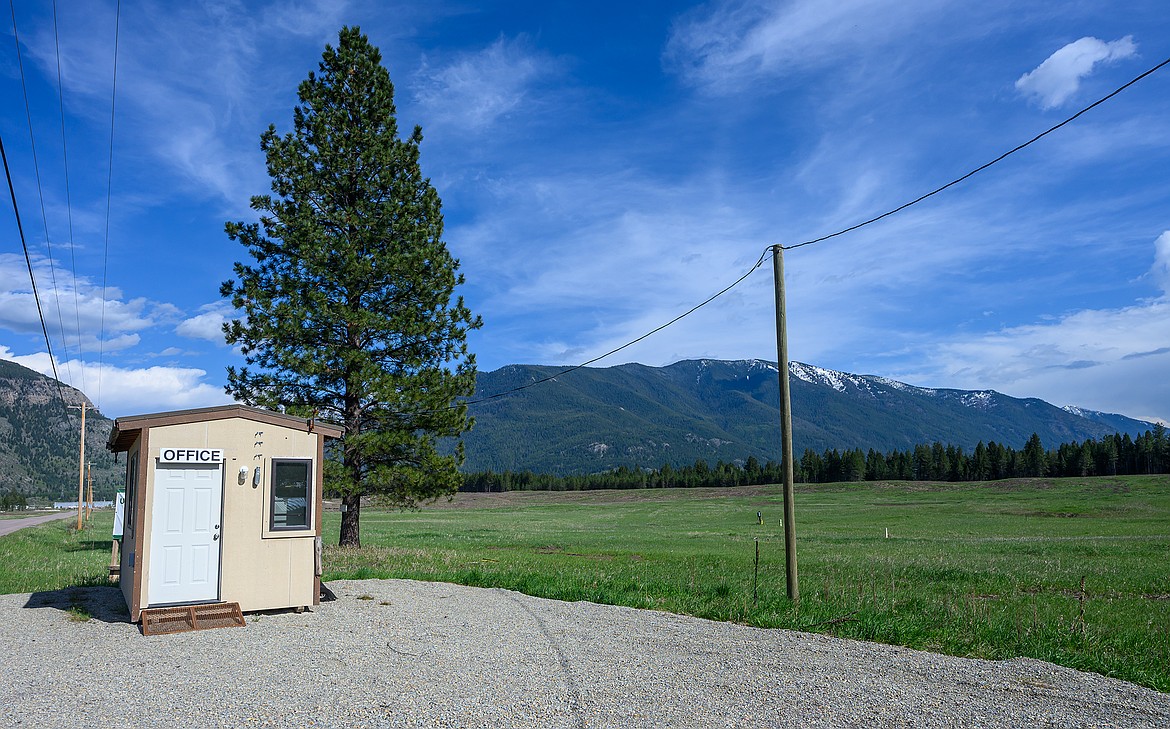
The proposed Teakettle Heights property.
The Columbia Falls City Council on Monday approved developer Mick Ruis’ Teakettle Heights subdivision on former Columbia Falls Aluminum Co. lands.
The subdivision is located on the CFAC Superfund site, but the Environmental Protection Agency said the 78-acre parcel is suitable for residential use, though no water wells can be dug on the land. There are concerns that if the development starts drawing from the water table it could result in contaminated water from the east flowing into the area.
The groundwater, however, has little to do with the subdivision itself, as it will be annexed into Columbia Falls and hook into city sewer and water to serve its residents, which is a separate and approved system already serving the municipality.
The meeting on the subdivision lasted about three and half hours and was not without some last minute drama.
Councilor Kelly King, who has consistently voted against the development over concerns of the future health of residents, made a motion to add a condition that no building could go forward on the site until remediation of the CFAC property was completed by the EPA and the state Department of Environmental Quality.
That was supported by Councilor Marijke Stob, who had previously raised concerns about the project, but voted to approve the development.
City Attorney Justin Breck advised Council that approving King’s condition could be viewed as an illegal taking, as the EPA had deemed the property suitable for residential development.
“The EPA has absolute exclusive jurisdiction to make that determination,” Breck warned, noting passing such a condition could result in a lawsuit against the city and individual councilors.
The motion to add the condition failed on a 4-2 vote, with King and Stob in favor and Councilors John Piper, Kathryn Price and Paula Robinson joining Mayor Don Barnhart in opposition.
Price, however, had previously opposed annexing the parcel into Columbia Falls, which is a requirement to provide city sewer and water. On the other side of the vote, Stob had previously supported annexation and other facets of the development.
The planned unit development calls for a total of 421 units and is the biggest subdivision ever approved by the city.
It includes 125 single family residences on detached lots, 56 single family townhouse sublots and 240 multi-family apartment units.
The apartments, which would be the closest buildings to Aluminum Drive, are proposed at 45 feet tall. All other buildings will be less than 35 feet.
Open space and park areas, including a baseball field and soccer field, total 26.3 acres, about 33.8% of the property.
Ruis will offer an alternative financing package to qualified home buyers of 2% down and a mortgage rate less than the market rate, subject to approval, according to the conditions.
He also previously said that no bulk or investor buying will be allowed as he plans on selling the homes below market rate — $550,000 to $600,000.
With city approval, the zoning would change from light industrial to CR-5 (two-family residential), which allows two units on 5,400 square foot lots which is equal to about 12 units per acre. The proposed development is looking at 5.4 units per acre gross, the city planning staff report noted. The change in zoning aligns with the city’s 2019 growth policy.
The development was previously given a positive recommendation by the city Planning Commission.
But neighbors opposed the subdivision outright or at least asked the Council to delay any development until the CFAC Superfund site is remediated. The physical cleanup of the site, which includes scraping away contaminated soils and putting a slurry wall around dumps that are leaching cyanide and fluoride into the groundwater, is expected to start as soon as next year.
The process could take several years, with monitoring well into the future by state and federal environmental agencies.
Residents also claimed that voting for the subdivision would define the Council’s legacy if there were future health issues of people living there.
Ruis bought most of the CFAC property from its parent company Glencore, all told about 2,300 acres. He said the remaining acreage will be his own private ranch, which is an expanse of land north of Aluminum Drive.
CFAC still owns about 200 acres of land along the west side of Teakettle Mountain. That’s where several landfills are located and the bulk of the contamination exists, at least according to multiple rounds of testing. Contaminated groundwater, tests have shown, runs toward the Flathead River, though it is highly diluted of contaminants by the time it reaches the river.
The groundwater has been known to be polluted close to dumps north of the former plant since at least the early 1990s. The plant has since been torn down.
Council did approve several conditions to the development, including a condition that warns future landowners that is on a Superfund site.
Another significant condition is the configuration of apartments on the west end of the property. The condition moves the parking behind the buildings, which gives nearby residents a greater buffer and lessens the impacts on the viewshed from the 45-foot buildings.
Barnhart spoke to the concerns about the subdivision being on a Superfund site, saying he was comfortable with the EPA’s analysis and determination that it was safe.
Piper agreed.
“I believe it’s a good project and a good location,” Piper said. “We’ve got to trust the science at some point.”
Stob brought up concerns about wildlife corridors and how wildlife habitat was lost after the trees were cut down to make way for the development.
But while wildlife does play a role in the decision, it was noted that the state’s Montana Land Use Planning Act requires cities to accommodate new housing and growth over wildlife.
Planner Eric Mulcahy said the city has previously asked Montana Fish, Wildlife and Parks for further guidance.
“We asked FWP for a wildlife corridor plan for our growth policy and they wouldn’t [provide one],” he said.