
U.S. Sen. Sheehy tours forestry project in south Lincoln County
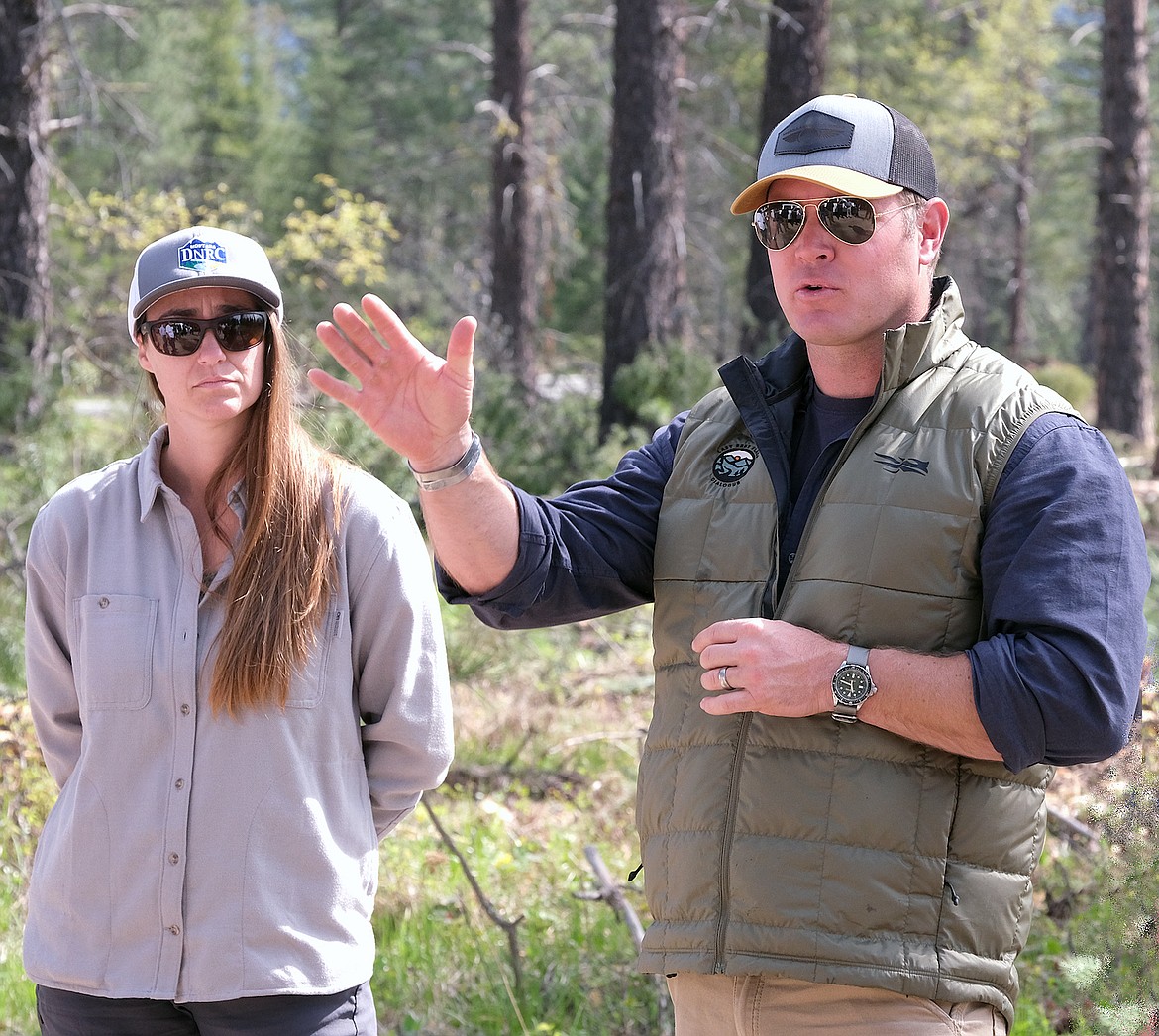
U.S. Sen. Tim Sheehy and Montana Department of Natural Resources of Conservation Good Neighbor Authority Forester Jodi Turk during a tour Monday, May 4, 2026, at the Granite 1000 forestry project. (Paul Sievers/The Western News)
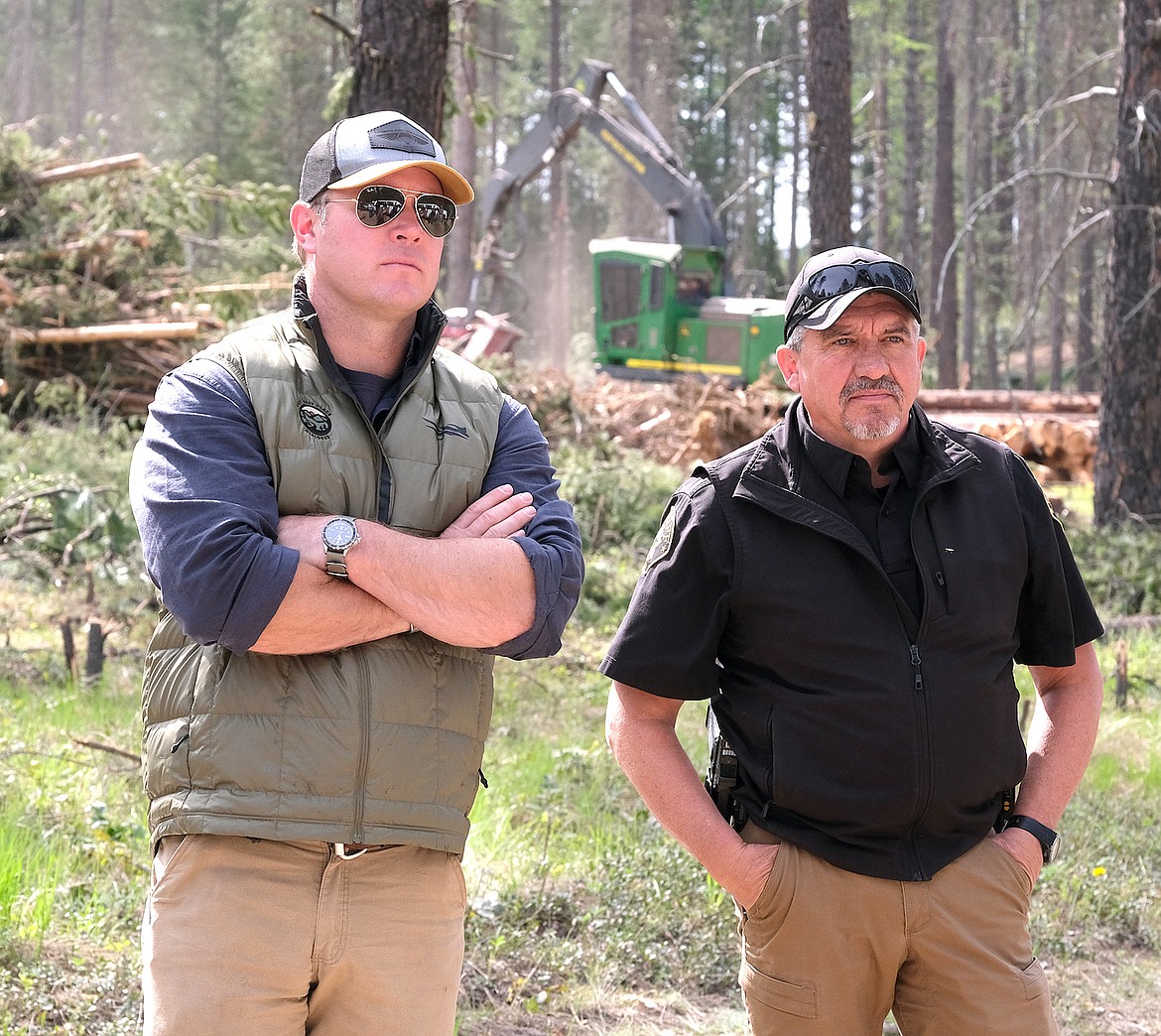
U.S. Sen. Tim Sheehy and Lincoln County Sheriff Darren Short during a tour Monday, May 4, 2026, at the Granite 1000 forestry project. (Paul Sievers/The Western News)
U.S. Senator Tim Sheehy was in south Lincoln County last week for a tour and to honor the Troy Power and Light crew for its work during the wind and flooding events in the last six months.
Steve Gunderson, former Montana District 1 House of Representatives member and a candidate for the state Senate District 1 seat, organized the tour.
“I worked with the senator on the issues we were facing with the flooding and wind storms and it was great to have him here,” Gunderson said. “He’s been very helpful and he graciously made a call the other day to get us in contact with the Environmental Protection Agency to fast track an issue we have worked on with the Libby Asbestos Superfund Oversight Committee.”
Sheehy saw the Granite 1000 Project on Lower Granite Creek Road. Montana Department of Natural Resources and Conservation’s Jodi Turk explained the Good Neighbor Authority project.
“Should a fire come out of the Cabinets, this would act as a fire break to protect these communities,” Turk said. “And it helps support our timber industry.”
District 3 Commissioner Noel Duram discussed the importance of forestry in relation to fire protection as well as the economy. He talked about the county’s latest plan to bring in a biomass facility to process the remains of logging jobs to generate electricity.
Duram was appreciative of Sheehy’s visit.
“It was very productive and great for him to see what’s going on here,” Duram said. “[Sheehy] is a high energy guy and his leadership will be very beneficial for Lincoln County.”
Sheehy shared his thoughts about the timber industry, saying, “Letting it burn makes no sense. Radical environmental groups argue fuel breaks don’t stop fires, well they’re not supposed to stop fires, but they decrease the likelihood of fires burning into residential areas.”
Mark Pluid of Pluid and Sons Logging in Idaho said the logs were going to Idaho Forest Group’s plant in Moyie Springs.
“With the price of fuel, the shorter the trip, the better,” he said.
The cost of diesel fuel has surged to well more than $5 a gallon following the beginning of the Iran war.
Sheehy also urged interested partners such as logging companies and municipalities to “get their story out there.”
He referenced the housing shortage while asking: “What are these houses going to be built out of?”
Kootenai National Forest Supervisor Chad Benson was also at the tour of the Granite 1000 Project.
He spoke about what’s on the minds of most in south Lincoln County: Clearing and repairing roads and bridges that were destroyed or damaged in the extreme weather events that occurred between December 2025 and March.
“We’ll probably spend $1 million on some of the bridge replacements and we’re focusing a lot of our efforts on the salvage work that needs to be done,” Benson said. “We’re putting temporary bridges in on Lower Granite and Ramsey so we can get that work going.”
Benson said bids would go out May 13 for those undertakings and he hoped to get work started as soon as possible, depending on the schedule of the contractors. He also said permanent bridge replacement wouldn’t happen for another two years.
SHEEHY SAID he believes the push to relocate U.S. Department of Agriculture offices in the West would help further the progress of forestry projects.
“You shouldn’t have to get the OK from D.C. for these projects,” Sheehy said.
The agency said in a March 31 announcement that the department’s headquarters is slated to move from Washington, D.C. to Salt Lake City, Utah.
Under the new model, 15 state directors will be distributed throughout the country to oversee Forest Service operations within one or more states. State directors will serve as national leaders with primary oversight of forest supervisors, operational priorities, and relationships with states, tribes and other partners.
Each state office will include a small leadership support team responsible for functions such as legislative affairs, communications and intergovernmental coordination.
The Montana state office will be located in Helena. An Operations Service Center will be located in Missoula.
According to the Forest Service, state directors will be filled exclusively by career federal employees. These positions are being created to bring leadership closer to the work and ensure the right span of control over forests and programs.
"This is about building a Forest Service that is nimble, efficient, effective and closer to the forests and communities it serves," said Forest Service Chief Tom Schultz.
But opponents have said the relocation is an effort to control and place national forest lands in the ownership of states.
“Utah politicians have failed repeatedly to sell off public lands outright, so now they’re teaming up with their Trump cronies to push the same disgraceful agenda,” said Laiken Jordahl, national public lands advocate at the Center for Biological Diversity, in a Jan. 8 press release. “This agreement strips federal protections, shuts the public out of decision-making and puts Utah’s old-growth forests directly on the chopping block. The American people will see this latest scheme for what it is, a backdoor push to privatize our public lands.”
The agency release stated restructuring will not affect wildland firefighting operations which currently radiate out of the National Interagency Fire Center in Boise.
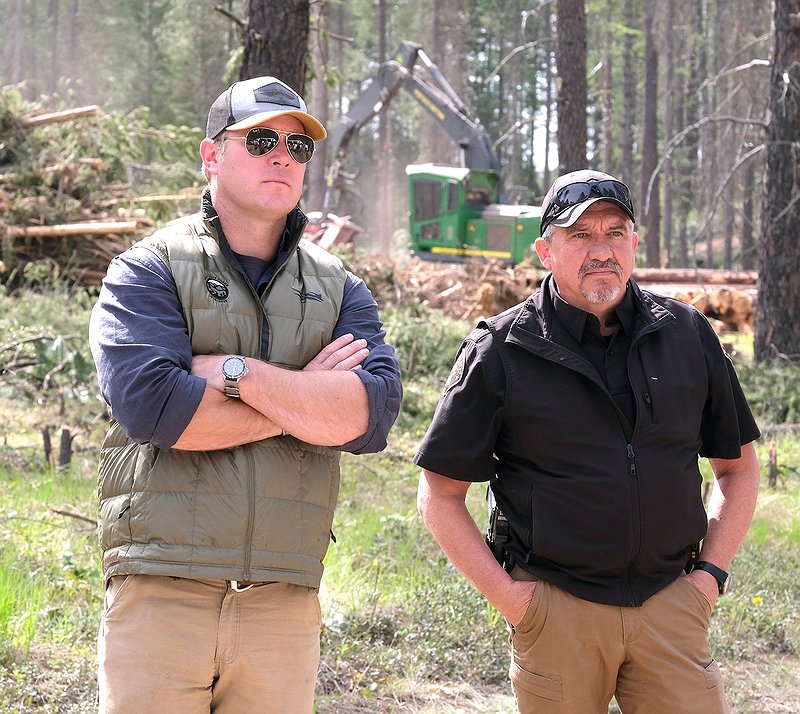 U.S. Sen. Tim Sheehy and Lincoln County Sheriff Darren Short during a tour Monday, May 4, 2026, at the Granite 1000 forestry project. (Paul Sievers/The Western News)