
Historic guardians: Efforts work to preserve the story of Bigfork
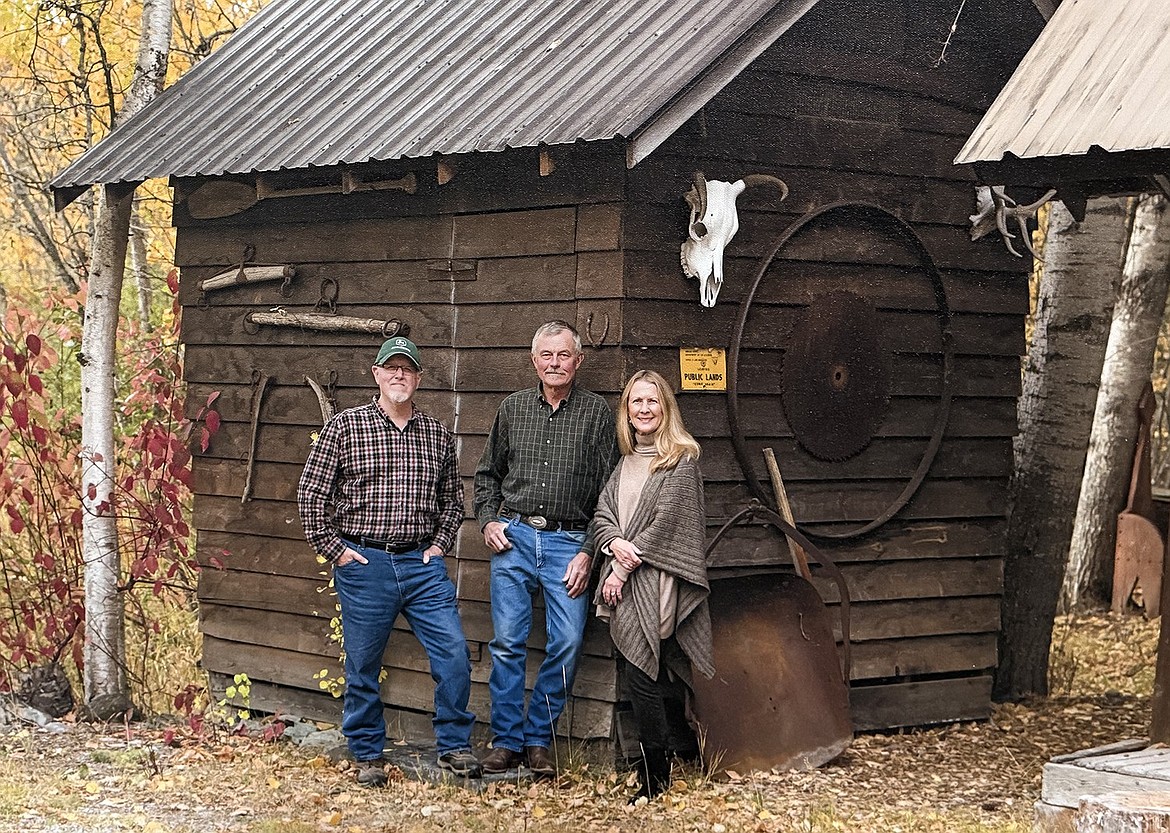
Ed Gillenwater, Denny Kellogg and Tabby Ivy are the team behind the Bigfork History Project and "Bigfork: A Montana Story" documentary (Courtesy Ed Gillenwater)
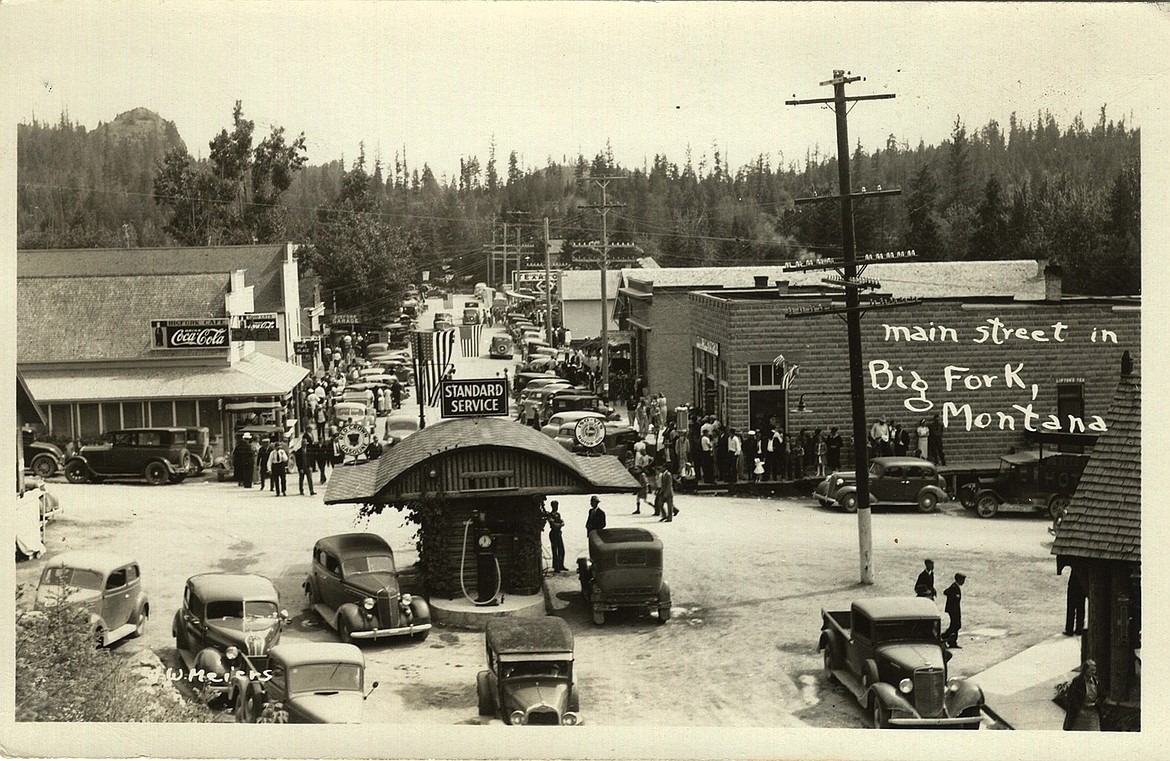
Looking south along Electric Avenue in downtown Bigfork during a 4th of July celebration in the 1930s. (J.W. Meiers/Denny Kellogg Collection)
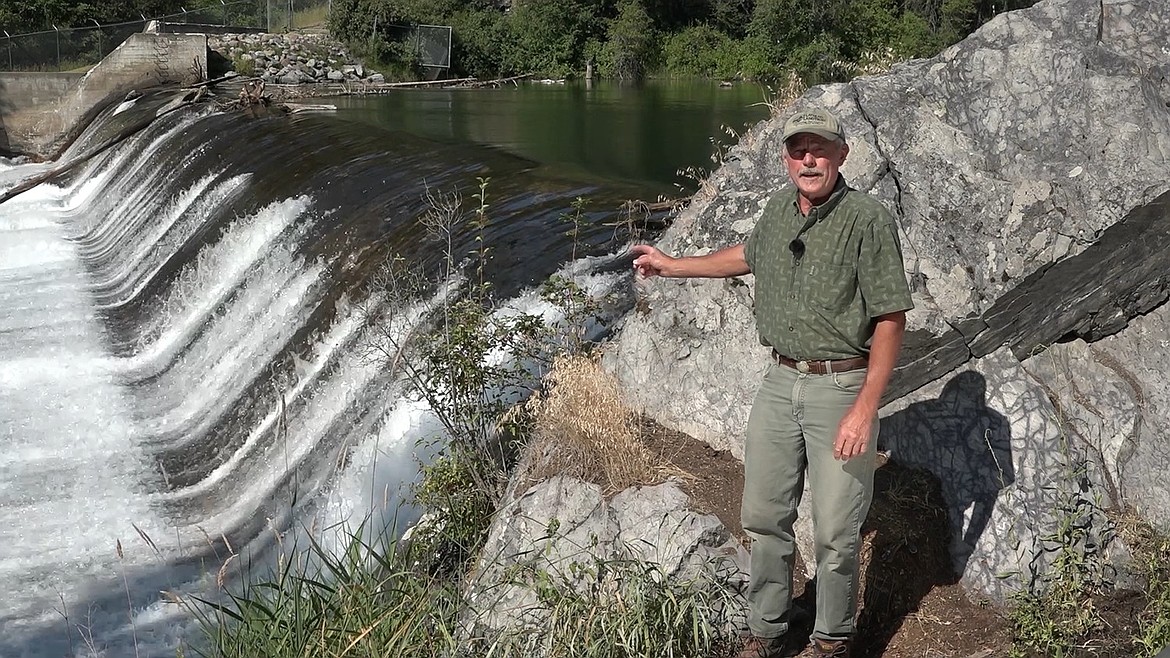
Denny Kellogg, co-writer of the Bigfork documentary, standing by the Bigfork hydroelectric plant's diversion dam on the Swan River. (Courtesy Ed Gillenwater)
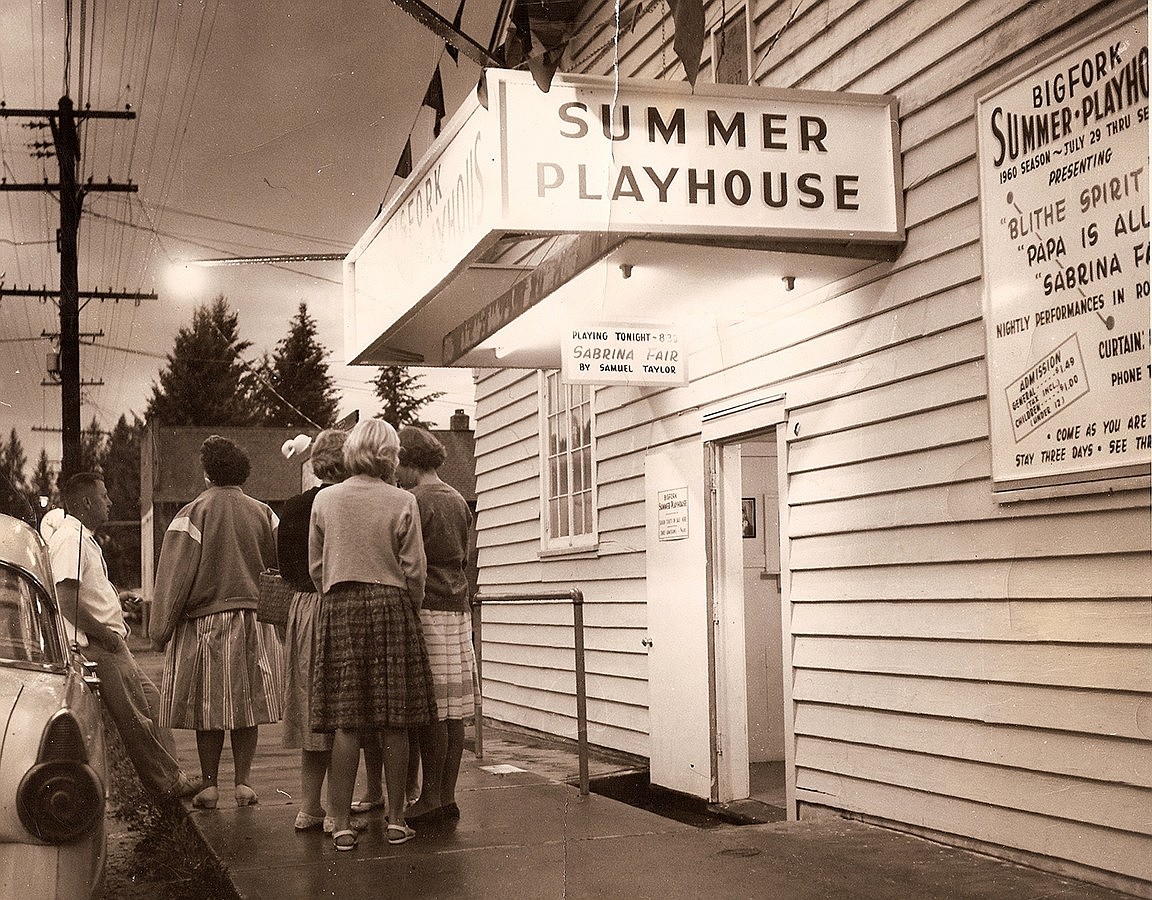
The exterior of the Bigfork Summer Playhouse in downtown Bigfork in the early 1960s. (Collection of Dr. Firman "Bo" Brown, former head of the University of Montana Drama Department, and founder of the Bigfork Summer Playhouse)
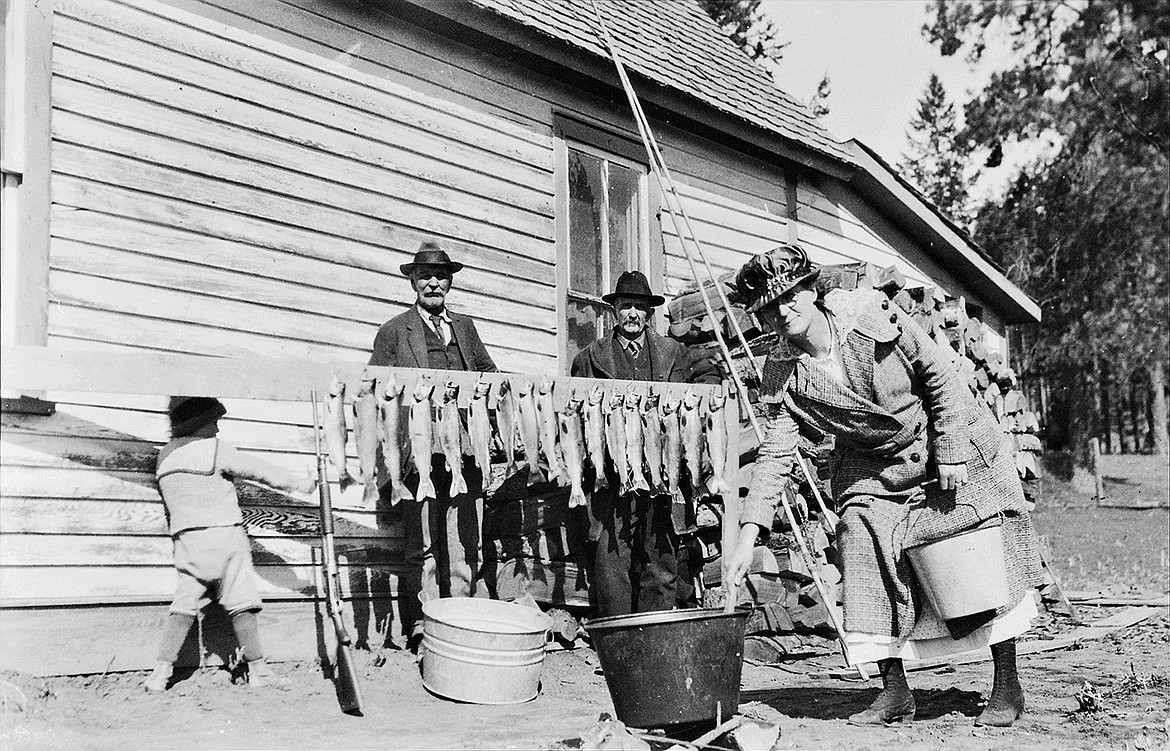
At the Weed family's Bigfork cafe in the early 1900s, patrons could go to the Swan River, catch a stringer of "Flat" (Western Cutthroat) trout and bring the fish back to the cafe for the Weeds to cook. (BACC Photo Archives/University of Montana Collection) This photo was taken beside the Weed family's cafe in Bigfork, where patrons could go down to the Swan River by the cafe, catch a stringer of "Flat" (Western Cutthroat) Trout, and the Weed's would cook them for you. Attribution: BACC Photo Archives (Univ. of MT Collection)
The story of Bigfork began 125 years ago today, on May 17, 1901, when an enterprising young man by the name of Everit L. Sliter filed a plat for the fledgling settlement.
As Denny Kellogg and Ed Gillenwater tell the story, though, Bigfork’s history actually began a little earlier: a modest 100 million years earlier, in fact. This was when the forces of nature conspired to carve the valleys and peaks that would one day come to define this scrappy little village on the shores of Flathead Lake.
Kellogg and Gillenwater are a mischievous pair, both in their 70s, who fondly reminisce about the stories of Bigfork’s eclectic characters like they’re old friends. The two came together in 2015, along with Tabby Ivy, to found the Bigfork History Project with the aim of preserving Bigfork’s colorful past for the community.
The project has already produced an audacious and sweeping two-and-a-half-hour-long documentary chronicling the village’s past, along with a companion book, a bold undertaking for a volunteer team. Now, they’re creating a permanent exhibit at the Bigfork Art and Cultural Center, which debuts on Bigfork’s 125th anniversary and provides a venue for the evolving stories of Bigfork.
The Bigfork History Project originated with Denny Kellogg, if not in name, then in spirit.
It was 2014 when Kellogg first noticed the stories of Bigfork’s past rapidly slipping away around him. He had arrived in Bigfork decades earlier, in 1975, and quickly fell in with a crowd he fondly referred to as “the old timers.” Kellogg absorbed their tall tales from Bigfork’s early decades with rapt attention, and as he stated humbly, “just kind of remembered it all.”
Kellogg hadn’t set out to become Bigfork’s unofficial historian, but no one else was interested in the job. He studied history in college, but only as a minor, because he was told he would never find a career with that degree.
In Bigfork, though, word must have spread about Kellogg’s fascination with the past. For years, he would come home to find cardboard boxes or even entire suitcases left on his front porch. Inside, he would find treasure troves from the past: photographs, journals and artifacts from an earlier era of Bigfork’s history. Kellogg collected these items in his personal library, with no clear goal other than preservation.
Until he met Ed Gillenwater.
Gillenwater, a corporate film producer by trade, met Kellogg on the board of the Glacier Art Museum (then the Hockaday Museum). As the two got to know each other, Gillenwater began to grasp just how much Kellogg knew about the community.
“I really started understanding the depth of knowledge that this fellow has hidden in his head,” said Gillenwater. “He would tell me stories and things about the past, and every time he told me another story, it made me feel more and more connected, because I wasn't from here.”
Kellogg, Gillenwater and Ivy hatched the idea for a documentary and began the two-year-long process of researching, writing and producing the film. As they did so, a clear theme started to emerge, that of a distinctly Montana story.
“This was a land that constantly challenged those who attempted to settle here. The ones that made it often possessed an uncanny ingenuity, an inventiveness. When faced with a problem, they simply created their own solution. It’s a trait ingrained in the spirit of Bigfork.”
These were the lines that echoed through the Bigfork Summer Playhouse in 2017, when the documentary premiered to much fanfare. The show was sold out, and book and DVD sales brought in more than $100,000 in the first year, with proceeds supporting the Bigfork Art and Cultural Center.
“What we realized was there's a real hunger here for knowledge about the history,” said Gillenwater. “It's real easy at a certain stage in the development of a small town that it could either become a resort town with a complete loss of its history and personality, or it can become a hometown that people enjoy being a part of.”
MUCH OF Bigfork’s personality, as Kellog and Gillenwater tell the story, comes from its unique geography, which resisted settlement even more than other areas of Montana’s frontier. Bordered by the Swan Mountain Range and the shores of Flathead Lake, situated between two perilous river crossings, this swath of land was challenging to reach for much of its existence. The rugged and isolated landscape acted as a magnet for all sorts of larger-than-life characters.
“In the late 19th century, the Bigfork and Swan Lake area became a destination for adventurous folks who were fleeing civilization or looking for a fresh start,” said Kellogg. “What it didn’t offer in riches it did provide in plenty: community, independence, opportunity and recreation, all in a spectacular natural setting unmatched elsewhere in the lower 48.”
Often without pausing to take a breath, Kellogg and Gillenwater recount the stories of these pioneering spirits. There are the stories featuring more prominent names, like when Bugsy Siegel hid out in the Swan Mountains or when Les Averill built an (illegal) hot tub for Jack Nicklaus in the Bob Marshall Wilderness.
Or there are the lesser-known characters, like the legend of Scissor Bill, a recluse whose crumbling homesite’s location is a carefully guarded secret. Or Charles Morkeberg, who considered himself the Da Vinci of Bigfork and set out to invent a flying machine and hosted lavish fundraising parties. There’s no evidence that his bicycle, fitted with cloth wings that flapped when he pedaled the bike, ever left the ground.
Often, Kellogg and Gillenwater told these stories as if they were close friends with those involved. In some cases, they were. Compared with the centuries-long history found in other parts of the world, Bigfork’s history is relatively new, just two or three generations.
“You know somebody who knew somebody or was connected to somebody who was there when it happened,” said Kellogg.
It’s this feeling of closeness in the community that Kellogg and Gillenwater hope to maintain with the Bigfork History Project. If Bigfork is a Montana story, then it’s not immune to the challenges plaguing other communities in the Treasure State.
The village on the shores of Lake Flathead is grappling with how to maintain its identity in the face of rapid, and often unwelcome, growth. Transplants are often viewed with disdain, and “local” status is the most valuable form of currency.
But for Kellogg and Gillenwater, neither of whom is “from” Bigfork, the Bigfork History Project isn’t about who has been here the longest. Kellogg laughed that, with 51 years under his belt, he’s been around longer than most of the people born here.
“I kind of laugh when I see the sign out on the highway: ‘Visit Historic Downtown Bigfork.’ Most of this has been built since I was here,” he said with a smile.
He’s not one to get caught up in longings for the past, and, if anything, the meticulous details of the project have dispelled many of the romantic notions of the “good old days” that so many pine for.
“What were the good old days?” asked Julie Bottum, the executive director of the Bigfork Art and Cultural Center. “What actually was that? Was it a series of buildings? Was it the offerings? What was it a place?”
What many see as change in Bigfork, and often not positive change, Kellogg sees as the evolution of a young community that’s still growing up.
"In looking at the pictures, I feel like Bigfork has just gone through phases where it just became different. Sliter shows up, and he plants a bunch of orchards, but then eventually the orchards make way for houses and businesses, and then those kept growing. And then eventually the arts came in and we got the Playhouse in 1960. Is that change, or is it just natural progression and growth that a community goes through?” asked Kellogg.
Ultimately, the goal of the Bigfork History Project isn’t for people to get stuck in the past. Rather, its founders and the countless volunteers who have contributed thousands of hours of their time and talents to the project hope residents, new and old, will feel a deeper connection to the place they call home and will be inspired to continue in the legacy of those who came before them.
"If people are coming here without a history here, what they can learn from this community is that there was this history of connectedness, of how they built it together,” said Gillenwater. “There was angst and there was production and there were things that burned down, and there were things that worked and didn't work. Through all of those failures, this community survived, and really that's the theme of Bigfork.”
To learn more about the history of Bigfork, visit the Bigfork Art and Cultural Center or visit bigforkhistorynetwork.org
Reporter Elsa Ericksen can be reached at 406-758-4459 or eericksen@dailyinterlake.com. If you value local journalism, pledge your support at dailyinterlake.com/support.
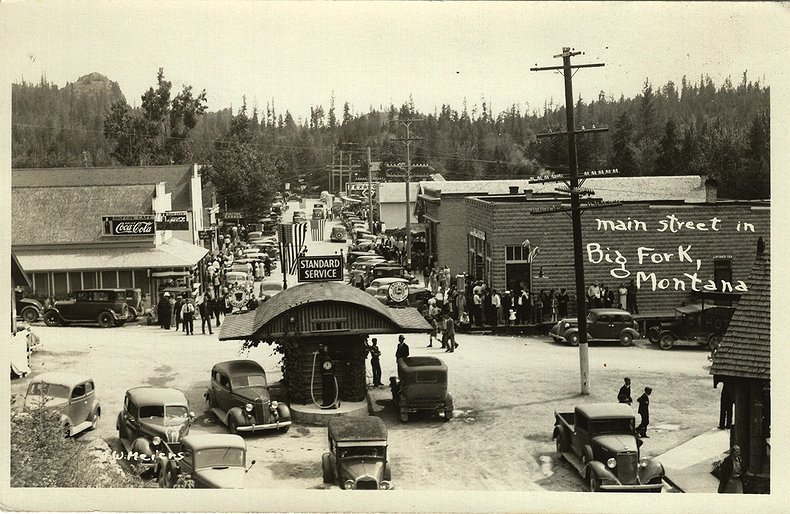 Looking south along Electric Avenue in downtown Bigfork during a 4th of July celebration in the 1930s. (J.W. Meiers/Denny Kellogg Collection)
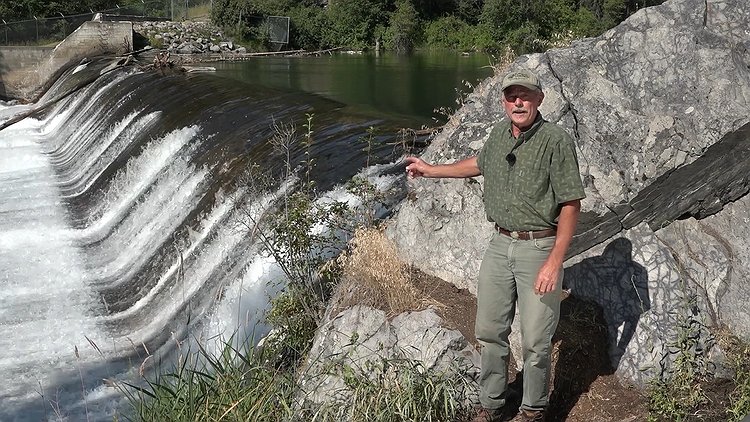 Denny Kellogg, co-writer of the Bigfork documentary, standing by the Bigfork hydroelectric plant's diversion dam on the Swan River. (Courtesy Ed Gillenwater)
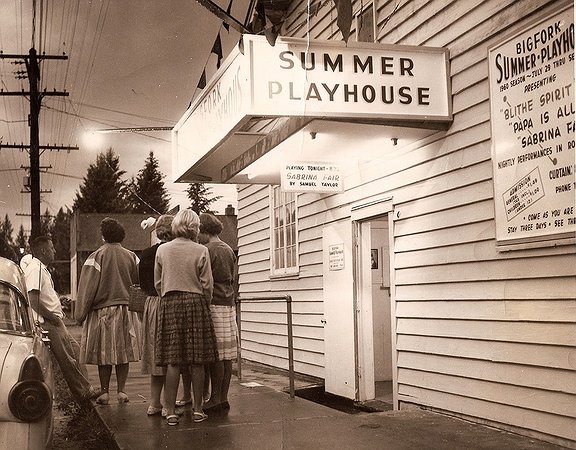 The exterior of the Bigfork Summer Playhouse in downtown Bigfork in the early 1960s. (Collection of Dr. Firman "Bo" Brown, former head of the University of Montana Drama Department, and founder of the Bigfork Summer Playhouse)
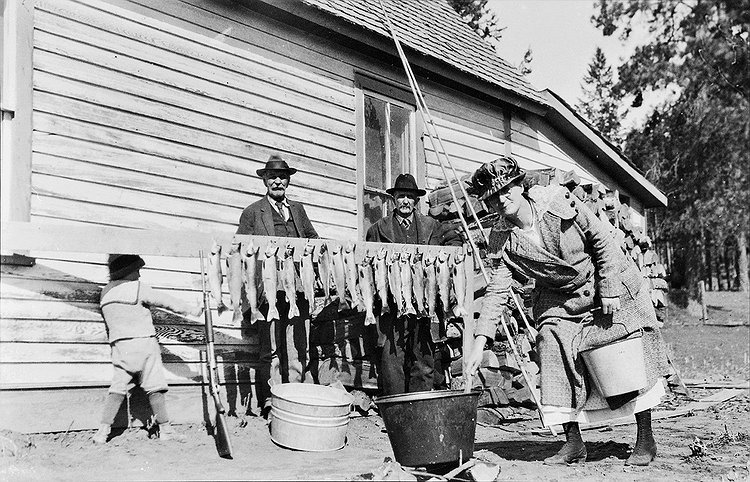 At the Weed family's Bigfork cafe in the early 1900s, patrons could go to the Swan River, catch a stringer of "Flat" (Western Cutthroat) trout and bring the fish back to the cafe for the Weeds to cook. (BACC Photo Archives/University of Montana Collection)