
Glacier Park transportation plan calls for more parking, more shuttles
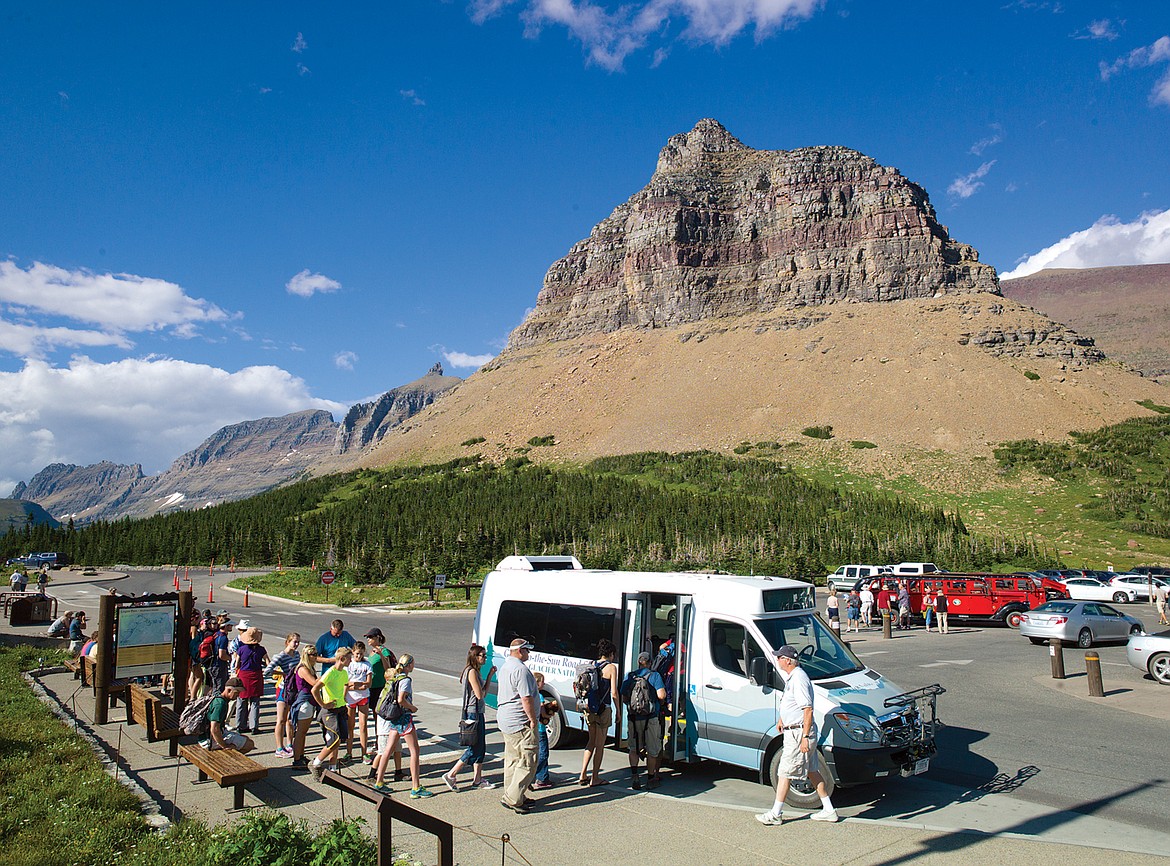
Folks board the shuttle at Logan Pass in this file photo.
Glacier National Park officials revealed preliminary plans for a permanent transportation plan for the Going-to-the-Sun Road.
The plan does not call for any future reservation systems for the Sun Road, but it does look to increase parking availability and expand shuttle services to popular trailheads.
The plan is similar to a previous Sun Road Corridor Management plan proposed during the first Trump administration but never implemented. That plan, however, called for using the Avalanche Creek campground for parking. This one does not.
All told, the park would add parking on both the west and east sides for a total of 540 to 600 new parking spots at lower elevations.
Superintendent David Roemer said the plan would use an approach to the shuttle service that would determine the capacity of the popular trails along the road, so they don’t become overcrowded.
For example, the National Park Service this summer will pilot an express shuttle to Logan Pass, designed to deliver about 780 hikers to the pass and the Highline Trail daily, from July 1 to Labor Day. It will then pick up hikers at the Loop.
The capacity of the Highline is about that many hikers daily, Roemer noted at a community meeting Monday night.
Parking at Logan Pass this summer is limited to three hours. People who go beyond that could see a boot placed on their vehicle and a ticket from a law enforcement ranger.
In the proposed plan, 50% of Logan Pass parking would be available through a lottery, the rest would be first-come-first serve with a three-hour time limit.
For bicyclists, the Park Service is proposing a “not to open before” date for the Sun Road, likely mid-June, so cyclists can ride the road at their leisure and be assured no vehicles will be on it. Once the road is open to vehicles, cycling would be forbidden.
Cycling conditions will also be improved on the section of the Inside North Road from Camas Creek north to Logging Creek.
The park is also considering new “bike camping” sites along the Inside Road.
In outlying valleys, the Park Service will add about 150 more parking spaces in Many Glacier and a concession-run circular shuttle service in the valley. At Two Medicine, they would add a shuttle from East Glacier to the Two Medicine boat dock and improve the parking inside the valley (a project that is already underway).
The North Fork would remain primitive with no shuttle, but parking at Bowman Lake would be redesigned to improve efficiency.
Roemer also said the Park Service expects to add a bypass lane at the entrances for those visitors who have an America The Beautiful pass or an annual park pass. Through a grant from the National Parks Foundation, they plan to add a card swipe transponder that will read the cards without having to visit with entrance staff, a feature pass holders have long sought.
Glacier sees about 3 million visitors a year, but 83% of them visit in the four months from June through September, Roemer noted.
The Park Service plans on holding a series of meetings with the public this summer on the transportation plan, with an environmental assessment completed this year and implementation in 2027, provided it gets federal funding for the parking areas and the additional shuttles and staff it will need to operate the system.
Hiring this year has been going well, with just over 300 seasonal employees on board, Roemer noted.
But the park been unable to replace some key permanent positions, though it did recently hire a new chief ranger in Katy Anderson, who hails from Yellowstone National Park.