
Tribal project farmers in Hot Springs protest fee increase amid diminishing water supply
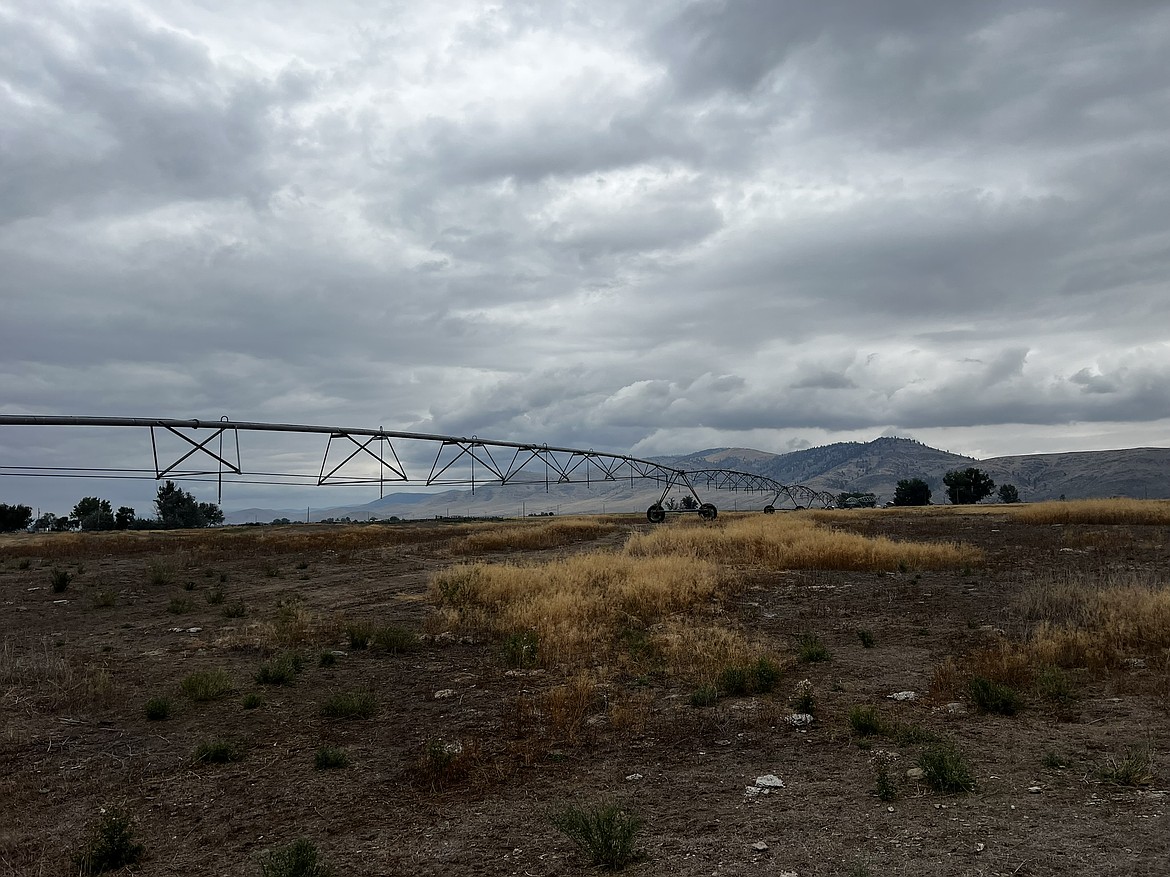
Kevin Hein, a farmer in Hot Springs, took a photo of a neighboring hayfield in August 2025 after a dry irrigation season. (Courtesy)
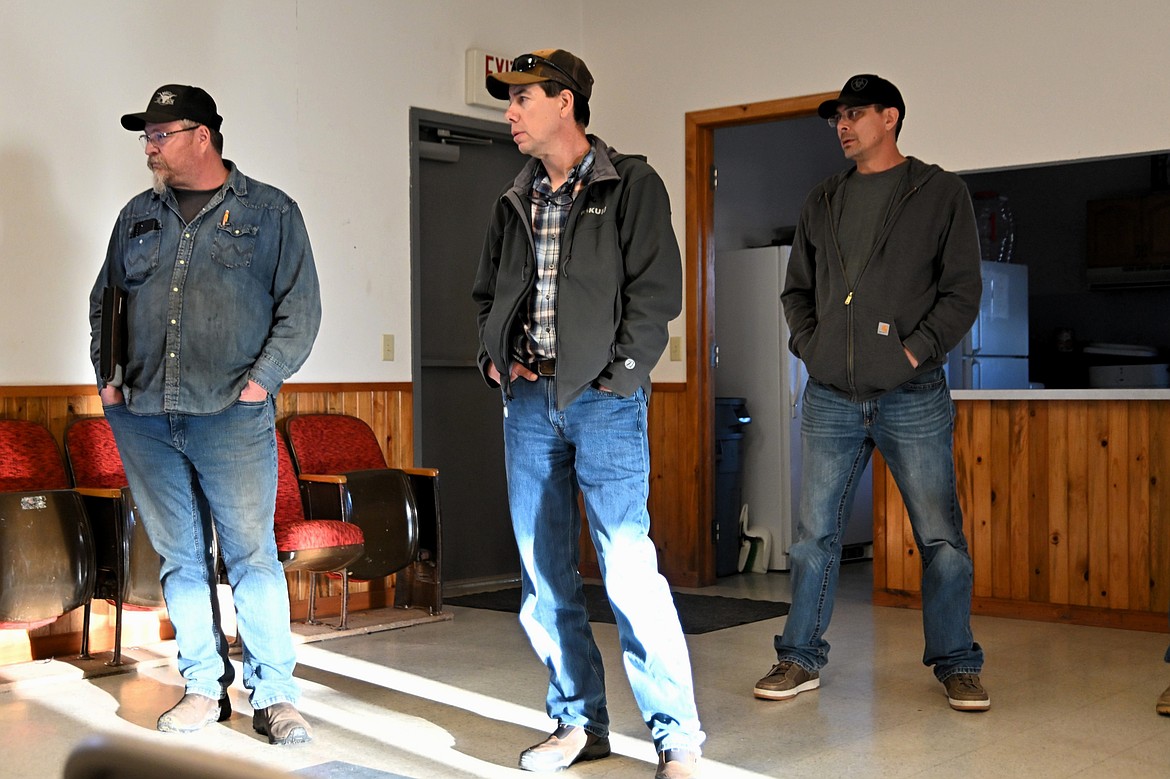
[Left to right] Flathead Indian Irrigation Project Acting Manager Nick Belcourt, Confederated Salish and Kootenai Tribe Hydrologist Shane Hendrickson and Acting Water Master for the Flathead Irrigation District Koshon Lacounte field questions from farmers during a meeting in Lonepine on April 29, 2026. (Hannah Shields/Daily Inter Lake)
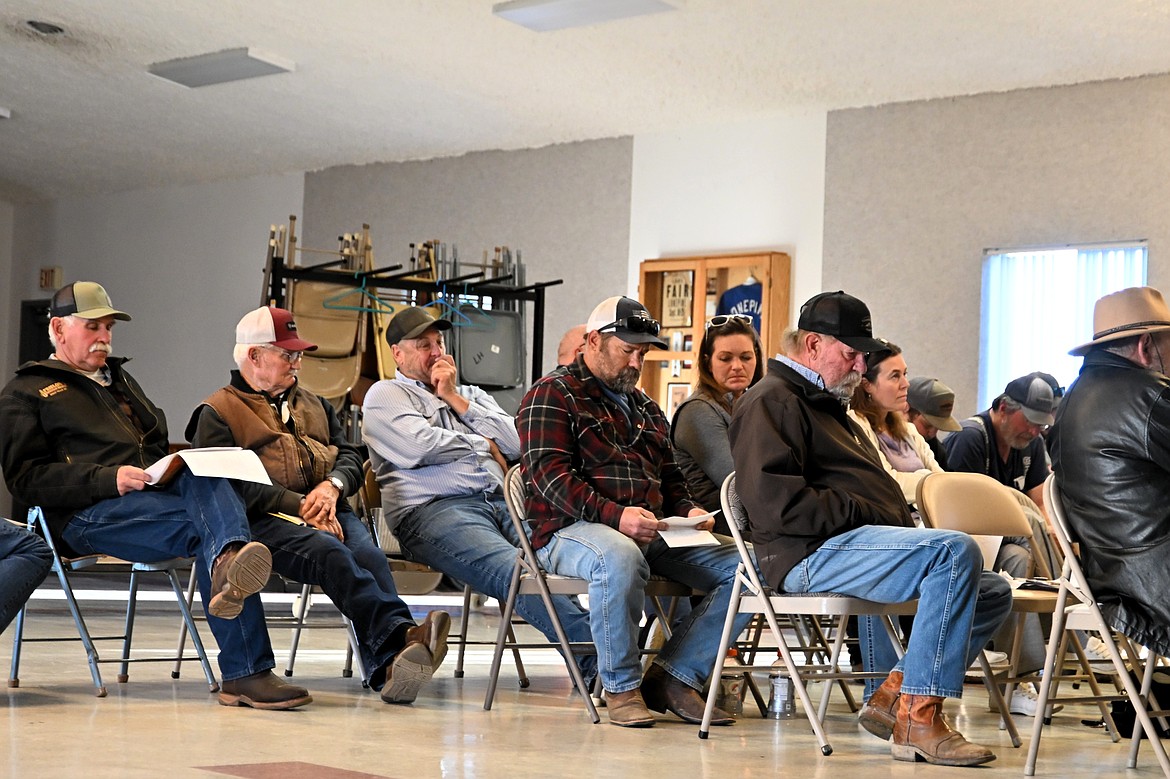
Farmers from the Hot Springs area in Sanders County attend their annual meeting in Lonepine on April 29, 2026. (Hannah Shields/Daily Inter Lake)
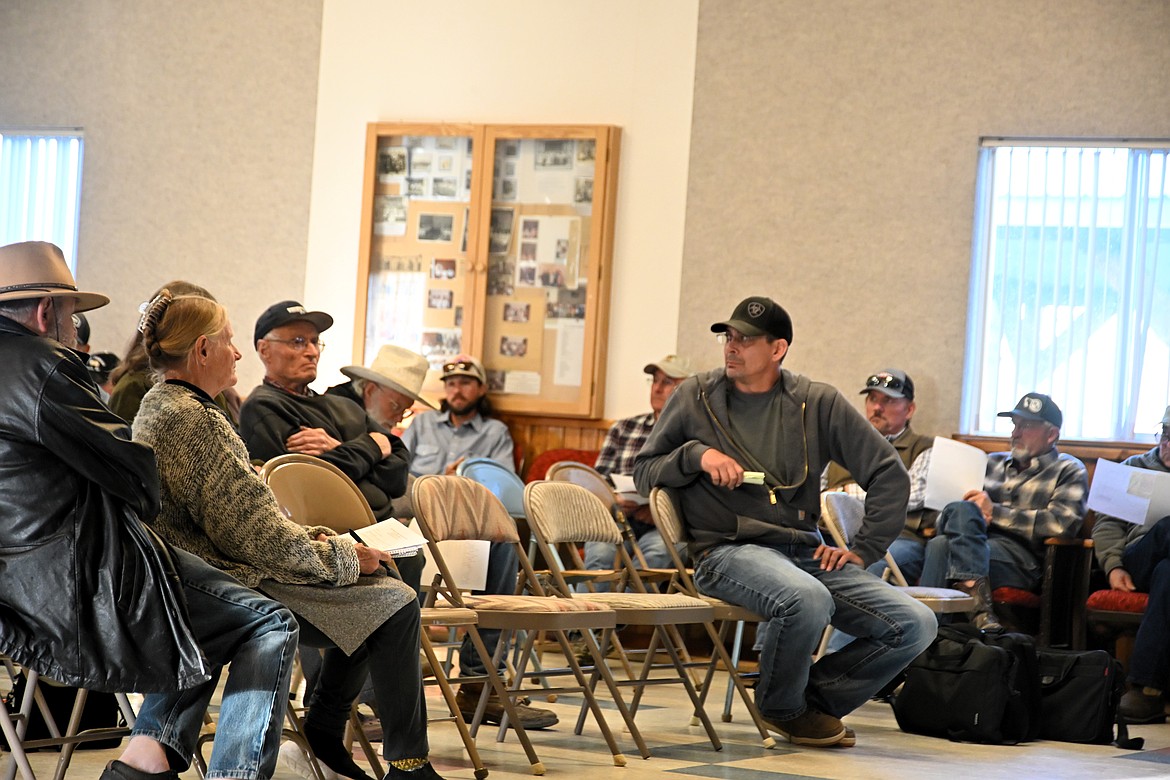
Acting Water Master for the Flathead Irrigation District Koshon Lacounte [far right] turns back as farmers ask questions during a meeting in Lonepine on April 29, 2026. (Hannah Shields/Daily Inter Lake)
Farmers in the Hot Springs area of Sanders County are protesting their third fee increase from the Flathead Indian Irrigation Project in less than five years as they struggle to pull enough water for their crops.
The last two irrigation seasons yielded little hay production as agriculture producers in the area received staggering low water quotas during the recent drought years. Hay growers need to water their fields three times for a healthy crop, but the last two years’ quotas let them water barely once, farmers told the Inter Lake.
The operation and maintenance fee irrigators pay as part of the Flathead Indian Irrigation Project remains the same -- $39 an acre -- no matter how much water is doled out. The fee is paid with their taxes in exchange for water supply and irrigation system repairs. The tribal irrigation project spans across Sanders, Flathead, Lake and Missoula counties on the Flathead Indian Reservation.
The Bureau of Indian Affairs, which houses the tribal project, is proposing a new fee of $46 an acre for 2027 – a significant $7 jump compared to the last two increases. In 2024, fees rose by $3.50 an acre, and in 2023 they rose by $2 an acre. Notice of the new fee was posted in the Federal Register on March 23, launching a 60-day public comment period that ends May 22.
The fee increase is to help rebuild staffing levels at the Flathead Indian Irrigation Project, which have fallen to a “historic low,” according to Joshua Barnett, a spokesperson for the Bureau of Indian Affairs.
Only 25 of 61 positions are filled, and 13 additional employees were pulled out of retirement as temporary, emergency hires, said Nick Belcourt, acting project manager of the Flathead Indian Irrigation Project, at a meeting with Hot Springs farmers last month. The current rate of $39 an acre restricts him from hiring more than 40 employees, he said, and it led to massive layoffs last year.
The new rate also intends to cover increased water pumping costs, rising inflation and
construction costs, and replenish the irrigation tribal project’s depleted reserve account for emergencies.
“The proposed $7 per acre increase ensures the [Flathead Indian Irrigation Project] can
keep up with these financial demands and maintain reliable service for water users,” Barnett said in an email to the Inter Lake. “Assessment rates are commensurate with our quality irrigation service, so we must increase rates to improve service.”
COMMISSIONERS OF the Flathead Irrigation District – a collective of the Northwest Montana tribal project’s Camas, Jocko and Mission divisions – voted at their April 22 meeting to send a letter objecting to the new charge.
Attorney Cassie Dellwo, who has worked with the Flathead Irrigation District since 2019, wrote the letter that was sent May 21, stating that the fee increase is “unsustainable and unconscionable.”
In the letter, Dellwo said the new fee is not justifiable while the Flathead Indian Irrigation Project remains critically understaffed. She alleged that the tribal irrigation project is not fully spending its annual budget amid ongoing staffing shortages. Collected fees from prior years “may be available to cover any budget shortfall,” she said in the letter.
Farmers are stepping up to maintain and clean irrigation ditches, installing irrigation structures and other tasks that should be handled by project management, Dellwo said. Meanwhile, she speculated in a conversation with the Inter Lake that the fee increase is likely to create bankruptcies in the agriculture business.
“Our irrigation prices are way lower than most, but we also get less [water in the Camas Division],” Dellwo said.
The Camas Division covers 13,000 acres in the Hot Springs area, supported by an irrigation system of four reservoirs within Little Bitterroot Watershed: Little Bitterroot Lake, Hubbart Reservoir, Upper Dry Fork and Lower Dry Fork reservoirs. At about 4,000 feet in elevation, the basin depends on snowmelt to fill the reservoirs below.
But warmer seasons starting earlier in the year have led to rapid snow melt, leaving less water available by the time irrigation season starts in April. Hydrologist Shane Hendrickson, with the Confederated Salish and Kootenai Tribe, told Hot Springs farmers it’s “almost the driest spot in the state of Montana” during their annual meeting in Lonepine on April 29.
“We ran out of snow three weeks ago,” Hendrickson said. “The water that we have is what we have.”
The Upper Dry Fork and Lower Dry Fork reservoirs have reached full capacity, but only carry 13% of the irrigation system’s water supply. Little Bitterroot Lake holds nearly 25,000 acre-feet of water and provides 58% of the irrigation system’s water storage. The Hubbart Reservoir holds 12,000 acre feet of water, representing 29% of the water storage.
As of April 15, Little Bitterroot Lake held 7,007-acre-feet of water storage, reaching 28% capacity, a 2% decrease from the same time last year, according to the CSKT Division of Engineering and Water Resources. The Hubbart Reservoir had 3,956 acre feet of water storage, reaching 32% capacity, a 6% increase from last year.
HOT SPRINGS farmers saw a bump in their water quotas this year to 0.4 feet of water per acre, an increase from the 0.17 feet per acre quota two years ago. The quota is multiplied by the number of acres to calculate how much water a farmer receives per acre feet. On 100 acres of land, a farmer who received 17 acre feet of water in 2024 will receive 40 acre feet of water this year.
The bump is helpful, farmers said, but it’s still a far cry from what they received in the past. In 2023, water quotes were 0.58 feet per acre, 0.7 feet per acre in 2022 and 0.6 feet per acre in 2021. Hay growers need about 0.75 to 0.8 feet of water per acre to irrigate their fields in three, 12-hour sets, farmers said.
“You just gotta get a little rain here and there,” said Lenny Page, who runs a bison ranch in Hot Springs. “You can’t rely on the project.”
Page leases half of his dad’s 920-acre property to raise and sell bison meat, and his dad raises cattle on the other half. Just over 500 acres of the land is on the irrigation project, he said.
Page pays $9,828 in operation and maintenance fees for 252 acres on the project. His dad pays $10,608 for 272 acres, although only about 240 are “true fields,” he said, meaning there are no county roads cutting through it.
If the new fee increase goes through next year, Page and his parents will pay $11,592 and $12,512, respectively. And that’s not including off-road diesel fuel, property taxes and other expenses associated with running a farm.
“Hay in the barn is like money in the bank,” said Jim Baker, who runs Field and Cattle in Hot Springs.
More hay grown in the fields means more food for livestock that doesn’t have to be purchased from somewhere else. Page feeds hay to his bison over the winter, and he counts on the summer rain to keep his 350 acres of dry land green enough for grazing through August.
Until four years ago, Page said he had enough irrigation water, combined with rainfall, to feed more than 200 bison. In good years, there was even enough hay leftover to sell and earn extra cash.
But limited water supply over the last few years has reduced his hay crops. He received about 43 acre feet of water to irrigate his land in 2024, but didn’t see any water in April and May, the first two critical months of the irrigation season. His bison quickly ate through the grass by mid-summer.
“Man, it was bad,” he said.
He’ll have about 100 acre feet of water for his fields this season and has enough stored hay to keep his bison fed through the next winter. But it’s barely sustainable, he said.
His livestock numbers are down by more than half, and he and his wife are finding new ways to cut spending. They bought chickens to save money on eggs and recently canceled their satellite TV subscription.
“We're just trying to be frugal,” he said. “Cut out little things here and there.”
SOME FARMERS have resorted to selling their cattle to reduce feeding costs. Others are getting second jobs to make ends meet.
In an interview last October, Hot Springs farmer Mathew Bartholomew said he produced over 400 tons of hay on 270 acres of land in 2018. By 2020, he produced 355 tons. In 2025, he didn’t sell any hay after he sacrificed his entire field to feed his cattle.
“I don’t try selling hay if I can’t provide for my cows,” he said. “Cows are the guaranteed fall market.”
Despite today’s inflated hay prices, which have gone up to about $200 from $120 per ton, he’s not even making $60 an acre on hay, Bartholomew said. His operation and maintenance fee and property taxes cost $55 per acre.
“I’m running on a double negative for the hay,” he said. “My cattle ... I’ll be lucky if I break even, cause I got to buy the hay to feed my cows.”
Bartholomew said he sold 13 cows in 2025 to reduce feeding costs. At the time of the interview, he couldn’t pay his property taxes, bank statements or electricity. He works another job in Polson to make ends meet.
“I have to have a secondary job, my mother has to have a secondary job, just so that we can keep the lights on,” Bartholomew said.
Another Hot Springs farmer, Kevin Hein, said he was able to water just over 50% of his irrigated fields last season. He produced just over 60 tons of hay last year, earning $12,500 at about $200 per ton. Four years ago, he sold about 700 tons of hay.
His expenses, including over $10,000 in operation and maintenance fees, totaled approximately $22,000. Hein said he’s looking for remote work in information technology to help pay the bills, and his wife got a job in Plains, roughly 20 miles away.
“I’m telling everyone, with no water, I’m growing grasshoppers,” Hein said.
Report for America Reporter Hannah Shields can be reached at 406-758-4439 or hshields@dailyinterlake.com. If you value local journalism, pledge your support at dailyinterlake.com/support.
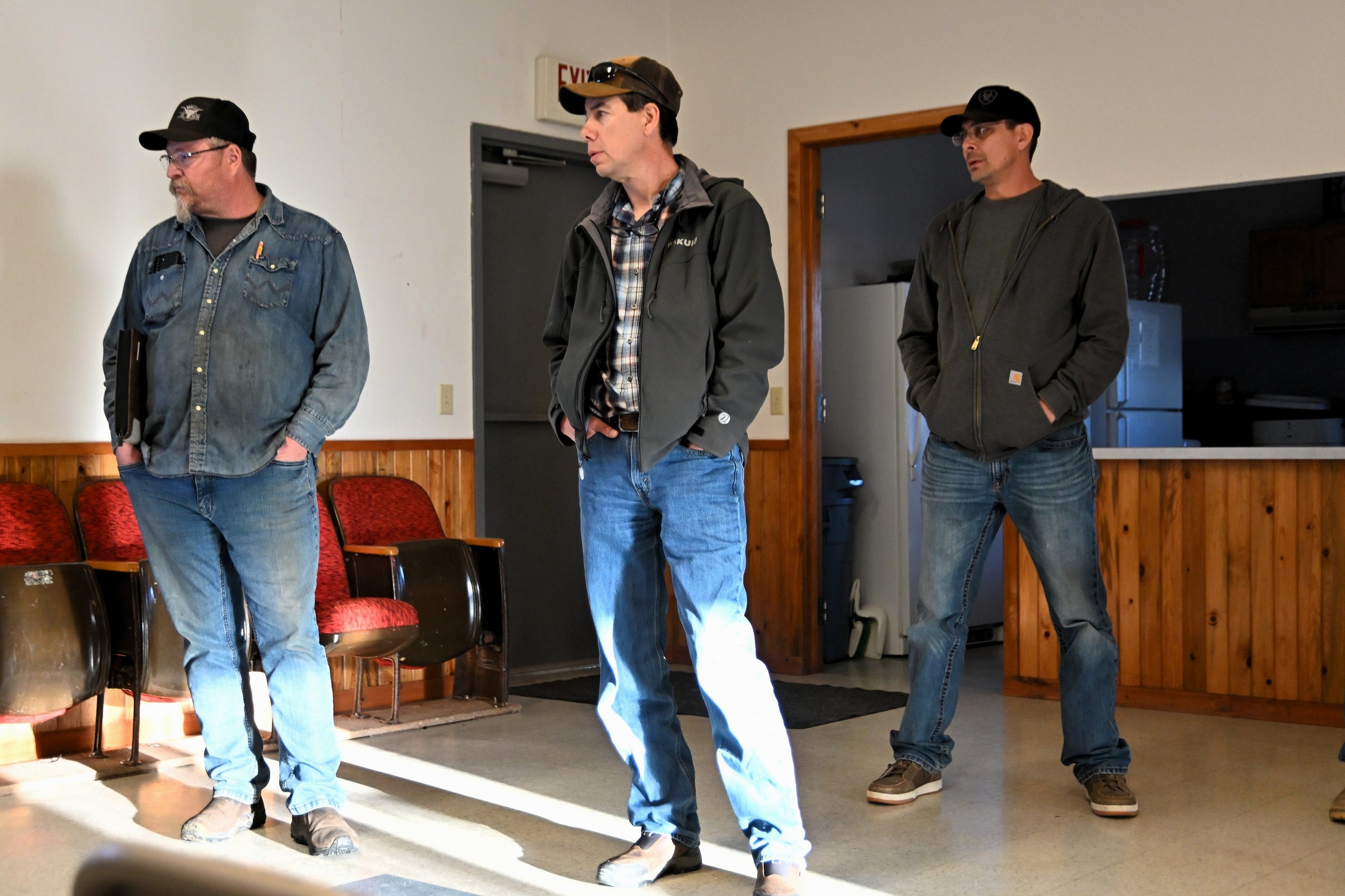 [Left to right] Flathead Indian Irrigation Project Acting Manager Nick Belcourt, Confederated Salish and Kootenai Tribe Hydrologist Shane Hendrickson and Acting Water Master for the Flathead Irrigation District Koshon Lacounte field questions from farmers during a meeting in Lonepine on April 29, 2026. (Hannah Shields/Daily Inter Lake)
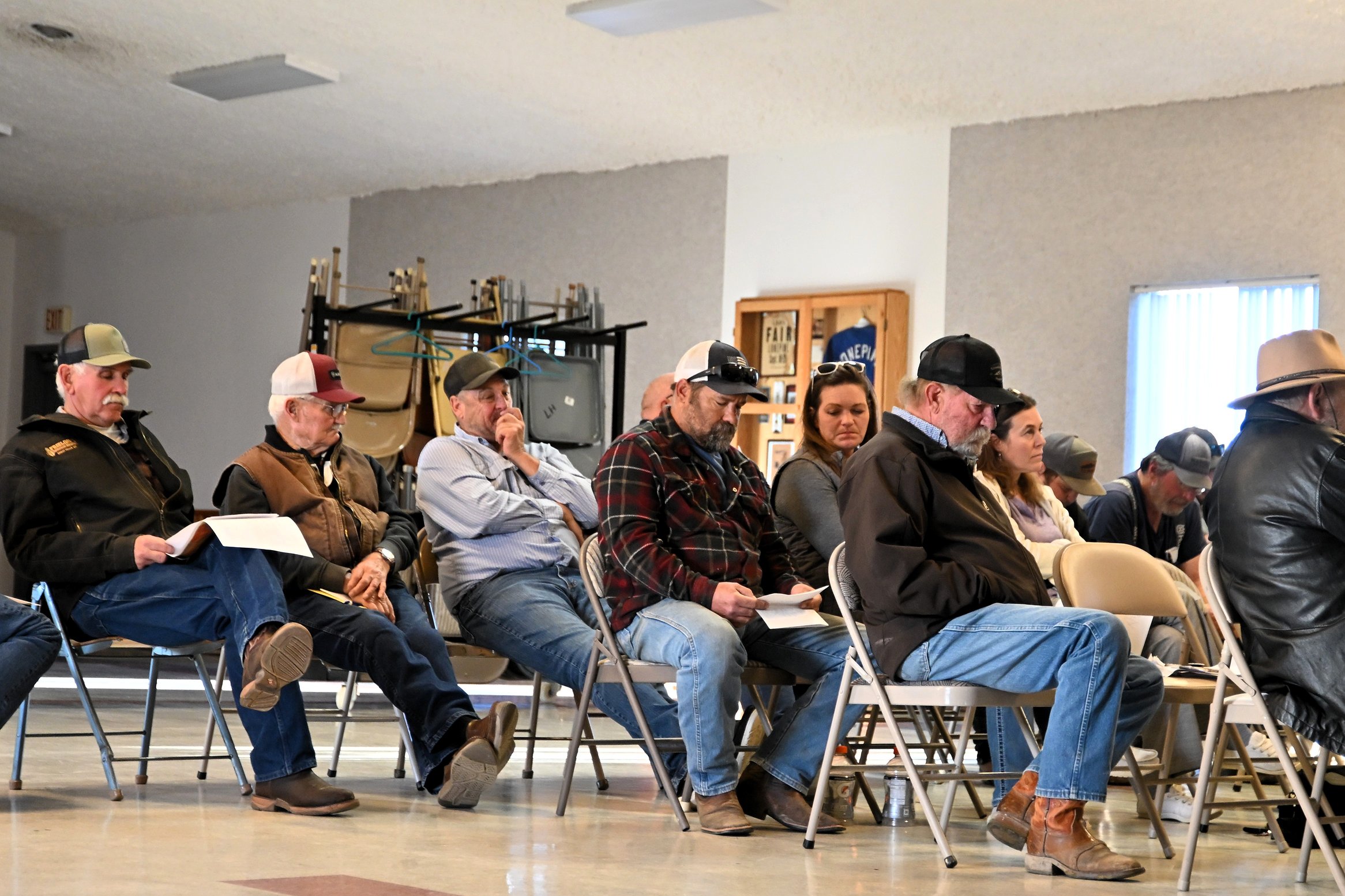 Farmers from the Hot Springs area in Sanders County attend their annual meeting in Lonepine on April 29, 2026. (Hannah Shields/Daily Inter Lake)
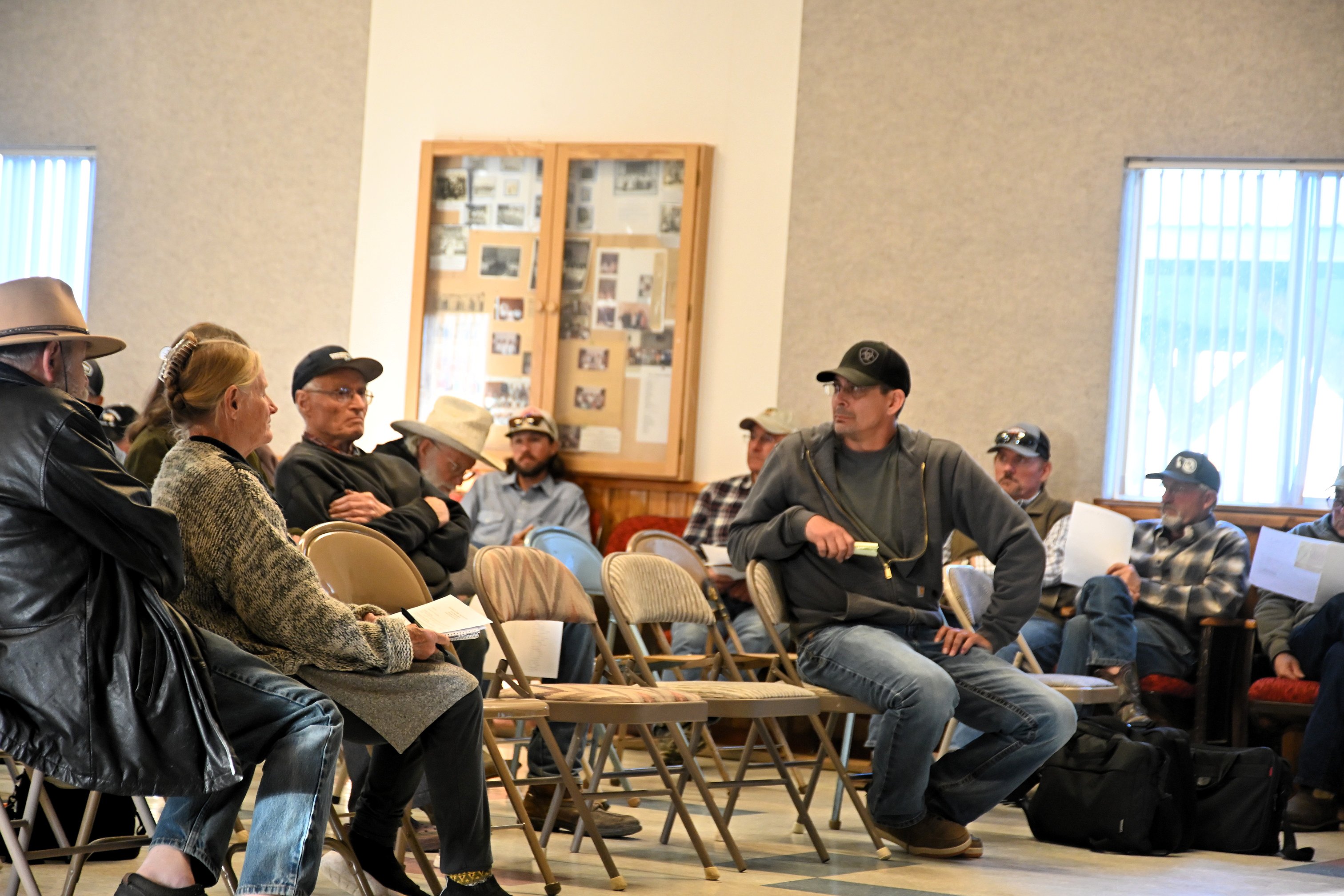 Acting Water Master for the Flathead Irrigation District Koshon Lacounte [far right] turns back as farmers ask questions during a meeting in Lonepine on April 29, 2026. (Hannah Shields/Daily Inter Lake)