
Wildlife experts analyze rare fatal bear attack in Glacier
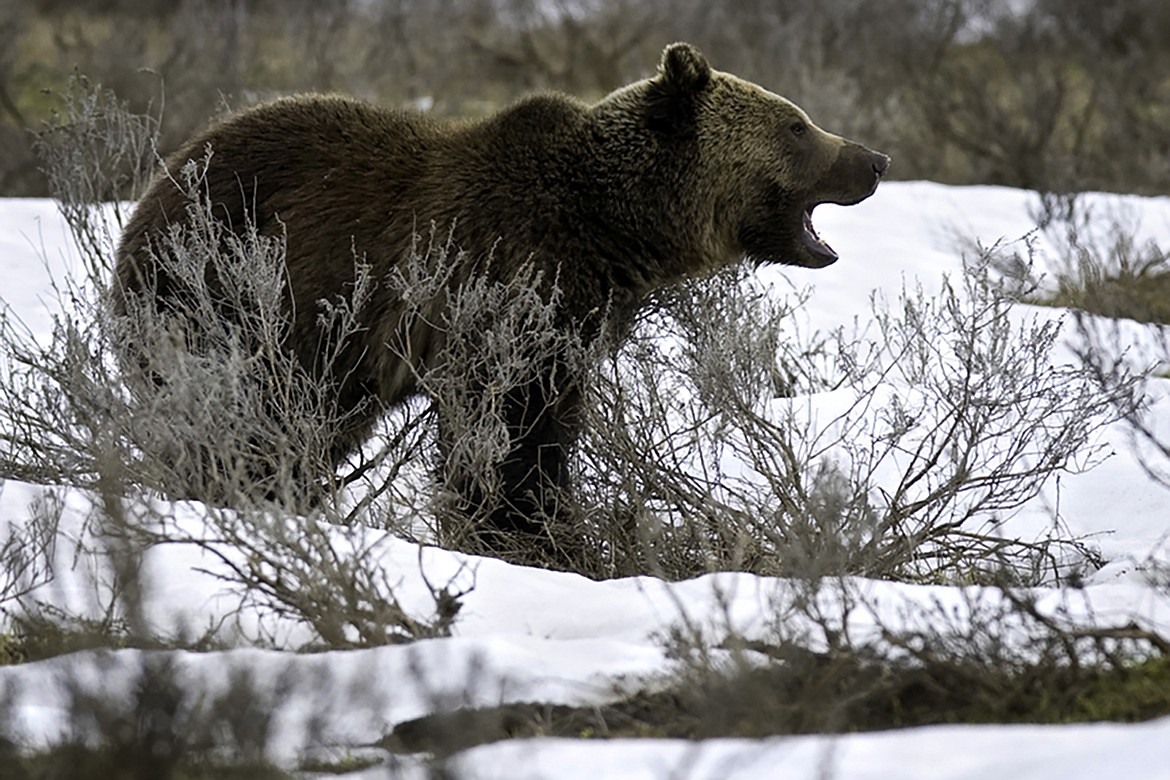
A grizzly bear in Yellowstone National Park. (Jeremy Weber/Daily Inter Lake)
Nearly three weeks after a 33-year-old hiker was killed in an apparent bear attack in Glacier National Park, questions continue to linger about what wildlife officials called a “stunningly rare” incident.
At the top of the list, wildlife experts are trying to assess what triggered the possible conflict, which could impact what happens, if anything, to the bear involved.
Anthony Pollio of Fort Lauderdale, Florida, was reported missing on May 4 after he didn’t return from a hike on the west side of Glacier Park the previous day. Two days later, his remains were discovered about 50 feet off the Mt. Brown Trail in a heavily forested area east of Lake McDonald. A can of bear spray was found near the scene, but wildlife experts have not been able to determine whether the canister belonged to Pollio or whether it had been deployed, according to Autumn Sifuentes, a spokesperson for the National Park Service.
As of Friday, trails east of Lake McDonald, where the attack is thought to have happened, remain closed. While Pollio’s injuries appeared consistent with a bear attack, park officials have yet to identify the bear that could have been involved, or its current whereabouts.
If a bear attacks a person, it’s up to people like Erik Wenum, a bear and lion specialist with more than 30 years of experience at Montana Fish, Wildlife & Parks, to figure out what happened.
Wenum said he was involved with the investigation into the recent fatality in Glacier Park, but that he could not comment on an ongoing inquiry. What he could do, however, is discuss what those investigations look like.
“We’re trying to figure out the who, the how, and the why,” he said during an interview.
Officials say that bear attacks in Glacier and elsewhere around Montana are rare. Since 1967, there have been ten fatal bear encounters in the national park, the most recent occurring in 1998, when a man was killed while hiking the Scenic Point Trail in the Two Medicine Valley. The most infamous was in August 1967, when two different bears killed two different women on the same night, miles apart from each other. Outside of Glacier, there have been more recent fatalities in northwest Montana. In 2021, a 64-year-old woman was dragged from her tent and fatally mauled while camping near Ovando. And in 2016, an off-duty U.S. Forest Service law enforcement officer was killed by a grizzly while biking near West Glacier.
When there’s a suspected bear attack anywhere in northwest Montana, people like Wenum spring into action to gather as much information as possible about what happened.
“We look at the big picture and then zoom in,” Wenum said.
That includes taking hundreds of photos of the scene and collecting DNA evidence, including blood, saliva, and hair samples. In many ways, Wenum said, an investigation into a fatal bear attack doesn’t look that different from a criminal murder investigation. Part of that reason has to do with the overlap between both types of violent encounters — some incidents that were initially reported as bear attacks have later been discovered to be actual murders, most recently in Gallatin County in 2024.
When they’re sure they are dealing with a bear encounter, Wenum said that wildlife experts try to place an attack into one of three categories: whether the attack happened when a bear was surprised, defensive or predatory. Those three options carry different conclusions about whether the bear could pose a future threat to other people, and could dramatically shift how wildlife experts decide to deal with the bear in the long run.
A surprise attack could occur when a human simply surprises a bear, Wenum explained. On the other hand, a defensive attack could happen when a bear is protecting its cubs or a carcass. The most concerning, however, is a predatory attack, when a bear has followed or sought out a human for unknown reasons. Key signs of a predatory attack include the bear consuming part of its victim or trying to hide or bury it. In instances of a predatory attack, bears will often stay in the area, Wenum said. That’s markedly different from a surprise encounter, when a bear typically tries to leave.
“If it’s a surprise encounter, the bear is usually just as surprised as the human, and they want to get out of there,” Wenum said.
Bears that are suspected of having attacked a human are usually captured and tranquilized first, allowing investigators to compare that animal’s DNA to that found at the scene. If it’s a match and wildlife experts believe the encounter was a predatory attack, the bear is euthanized.
“We want to make sure we have the right bear,” Wenum said.
While bear attacks can grab headlines, Wenum noted that they are exceedingly rare. Predatory attacks are even less common.
“You’re more likely to win the lottery,” he said.
But regardless of how rare these incidents are, Wenum said, it’s important to be safe while traveling or recreating through bear habitats. Having bear spray and knowing how to use it is a must. So is making noise while in the woods, so hikers can alert a bear to their presence, giving them time to get away.
“Always be aware of your surroundings,” Wenum cautioned. “And know that you’re in bear country.”